If you’ve ever searched for a glamping stay, you’ve probably seen one canvas tent listed at $90 a night and a similar-looking dome at $450, with no obvious explanation for the gap. That inconsistency makes the glamping cost hard to pin down, and it leaves many travelers guessing what to budget before they ever reach checkout.
This guide breaks prices down by stay type, from simple bell tents to high-end treehouses, and explains what you actually get at each price level. We’ll also cover how season and timing move rates, how far ahead to book, the hidden fees that inflate your final bill, and practical ways to pay less without giving up comfort. By the end, you’ll be able to set a realistic budget and spot a fair price when you see one.
What Does Glamping Cost? Average Prices by Stay Type
Glamping prices cluster into three broad tiers, and the type of structure you sleep in is the biggest driver of what you’ll pay. A simple tent on a farm and a glass-domed lodge overlooking a canyon are both sold as “glamping,” but they occupy completely different ends of the market. Knowing which tier a listing belongs to before you start browsing saves hours of scrolling and helps you filter out options that were never a realistic fit for your budget.
The good news is that the ranges are fairly consistent across most US booking platforms, so once you know the tier you’re shopping in, budgeting gets much easier. Descriptions can be vague, though. Some hosts use “yurt” for a permanent insulated structure and others use it for a wall tent, so read the full listing details and photos carefully before assuming you know what you’re getting. Here’s how the three levels typically break down per night:
- Budget canvas tents and bell tents: $80-$150 per night. These are often set up on private farms or small campgrounds, sometimes with a wood-burning stove inside and a fire pit outside, and they’re the most widely available option in rural areas.
- Mid-range yurts, cabins and safari tents: $150-$300 per night. Expect proper foundations, real furniture and private outdoor space, often on purpose-built sites with a handful of units rather than a single rental.
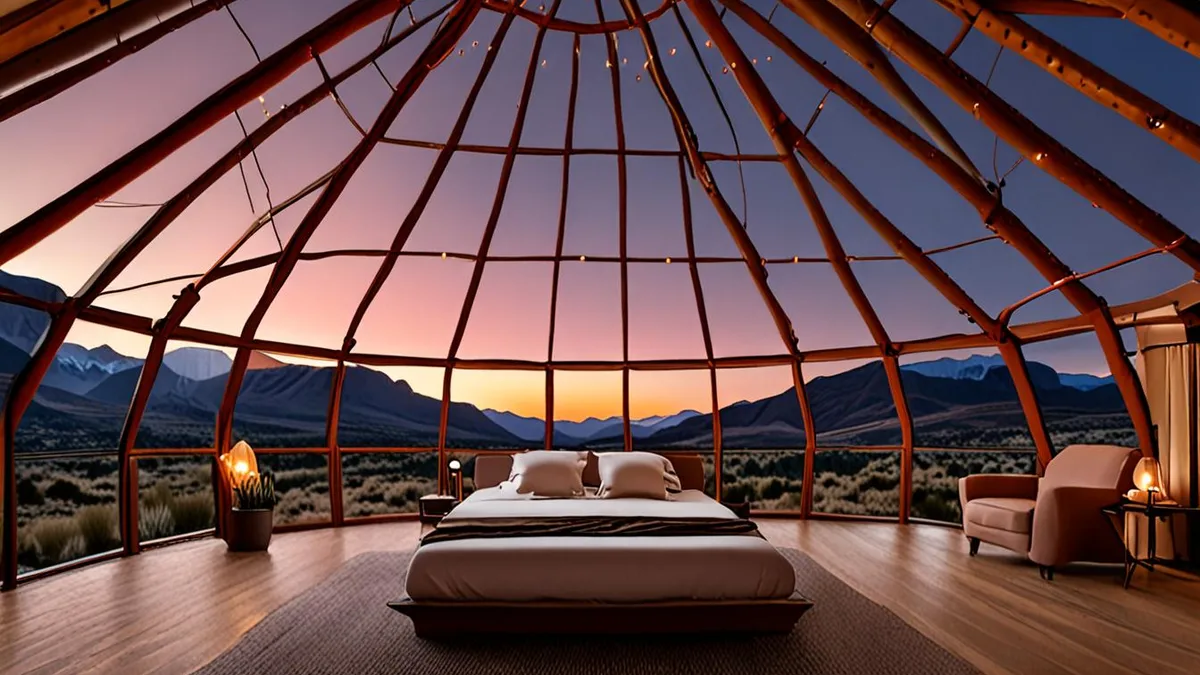
- Luxury treehouses, domes and lodges: $300-$600+ per night. These are usually one-of-a-kind builds with architect-designed interiors, and the most in-demand ones in scenic regions can climb well past the top of this range.
Location matters almost as much as structure. A mid-range safari tent near a popular national park can cost more than a luxury tent in a quiet corner of the state, so compare within your destination, not just across tiers. It also pays to look at what sits between the tiers, since many small operators blur the lines. A canvas tent with a private bathroom may be priced like a mid-range unit, and a bare-bones cabin on a scenic ridge can outperform a fancier structure with a mediocre view. Match the structure to how you actually travel: if you plan to spend your days hiking and only return to sleep, a simpler tent frees up money for the experiences around it. If weather or comfort is a concern, the sturdier builds are usually worth the step up in price.
What You Get at Each Price Level
The jump in price between tiers buys you a real jump in comfort, and knowing where the line falls helps you decide what you can live without. Budget stays are genuinely camping-adjacent: you get a real bed off the ground, but bathrooms are usually shared bathhouse-style or basic and nearby rather than en suite, and kitchens are often absent entirely. Plan on bringing a cooler and cooking over the fire.
Mid-range stays are where glamping starts to feel like a hotel room in the woods. You typically get a private bathroom, climate control, a small kitchenette for simple meals, and a deck or patio to sit on in the evening. For most couples and families, this tier hits the sweet spot between cost and comfort.
Luxury stays behave more like boutique hotels. Housekeeping, full kitchens, hot tubs and designed views come standard, and some hosts add concierge-style services like pre-stocked fridges or arranged local activities. Common features by tier include:
- Budget: linens and bedding provided, solar or battery lighting instead of full electrical service, and coolers rather than refrigerators at some sites.
- Mid-range: coffee makers, two-burner cooktops or microwaves, and heating that keeps stays comfortable well outside summer.
- Luxury: wood-fired hot tubs, floor-to-ceiling windows positioned toward the best view on the property, and sometimes on-site dining or spa-style extras.
How Season and Timing Change the Price
Timing is the single biggest lever on price once you’ve picked your stay type. Peak season runs from June through August, and rates during those months typically run 30-50% above what the same unit costs in shoulder season. A yurt that books at $180 in May can easily list at $250 or more in July for an identical night.
Weekends versus weekdays
Weekend nights typically cost 20-40% more than weekdays, and the gap widens at popular destinations. If your schedule allows a Sunday-to-Tuesday stay instead of a Friday-to-Sunday one, you’ll often pay noticeably less for the exact same unit, and sites are quieter too.
Why shoulder season wins
May, September and early October offer the best value in most glamping regions. The weather is still pleasant in most areas, the sites have usually worked out their early-season kinks, and hosts are motivated to fill units outside the summer rush. Combine a shoulder-month date with a midweek arrival and you can routinely land a mid-range stay for close to budget-tier money. Check the specific property’s calendar, since local events and school holidays can shift these patterns from one region to the next.
Booking Lead Times and Minimum Stays
Glamping books up faster than most people expect, especially the popular units. For a summer weekend trip, aim to book 2-3 months ahead. That gives you a real choice of sites and dates instead of whatever is left over. If you have your eye on a specific treehouse or a famous dome with a view, stretch that window to 3-6 months. The most photographed stays often sell out their summer calendar early.
Minimum stays are the other thing that quietly changes your budget. Many sites enforce a 2-night minimum on weekends, which means a quick Saturday escape is usually off the table. If the nightly rate fits your budget but the total for two nights does not, you either extend the trip or shift your dates. Neither is a disaster, but both should be planned for rather than discovered at checkout.
- Solo and couple travelers feel minimums most. A two-night minimum doubles the cost of a trip that one night would have covered, so couples on a tight budget often do better on a weekday when the minimum drops or disappears.
- Check the minimum before you fall in love with a listing. It is usually stated in the site policies, and it can differ between units at the same property, with premium domes sometimes carrying a stricter rule than standard tents.
- Holiday weekends are a different tier entirely. Expect the longest minimums and the earliest sellouts around major summer holidays, so treat those dates like peak-season bookings even if you are traveling in May or September.
Last-minute deals do exist, but timing matters. In shoulder season, operators with empty units often discount a few days before arrival, and flexible travelers can score a good unit at a reduced rate. In July and August, that rarely happens. Demand is simply too strong, and last-minute availability usually means the least desirable unit at close to full price.
Hidden Fees That Inflate the Final Bill
The nightly rate is only the starting point. Cleaning or service fees can add $30-$80 per booking, and unlike the nightly rate, they do not shrink when you stay longer. On a short trip, a fee at the top of that range can add a noticeable chunk to what looked like an affordable night under canvas.
Then come the extras. Pet fees apply at many pet-friendly sites and are often charged per pet, per night. Firewood is frequently sold as bundles rather than included, and glamping sites know you will pay for it rather than forage. Activity add-ons like guided walks, kayak rentals or breakfast baskets are offered at checkout or on site, and each one nudges the total upward.
- Late check-out and early check-in fees. Some properties charge for flexible arrival or departure times, which matters if your drive time does not line up with standard check-in windows.
- Hot tub prep fees. A few luxury units charge a one-time fee to fill and heat a private hot tub, so the amenity shown in the photos may not be fully included in the base rate.
- Resort or amenity fees. Larger glamping resorts with pools, playgrounds or communal lounges sometimes add a flat per-stay charge, similar to what you would see at a hotel.
- Gratuities folded into the bill. At higher-end properties, a suggested service gratuity may be added automatically, so read the checkout summary rather than assuming the listed total is final.
The simplest habit that saves money: always check the total price at checkout, not the nightly rate. Search filters sort by nightly price, but two listings that look close together can end up nearly identical once fees land. Compare the all-in total for your exact dates and number of nights, and the real price gap between sites will show itself quickly.
How to Pay Less Without Downgrading the Experience
You do not have to sleep in a luxury dome to have a great glamping trip. The easiest saving starts with the type of stay itself. Choose a mid-range yurt instead of a dome and you still get a real bed, a private or near-private bathroom and proper heating. You give up the panoramic window and the Instagram shot, not the comfort. For many travelers, a safari tent with a deck and a wood stove delivers most of the experience without the top-tier price tag.
Let location do some of the work
Where you book matters as much as what you book. Compare sites within driving distance of major national parks, where supply keeps prices competitive. When several operators cluster around the same gateway town, they cannot all charge premium rates, and that competition works in your favor. The same unit type a couple of hours from a famous park entrance often costs noticeably less than one with a postcard view of it.
One practical approach: pick your destination region first, then shortlist three or four sites within an easy drive and compare their all-in totals for the same dates. A site a short drive outside the park boundary frequently offers bigger decks, better bathrooms and lower prices than the marquee property everyone books first.
Finally, remember that the scenery outside your tent matters more than the tent itself. A modest yurt steps from a trailhead will beat a pricier dome with nothing to do nearby. Spend the difference on an extra night or a good meal, and the trip will feel upgraded without the upgraded bill.
Budgeting Your Glamping Trip
So, why do glamping prices look so inconsistent online? Because a single search mixes $80-$150 canvas tents with $300-$600+ luxury domes, and neither the nightly rate nor the photos tell the whole story. Once you sort stays into budget, mid-range and luxury tiers, budgeting gets much simpler: pick your comfort level, then add the extras like cleaning fees, minimum stays and seasonal surcharges to see the real cost.
The biggest savings still come from timing. Booking early and traveling in shoulder season consistently delivers the best value, often trimming a noticeable chunk off peak rates without downgrading the experience. Set your budget around the total checkout price rather than the headline rate, and you’ll rarely be surprised. Have you booked a glamping trip recently? Share what you paid in the comments, or pass this guide along to a friend planning one.