Booking a hotel with a pool sounds simple enough, yet it’s one of the most common travel letdowns. You arrive, swimsuit ready, only to find a plunge pond the size of a parking space, water too cold to enjoy, gates closed for the season, or a “facility fee” quietly added to your bill. The photos looked great, but photos rarely tell the whole story.
The good news is that most pool disappointments are avoidable with a few checks before you pay. In this guide, we’ll look at why “pool included” doesn’t always mean what you think, how to match indoor and outdoor options to your travel season, and what size, depth and layout details the listing photos won’t reveal. We’ll also cover opening hours and access rules, the fees that can appear at checkout, and how to choose a pool hotel that actually works for families, so you can book with confidence and swim when you arrive.
Why ‘Pool Included’ Doesn’t Always Mean What You Think
That gorgeous infinity pool in the listing photo? It might not be what you get. Hotels know that pool images sell rooms, so they lead with their most flattering shot — often taken on a perfect day, years ago, and sometimes not even at that property. Larger hotel groups occasionally borrow photos from a sister property, so the sparkling lagoon pool you’re admiring may exist at a resort several kilometers away.
Read the description carefully, too. A hotel can honestly claim “pool” when what it actually has is a small plunge pool barely big enough for two loungers, or a shallow splash pool meant for toddlers. Neither will do much for you if your plan involves actual swimming or lounging poolside for a week.
Pools Close — Even When You’re There
Pool maintenance and seasonal shutdowns happen at the least convenient times. A hotel may drain the pool for resurfacing, close it for a private event, or shut it down entirely in low season — sometimes without flagging this on the booking page. If the pool is the main reason you chose the hotel, this is a real risk to your stay.
Let Recent Reviews Do the Checking
The most reliable way to verify a pool’s actual condition is to read guest reviews from the last 6-12 months. Older reviews describe a pool that may no longer exist in that state; recent ones will tell you if the water is clean, the area is crowded, or the “main pool” is really a knee-deep afterthought. Search reviews for the word “pool” and sort by newest — five minutes of scrolling can save you a very disappointing arrival.
Indoor or Outdoor: Matching the Pool to Your Season
Season is the single biggest factor in whether a hotel pool gets used or ignored. Most outdoor hotel pools in Europe operate roughly May to September, so if you’re traveling in April, October or the winter months, an outdoor pool is often drained, covered or simply closed. A shoulder-season trip to Italy or Spain with a “stunning outdoor pool” in the listing can easily mean a dry basin and a locked gate.
Temperature matters just as much as whether the pool is open at all. Heated outdoor pools are typically kept at 26-28°C, while indoor pools sit at 27-30°C — warm enough for a proper swim rather than a quick, shivering dip. Unheated outdoor pools in spring or autumn can feel noticeably colder, which matters if you’re traveling with children.
When swimming is a daily priority
If you plan to swim every day, confirm the pool is heated and covered rather than assuming. Email the hotel before booking and ask two direct questions: is the pool open during your exact dates, and is it heated? A pool can be open but unheated, or heated but outdoor-only with no cover for rainy days. Indoor pools or a combination of indoor and outdoor options give you the most flexibility in cooler months.
Destinations with mild winters — think the Canary Islands, Malta, parts of Florida or Southeast Asia — often keep outdoor pools open year-round. Even then, check the details: hours may shrink in low season, and some hotels rotate pools for cleaning. It’s also worth knowing how pool access fits around your arrival, since a late arrival can mean missing your swim on day one; the way check-in and check-out times work for travelers can help you plan that first dip.
Size, Depth and Layout: What the Photos Won’t Tell You
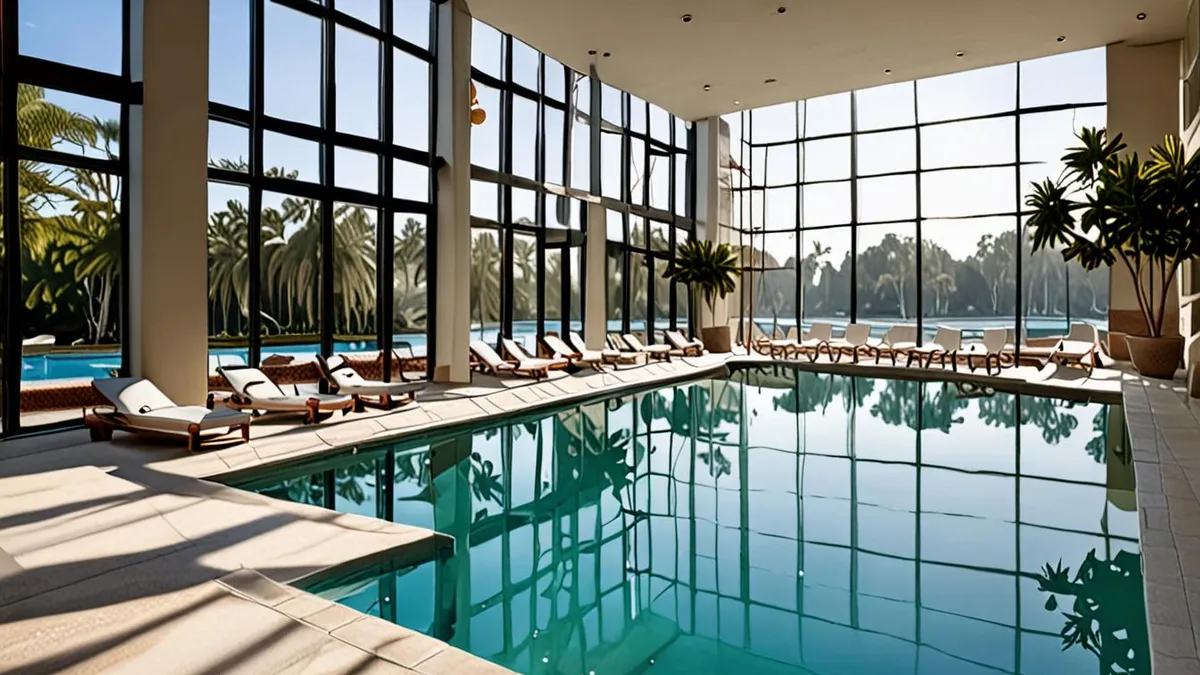
Hotel pool photos are almost always taken with a wide-angle lens, which makes even a modest splash pool look like an Olympic facility. In reality, a standard lap pool measures around 25 meters, while many hotel pools are under 15 meters — perfectly fine for cooling off after a day of sightseeing, but frustrating if you actually want to swim laps. Three or four strokes and you’re at the wall.
Depth matters just as much, especially if you’re traveling with children. Family hotel pools typically sit at 1.2-1.5 meters deep, which is over most kids’ heads, so look for a separate shallow kids’ pool around 0.3-0.5 meters where little ones can stand and play safely. If the listing only shows one pool, ask whether there’s a designated children’s area before you book.
Layout details rarely make it into the description, so it pays to ask the hotel directly or study guest photos rather than the official ones. Before committing, check for:
- A sun shelf or Baja shelf — a wide, waist-deep ledge along the pool edge where you can lounge in the water on a submerged chair; great for relaxing without fully committing to a swim.
- A separate adults-only section — many resorts split the pool area so families and adults seeking quiet don’t share the same water, which can make or break your stay depending on what you’re after.
- The lounger-to-room ratio — a pool surrounded by far fewer loungers than rooms means morning towel wars; some hotels even remove unattended towels after a set time, so ask about the policy.
- Pool orientation for rooftop and courtyard pools — these can sit in shadow from surrounding buildings for much of the day; if sunbathing matters, ask which side gets direct sun and at what hours.
A quick email with two or three specific questions — pool length, depth zones and sun exposure — will usually get you a straight answer and save you from a pool that looks great in photos but doesn’t fit how you actually want to use it.
Hours, Access and Guest Limits
Most hotel pools follow a fairly standard schedule, typically opening around 8:00 in the morning and closing somewhere between 20:00 and 21:00. That works fine for most travelers, but if you like to swim laps before breakfast or take a late evening dip after dinner, the standard schedule can be frustrating. Some pools also close earlier in low season or on certain weekdays.
Access is another thing worth confirming before you book. In some city hotels, the pool sits inside the spa area, and even paying room guests are expected to buy a spa pass or pay a per-entry fee to use it. Other properties restrict the pool to certain room categories or club-level guests, which is rarely obvious from the listing.
Large resorts and all-inclusive properties bring their own quirks. During busy weeks, some cap the number of guests in the pool area at one time, and sections may be roped off for private events, weddings or swim-up suite maintenance without any notice on the booking page.
Finally, think about the practicalities around the pool. Towels, showers and changing rooms are not always included, and at big resorts they can be a long walk away.
- Ask if pool towels are free and whether you can take them to a beach or a second pool, since some hotels charge for replacements or count towels against your room.
- Check whether the pool has a lifeguard or is unsupervised, because this affects both safety and whether children can swim without a parent in the water.
- Find out if the pool area has shaded spots or umbrellas, since sun-only decks can be brutal at midday, especially with young kids.
- Confirm whether food and drink service reaches the pool, or whether you must leave the area and get dressed to eat lunch.
Hidden Pool Costs: Fees That Appear at Checkout
That pool you paid for may cost more than the nightly rate suggests. In the United States, many hotels add a resort or facility fee on top of the room price, commonly ranging from $25 to $50 per night. These fees often cover pool access, along with extras like gym use or Wi-Fi, and they usually appear only at checkout or in the fine print.
In Europe, the pattern is different but just as easy to miss. Some city hotels treat the pool as part of the spa and charge a separate per-day supplement to use it, even for guests. A family of four can end up paying a noticeable daily amount just to swim, so ask before booking rather than at the front desk.
Small charges that add up
Beyond the headline fees, watch for the smaller extras. Towel deposits, locker rentals and paid cabanas are common, and for a family spending a week around the pool, these can quietly add up to a real sum. Some resorts also charge for poolside loungers in peak season.
One way to sidestep some of this is to compare booking channels. Booking direct sometimes bundles pool or spa access that third-party rates exclude, while other times the third-party rate is cheaper overall. Before you pay, read what each rate actually includes — our guide to hidden hotel fees and extra costs breaks down the common charges to look for. A few minutes of comparison can save you an unpleasant surprise on your final bill.
Choosing a Pool Hotel for Families
When the pool is the main reason your kids will remember the trip, choose the hotel around it. The single most useful feature is a dedicated shallow kids’ pool, typically around 0.3 to 0.5 meters deep. A single deep pool, often 1.2 to 1.5 meters in family hotels, means small children spend the whole time clinging to the edge or an adult’s arm.
Safety and supervision vary a lot between properties. Some resorts keep lifeguards on duty during opening hours and fence the pool area with self-closing gates; others treat the pool as strictly swim-at-your-own-risk. Neither approach is wrong, but you should know which one you are signing up for, especially with younger children.
Location of your room matters too. Rooms near the pool are wonderfully convenient for wet, tired kids, but pool areas can stay lively until closing time around 20:00 or 21:00, and morning setup starts early. If your children sleep lightly, a room one building back may be the better trade-off.
- Ask whether the kids’ pool is shaded or has shade structures nearby, since young children burn quickly and shallow water offers no cover.
- Check if the hotel provides arm bands, floaties or swim diapers for sale or loan, because forgetting these can mean an expensive poolside purchase.
- Look for family rooms or connecting rooms with space to dry swimwear and store pool toys, since a cramped room fills with damp towels fast.
- Find out if the pool is heated, because a cold pool in shoulder season turns a promised swim week into a series of five-minute dips.
The Bottom Line Before You Book
That gap between the booking photo and the pool you actually find is easy to close with a little homework. Before you commit, confirm three things: the pool exists and is open during your travel months, it matches your expectations on size and temperature, and the hours and access rules work for how you want to use it. If you’re booking in the US, also check whether a $25-50 nightly resort or facility fee is hiding behind the room rate.
Finally, cross-check recent guest reviews from the last 6-12 months — they’re the most honest window into the pool’s real condition — and send the hotel a short email if anything is unclear. A two-minute message can prevent a disappointing stay. If this guide helped you sort the real pools from the photo props, share it or leave a comment below.