If you love the idea of sleeping under the stars but dread the reality of a thin sleeping bag on rocky ground, you have probably been eyeing glamping with a mix of curiosity and suspicion. Will it feel like camping, or will it feel like a hotel with a tent-shaped facade? If this is your first time glamping, it helps to know exactly what you are signing up for before you book.
The truth sits somewhere in the middle: glamping gives you a real bed, weather protection and often a private bathroom, but you are still genuinely outdoors, with insects, night sounds and dirt paths included. This guide walks you through what glamping actually is, when to go and how far ahead to book, how to choose the right stay, what to pack, what to expect at check-in, and the mistakes first-timers most often make. By the end, you will know whether a night under canvas is right for you, and how to prepare for it well.
What Glamping Actually Is (and Isn’t)
Glamping, short for glamorous camping, means you get the outdoor setting of a campground without giving up the basics of comfort. Instead of an air mattress on the ground, expect a real bed with proper bedding, lighting you can actually read by, and heating or cooling to take the edge off cold nights and hot afternoons. Many units also include a private bathroom, which is the single biggest difference from traditional camping, where you share a bathhouse or walk into the woods.
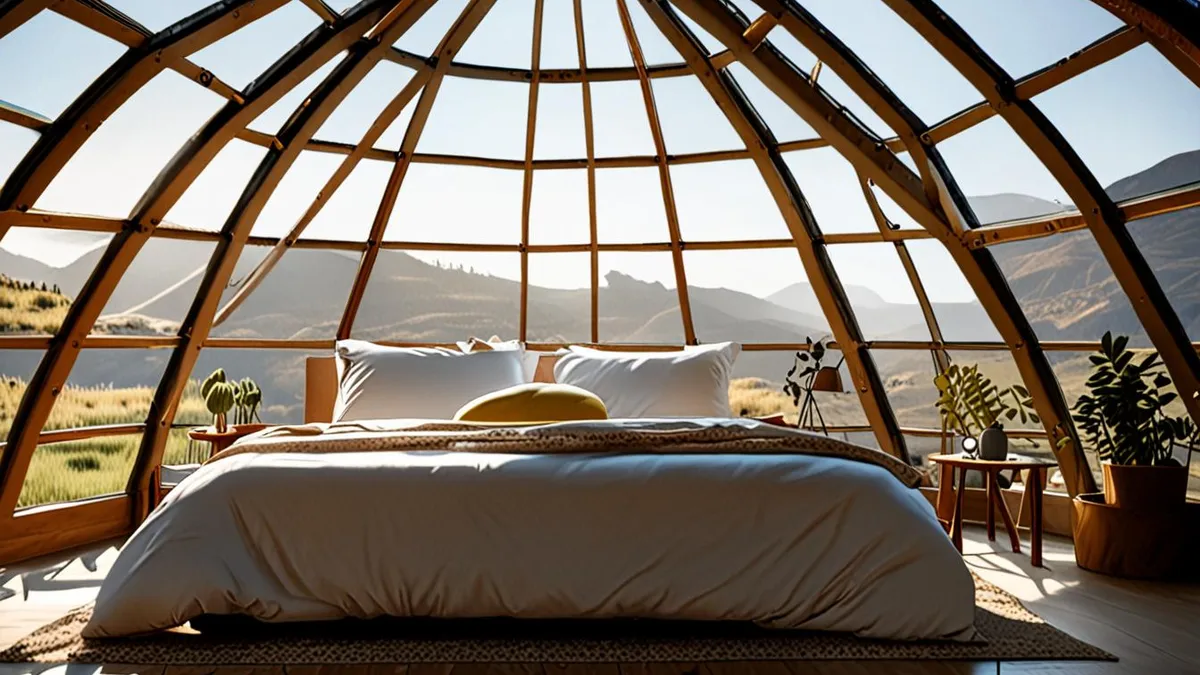
The word covers a surprising range of structures. Safari tents, yurts, geodesic domes, treehouses, A-frame cabins and converted trailers all show up under the glamping label, and the level of comfort varies accordingly. A yurt with a wood stove feels very different from a cabin with full plumbing and a kitchenette, so it pays to look closely at each listing rather than assuming all glamping is the same.
But it is still the outdoors
Here is the part that surprises some first-timers: glamping is not a hotel room in disguise. You will likely hear rain on the canvas, wind in the trees and the occasional rustle of wildlife outside. Insects find their way in, especially in summer, and paths between your unit and the bathroom or parking area are often gravel, grass or dirt. If you can accept that trade-off, the combination of a proper bed and the sounds of the night is exactly what makes glamping worth trying.
When to Go and How Far Ahead to Book
Know the season
Most glamping sites in temperate climates operate from April or May through October, since canvas structures and outdoor plumbing are not made for deep winter. Within that window, June through August is peak season: the warmest weather, the fullest calendars and the highest demand. If your heart is set on a July or August weekend, you will be competing with families on summer vacation, school breaks and every other first-timer in your area.
How far ahead to book
For peak season weekends, plan to book 2-6 months in advance. Popular sites near cities can fill their summer Saturdays surprisingly early, and the best units, like the domes with the best views, tend to go first. In shoulder season, booking 3-6 weeks ahead is often enough, though it never hurts to check earlier if you have a specific site in mind.
If you have flexibility, aim for May, early June or September. These months usually offer pleasant weather, fewer crowds and better availability, which makes them a sweet spot for a first glamping trip. You get the full experience without the peak-season scramble, and hosts often have more time to answer your questions when you are not arriving during their busiest stretch. Check each site’s exact opening dates before you plan, since they vary by region and operator.
How to Choose Your First Glamping Stay
Glamping stays typically range from $100 to $500+ per night, depending on the structure, location and level of luxury. That spread is wide because “glamping” covers everything from a simple canvas tent with a shared bathhouse to a dome with a private hot tub and full kitchen. Before you browse, decide which comforts you will not compromise on. For many first-timers, that is a private bathroom; for others, it is reliable heating or a real kitchen. Knowing your non-negotiables makes it much easier to compare listings at different price points.
For your first trip, pick a site roughly 1-3 hours from home. A short drive keeps the trip low-stress: if you forget something, the trip to the nearest store is manageable, and if the experience is not for you, you are home the same day without a long haul. Once you know you love it, you can plan more ambitious trips.
Reviews matter more than photos, so read them with specific questions in mind:
- Cleanliness: Look for comments on whether bedding, floors and bathrooms were spotless at arrival, since canvas structures collect dust and moisture faster than hotel rooms.
- Heating and cooling: Search reviews from cooler or hotter months to see whether the heating or cooling actually kept guests comfortable overnight, not just on mild evenings.
- Photo accuracy: Note whether recent guests say the listing looks like its photos, and check review dates, since an aging tent can look very different from its listing pictures.
What to Pack for First Time Glamping
Packing for a glamping trip is much lighter than packing for camping, but it is not the same as packing for a hotel. The biggest thing to plan for is temperature swing. Nighttime temperatures can drop 10-15°F below daytime highs, even in summer, so a warm evening by the fire can turn chilly fast once the sun goes down.
That is why layers are essential. Think t-shirt, fleece or sweater, and a light jacket you can add or shed as conditions change. A beanie and warm socks take up almost no space in your bag but make a huge difference around a fire pit at 10 PM.
You can leave the bulky gear at home. Glamping sites usually provide bedding, towels, and basic kitchen or fire pit equipment, so there is no need to haul sleeping bags, coolers, or cookware unless your host tells you otherwise.
A few smaller items earn their spot every single time:
- Closed-toe shoes — paths between your tent and the bathroom are often grass, gravel, or dirt, and damp grass at night is no fun in sandals.
- A headlamp or flashlight — lighting on site is often dim and motion-sensor, and a headlamp keeps your hands free for unlocking doors or stoking a fire.
- A power bank — outlets may be limited to one or two per unit, so a charged backup keeps your phone alive for photos and maps.
Arrival, Check-In and Settling In
Your first glamping check-in is refreshingly simple compared to a big hotel front desk, but a little planning makes it even smoother. Most sites set check-in around mid-afternoon, typically 3-4 PM, with check-out late morning, usually 10-11 AM. That window matters more than it sounds: many sites are on rural roads with limited lighting, so arriving with daylight to spare gives you time to unpack, explore and settle in without stress. Plan your drive so you are not racing the sunset, and message your host the day before to confirm arrival details and any gate codes or parking instructions.
- Arrive in daylight if you possibly can. Seeing the layout of your unit and the surrounding grounds makes everything easier, from finding the bathroom path to spotting the light switches and the firewood stash.
- Get a walkthrough from your host. Ask them to show you how the heating or cooling works, how to light the fire pit safely, and where any breakers or water valves are located. A five-minute tour now saves you a cold, confusing evening later.
- Clarify the practical details. Confirm whether the water is drinkable, what cooking facilities you have access to, and what the quiet hours are so you know the rhythm of the site.
- Test the lights and locks before dark. Fumbling with an unfamiliar latch or a finicky lantern in total darkness is a rite of passage you can happily skip.
Once the logistics are handled, give yourself an unhurried hour to settle in before sunset. Make the bed yours, set out your layers for the evening, and pour something warm to sip on the deck or around the fire. Ask your host for their local recommendations too, since they usually know the best viewpoints, short walks and spots to catch sunset. By the time the stars come out, the place will already feel like it belongs to you.
Common First-Timer Mistakes to Avoid
The most common first-timer mistakes all come from expecting a glamping tent to behave like a hotel room. It is close, but the outdoors part is real, and it catches people off guard in a few predictable ways.
The first surprise is how dark and quiet it gets. There are no streetlights and no neighbor’s TV, and once your host’s exterior lights shut off, the darkness is complete. Pack a light source for every person in your group, and download your entertainment offline before you leave home. Streaming a movie over a weak connection in the middle of nowhere is a frustrating way to end the day.
The second is cell service. Coverage at rural sites is often patchy or nonexistent, so confirm connectivity with your host before relying on it for navigation, work calls, or meeting up with friends.
A few more mistakes are easy to sidestep once you know them:
- Leaving food out or in open packaging — wildlife at most sites, from raccoons to mice, has learned that tents mean snacks, so seal everything in hard containers or your car.
- Forgetting to close tent flaps fully at night — a gap small enough to miss in the dark is an open invitation for moths and other insects drawn to your interior lights.
- Not checking the weather before you pack — a forecast with rain means an extra pair of shoes and a dry bag for your phone, not a canceled trip.
Ready for Your First Night Under Canvas
So what should you actually expect from your first glamping trip? Something in between the two fears most beginners have. It is not a tent with a sleeping bag on hard ground, and it is not a hotel dropped into the woods either. Glamping blends real beds and bathrooms with an outdoor setting, so you get the sounds, the stars and the fresh air without giving up comfort.
If you remember just two things, make them these: book 2-6 months ahead for a summer stay and pack layers for the temperature drop after dark. Then keep your first trip simple by choosing a site within a 1-3 hour drive of home. That way you can test whether glamping is for you without a big commitment. Have you tried glamping yet, or are you planning your first trip? Leave a comment or share this article with a friend who needs a nudge.