Choosing between a glamping honeymoon and a traditional hotel or resort honeymoon is one of those decisions that looks simple on the surface, then gets complicated fast. Both promise romance, but they deliver it in completely different ways: one wraps you in a private dome under the stars, the other in daily housekeeping and a spa down the hall. Before you book, it helps to know exactly what differs.
This guide breaks the comparison down piece by piece. We start with what a glamping honeymoon actually looks like day to day, then see how a regular romantic stay compares. From there, we look at where glamping wins on privacy and atmosphere, where hotels win on comfort and facilities, what a glamping honeymoon typically costs and when to book it, and how season and weather risk affect your dates. A final section helps you choose between the two, including a hybrid option if you cannot decide.
What a Glamping Honeymoon Actually Looks Like
A glamping honeymoon centers on a private unit built for two. Think a geodesic dome, a safari tent or a treehouse, standing alone rather than lined up along a corridor. Inside, you usually find a proper bed, some form of heating and either an en-suite bathroom or one a short walk away. The level of polish varies by property, so it pays to read descriptions and reviews closely before committing.
The setting is the real draw. Glamping sites tend to sit in nature-first locations: a forest clearing, a stretch of coast or the edge of a vineyard. Most units come with their own deck, and many add a hot tub or a fire pit just outside the door. You are paying for the view and the quiet as much as the bed.
Food and service: what to expect
Meals work differently than at a hotel. Self-catering is common, with a small kitchen or grill setup in or near your unit, and many sites offer a breakfast-basket service delivered to your deck. Full restaurants and room service are rare, since glamping units usually sleep just 2–4 guests and sites stay small by design. If dining out matters to you, check what nearby towns offer before you book.
How a Regular Romantic Stay Compares
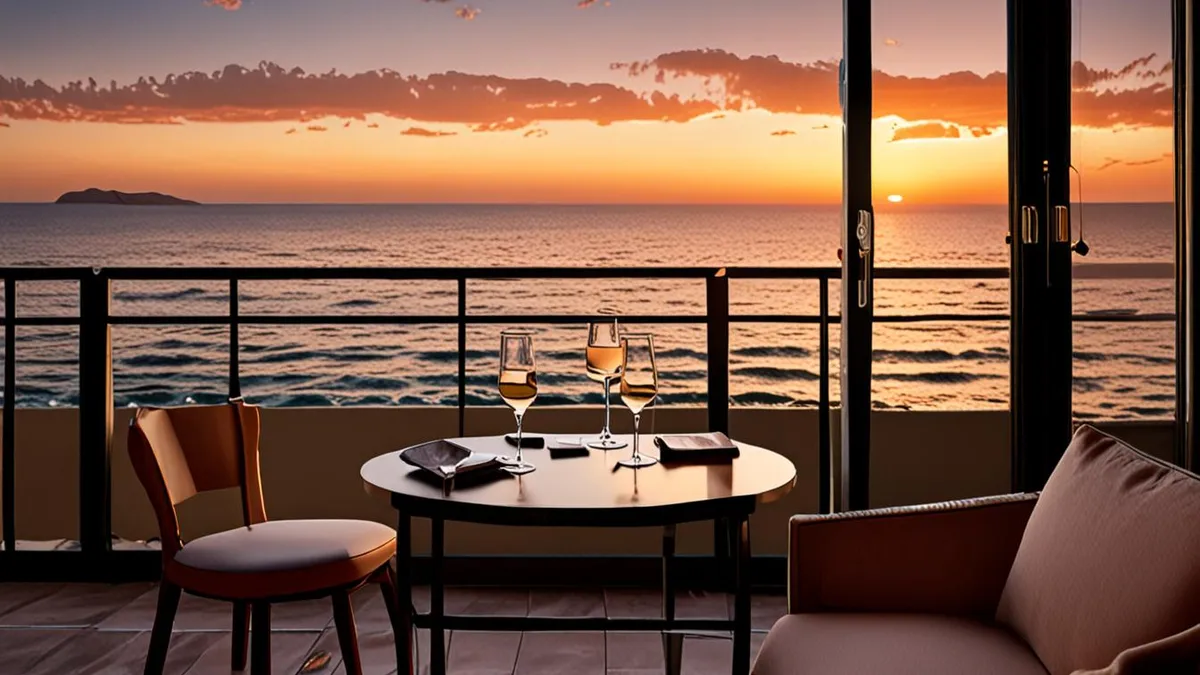
A regular romantic stay, whether at a hotel or a resort, is built around service. Daily housekeeping refreshes your room without you lifting a finger, on-site dining means dinner is a reservation away, and many properties add spas, pools and concierge staff who can arrange everything from flowers to day trips. If your idea of romance includes being looked after, this is the format that delivers it most reliably.
Privacy works differently here. Your room shares corridors, walls and elevators with other guests, so how quiet and intimate your stay feels depends on the property itself: its layout, soundproofing and how full it is, not on the surrounding landscape. A well-designed boutique hotel can feel wonderfully secluded; a busy resort pool deck rarely does. If you are weighing a tent-based stay partly for the seclusion, it helps to understand how the two settings genuinely differ, and our guide to glamping with a dog covers rules, etiquette and what to check if you are also bringing a pet along.
Weather and season: the hotel advantage
Where hotels quietly win is risk. An all-inclusive resort or a city hotel removes weather and season risk almost entirely: the restaurants, spa and indoor spaces run year-round, so a rainy afternoon costs you little. That predictability matters if your honeymoon dates are fixed and cannot shift.
Privacy and Atmosphere: Where Glamping Wins
Privacy is where a glamping honeymoon pulls clearly ahead. Your unit is a standalone structure, which means no shared walls, no corridors and no small talk in the elevator, because there is no elevator. The nearest neighbors might be a field away, and your evenings unfold entirely on your own terms: dinner by the fire, a soak in the tub, stars overhead with nobody else in sight. Because most units sleep just 2–4 guests, you never hear footsteps above you or a TV through the wall, and there is no lobby to cross on your way to breakfast in your robe.
Atmosphere is the second advantage, and it is hard for a standard hotel room to replicate. Fire pits, star-gazing decks and outdoor baths turn the setting itself into the experience. Many sites also cap capacity at a handful of units, keeping noise and foot traffic low in a way even the quietest hotel cannot match. Most glamping sites are adults-only or quiet by design, though only some explicitly ban children, so check the policy if that matters to you. Many also offer add-ons like breakfast baskets or private hot tub time, usually for a modest extra fee per stay, which deepens the sense that the whole place exists for just the two of you.
- Soundscapes change with the hours. Instead of hallway chatter, you hear owls, wind in the trees and crackling firewood, which many couples find far more romantic than any playlist.
- Darkness is a genuine amenity. Sites in remote locations often have minimal outdoor lighting, so the Milky Way can be visible from your deck, something city hotels cannot offer at any price.
- Your outdoor space is truly yours. The fire pit, deck and hot tub attached to your unit are not shared facilities, so you never wait your turn or time your evening around other guests.
Comfort and Facilities: Where Hotels Win
Hotels do the unglamorous things brilliantly, and on a honeymoon those things matter more than you might think. Climate control is the big one: you set the temperature you want, and it stays there, whether it is a heatwave outside or a cold snap. Blackout curtains, a proper mattress and daily housekeeping come as standard, not as an upgrade.
Glamping has closed much of the gap in recent years, but the experience still varies enormously from site to site. A luxury safari tent with a private en-suite and underfloor heating is a different world from a canvas lodge that shares a wash block with three other units. The only way to know which one you are booking is to read the unit description carefully and ask the operator directly before you pay.
- Ask whether the bathroom is en-suite, private but a short walk away, or shared with other guests, and whether it has hot water around the clock or only at set times.
- Check how the unit is heated or cooled: wood stoves, electric heaters and air conditioning are not universal, and some sites switch facilities off outside peak season.
- Confirm whether housekeeping happens daily, every few days or not at all during your stay, since many small glamping sites leave units self-service.
- Look at what happens after dark, including lighting in the unit, paths to the bathroom and whether there is reliable phone signal or wifi if you need it.
Then there is everything around the room. A spa afternoon, a swim before breakfast or a late dinner without leaving the property usually requires a hotel or resort. If those rituals are part of your idea of a romantic stay, a standalone tent in a vineyard will not replicate them, no matter how beautiful the setting. For a clearer picture of what glamping sites typically provide, this guide to glamping bathrooms, kitchens and facilities covers the details worth checking before you book.
Glamping Honeymoon Cost and When to Book
Good news first: a glamping honeymoon is rarely a budget-buster. A couples-focused unit, whether that is a dome, a treehouse or a safari tent with a private deck, typically runs $150–$400 per night. That puts it on par with a mid-range romantic hotel, and you are often paying for far more atmosphere per dollar than a standard hotel room offers.
How far ahead to book
Here is where glamping behaves differently from hotels. Because most sites have only a handful of units, availability disappears fast. Plan to book 3–6 months ahead for most dates, and if you have your heart set on a popular dome or safari tent in peak season, assume it sells out 6+ months in advance. Unlike hotels, where a cancellation frees up a room, there is often no equivalent unit to move you to.
Budgeting for the extras
The nightly rate is rarely the whole story. Many sites sell add-on packages such as breakfast baskets, firewood bundles or private hot tub time, and these typically add $30–$100 per stay. They are usually worth it, since on-site dining is rare at glamping properties, but factor them in from the start rather than treating them as a surprise. For a fuller breakdown of what different stay types cost, see this guide to glamping prices by stay type.
One last tip: ask what is included before comparing rates. A $200 tent with a private bathroom, breakfast basket and firewood can beat a $260 one where everything is charged separately. Check current prices directly with the operator, as rates shift with season and demand.
Season and Weather Risk on a Glamping Honeymoon
Weather is the single biggest difference between these two honeymoon styles, and it is the one couples most often underestimate. Most glamping sites in Europe and North America operate a main season running roughly April–October. Outside those months, many sites close entirely, and those that stay open generally expect guests to book heated units built for cold nights.
What can go wrong, and how to soften it
Rain and cold nights are the two risks that matter. A downpour can turn a star-gazing deck into a decoration, and a chilly evening is far less charming in a tent than behind hotel double glazing. You can soften both: choose a unit with real heating, a covered deck or veranda, and solid insulation rather than thin canvas. Ask the operator how the unit performs in wet weather, and read recent guest reviews for honest reports rather than marketing photos.
It also helps to build flexibility into your plans. If a storm rolls in, having a car so you can reach a nearby town, a good restaurant or an indoor activity keeps a rainy day from becoming a wasted one. Packing proper layers and waterproofs costs nothing and pays for itself.
When a hotel is simply the safer choice
If your dates are fixed and fall in winter, a hotel carries almost no weather risk. You will get the same comfortable, climate-controlled room whether it snows or shines outside, and your romantic dinner reservation will not depend on a muddy track being passable. Save the glamping honeymoon for shoulder-season or summer dates when the odds are firmly in your favor, and enjoy the fire pit under a clear sky instead of under an umbrella.
Choosing Between the Two
So what actually differs? A glamping honeymoon trades services for privacy and atmosphere: no shared walls, no corridors, just a standalone unit in nature with a fire pit or star-gazing deck. A regular romantic stay trades that seclusion for reliability: daily housekeeping, on-site dining, spa access and almost no weather risk, whatever the season.
Neither is the better choice in absolute terms. Pick glamping if nature, quiet and atmosphere matter more to you than room service, and you’re flexible about weather. Pick a hotel or resort if dining, spa time and a guaranteed comfortable room top your list, especially for fixed winter dates. And you don’t have to choose just one — a hybrid trip with a few glamping nights followed by a hotel stay gives you both sides. If this helped you decide, leave a comment or share the article with your other half.