You arrive at your hotel after a long flight, unpack your bag, and suddenly the question hits you: where do the passport, the cash and the electronics actually go? The room safe looks flimsy, the front desk is down three floors, and leaving everything in an open suitcase feels risky. That moment of doubt is exactly what this guide is about.
Good hotel safe and security habits are simpler than most travelers think, but they do require a few deliberate choices. In the sections below, we cover why staff access to your room matters, how to use the in-room safe correctly, when a front desk deposit box makes sense, what to carry with you instead, how to protect your documents and data, what to do if something goes missing, and the key takeaways to remember on your next trip.
Why Hotel Safe and Security Matters More Than You Think
Here is something many travelers prefer not to think about: your hotel room is not private space in the way your home is. Housekeeping enters daily, maintenance teams come through for repairs, and minibar checks happen without you in the room. A passport tucked into a drawer, a stack of cash folded into a suitcase pocket, or a camera left on the nightstand is visible to anyone who opens that drawer or lifts that flap. Most of these people are honest professionals, but constant access means constant exposure.
The insurance problem with cash
Cash deserves special caution. Most travel insurance policies cap cash coverage at roughly 200-500 euros, which means a stolen wad of banknotes is rarely fully reimbursed. If you carry more than that limit, the surplus is effectively uninsured the moment it leaves the bank. Spread larger sums across your safe, your deposit box and your daily spending money instead of keeping it in one place.
The good news is that theft from hotel rooms is almost always opportunistic rather than targeted. Nobody is planning for weeks to steal your spare credit card; someone simply notices it lying out during a cleaning turn. That is actually encouraging, because it means simple, consistent storage habits remove most of the risk before you ever leave the room.
Using the In-Room Safe Correctly
The in-room safe is the workhorse of hotel security, but only if you set it up properly. Many travelers lock their valuables behind a code that has not been changed since the safe left the factory, which is an open invitation to anyone who knows the default. Others skip the safe entirely because they assume it is flimsy or unreliable, then leave a camera or a stack of cash in an unlocked suitcase instead. A few minutes of setup on arrival day makes the safe genuinely yours and turns it into the most convenient layer of protection you have.
- Set your own code first. Most in-room safes use a 4-6 digit guest-set code. Choose something you will remember but not something obvious like your birth year, and avoid reusing your phone unlock code. Check the safe’s instruction card, usually attached to the door, for the exact programming steps.
- Test it before loading anything. Close the door, enter your new code, and confirm it opens. Then lock it again with the door empty and test once more. A safe that will not reopen is a far bigger problem than a safe you never used, and this two-minute test catches it before your passport is inside.
- Know what actually fits. A typical in-room safe interior fits items up to roughly 30-40 cm wide. Passports, cash, spare cards, cameras and small electronics fit comfortably; laptops usually do not. Plan for larger devices to travel with you or stay secured another way.
- Photograph the locked safe and its contents. Before you close the door, take a photo of what you are putting inside, then one of the closed safe. If anything is disputed at checkout, you have a timestamped record of the safe’s condition and what it held.
Once your code is set and tested, make using the safe a reflex rather than an afterthought. Everything valuable goes in before you step out, every time, so there is never a day when something expensive is sitting out during a cleaning turn. If you share the room with travel companions, agree on a single code together rather than each person changing it, since a mid-trip reprogramming can lock everyone out. And when you check out, do a final sweep: open the safe, run your hand along the bottom and back edge, and check the instruction card pocket, because passports and cards are the items most often forgotten in there.
Front Desk Safe Deposit Boxes: When to Use Them
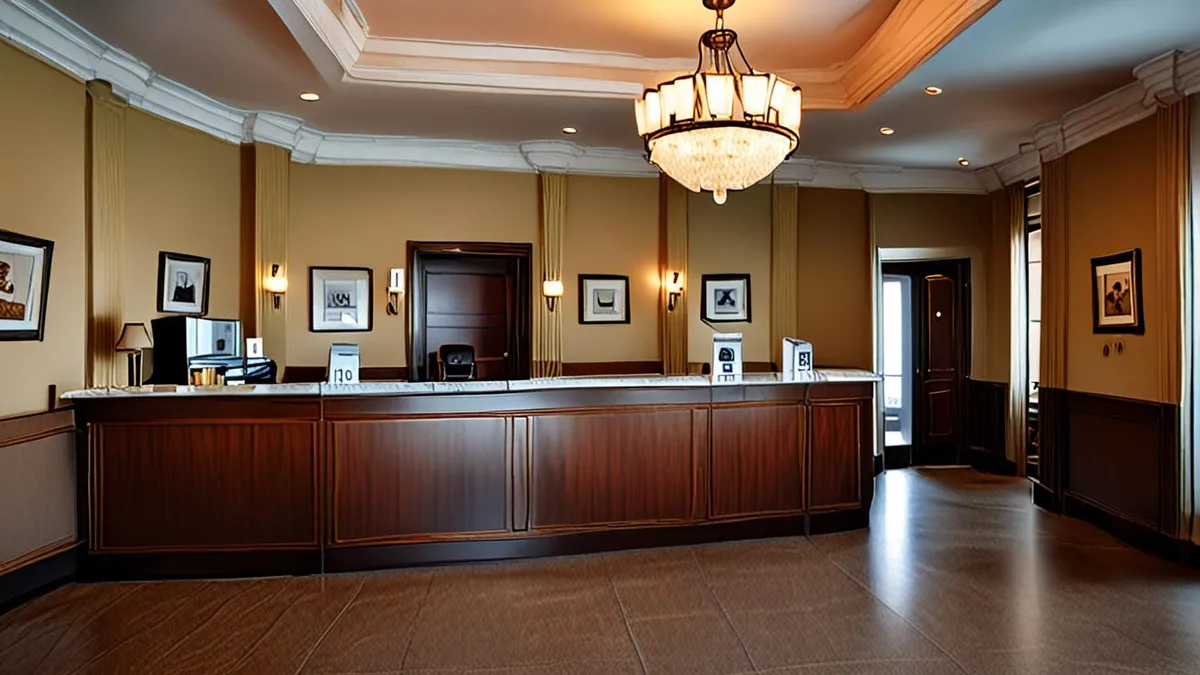
Every decent hotel also offers safe deposit boxes at the front desk, and they are an underused option. The reception safe sits behind staff, cameras and controlled access, which puts it a step above most in-room safes in terms of physical protection. The trade-off is convenience, so knowing when to use it matters.
How to hand items over properly
Do not simply slide your passport across the counter. Ask for a sealed envelope or a numbered box, and get a receipt listing every item you hand over. The receipt is your proof of what was deposited and its condition, and it protects both you and the hotel if a question ever arises. Count the cash in front of the clerk before the envelope is sealed, and keep the receipt somewhere separate from the items themselves.
What belongs in the box
Front desk safe deposit boxes are usually free or cost 0-5 euros per stay, which makes them a sensible home for passports, spare payment cards and any documents you will not touch until departure. The key word is “will not touch”: each withdrawal requires a trip to reception and a signature, sometimes with a wait if the box is held off-site or staffed by a manager. Items you need daily, like your main card and phone, belong with you or in the room safe instead. Reserve the deposit box for the things you can genuinely leave alone until checkout, and it becomes the most secure spot in the building for them.
What to Carry With You Instead
The safest place for many of your valuables is not in the room at all, but on your body. When you leave the hotel, carry only what you actually need for the day. A good rule of thumb is to bring no more cash than 1-2 days of planned spending, so even if a pickpocket succeeds, the loss stays manageable.
Splitting what you carry matters as much as limiting it. Keep some banknotes in one pocket and the rest in another, or use a money belt under your clothes. That way, a single theft never wipes out your entire daily budget, and you can still pay for dinner even if one stash disappears.
The same logic applies to cards and devices. When you head out, take your phone and one payment card in a crossbody bag worn in front of you, or in an inner jacket pocket that is hard to reach without you noticing. Leave spare cards and extra cash secured in the room safe or the front desk box instead.
One habit is easy to overlook: never leave valuables visible in your room, even briefly. During cleaning turns, the door can stand open for minutes at a time, and a closed laptop bag left on the bed still looks like a target. Put it in the safe, a locked suitcase, or out of sight in a wardrobe before you step out, even just to breakfast.
- Use a money belt correctly: wear it under your clothing, not as a visible waist pouch, and only access it in private places like your room or a restroom, never on the street.
- Decoy wallet trick: carry an old wallet with a small amount of local currency and expired cards in an easy-to-reach pocket, so a pickpocket grabs that instead of your real one.
- Photograph your belongings daily: a quick phone photo of your bag, camera, and cash before heading out gives you an accurate record of what you actually carried if something goes missing later.
- Be alert at hotel hotspots: lobbies, breakfast buffets, and elevators are common distraction spots, so keep your bag strap on your shoulder and zipped while you check out or queue for food.
Protecting Documents and Data
Losing your passport or phone abroad is stressful enough on its own, but losing the only copy of your documents turns a bad day into a trip-ending problem. Before you travel, set up backups so that a single theft or loss never leaves you empty-handed. It takes less than an hour at home and can save you days at an embassy later.
Start with digital copies. Scan or photograph your passport, travel insurance policy, visa pages, and booking confirmations, then store them in two separate places, such as a cloud storage account and a personal email you can access from any device. If one account is locked or unreachable, the other still works. This also helps when a hotel asks for your passport details at check-in and you would rather not hand over the original; you can read the numbers from a copy, and the front desk will confirm what they need during your stay, a process covered in more detail in our guide to hotel check-in and check-out times.
Your devices deserve the same preparation. A stolen phone with your banking apps logged in is far more dangerous than a stolen wallet, so take a few minutes before departure to secure everything.
- Enable remote lock and wipe: turn on the built-in find-and-wipe features for your phone and laptop, and test that you can trigger them from another device before you leave home.
- Add a screen lock with a delay: set your devices to lock automatically after a short period of inactivity, so a thief cannot browse your apps if the phone is snatched while unlocked.
- Log out of sensitive apps: sign out of banking and payment apps when you are not using them, or require a separate PIN for each one, so a locked phone alone is not enough to reach your money.
- Keep a printed photocopy of your passport: carry it separately from the original, for example in your luggage, as a backup for police checks or embassy visits when the real document is lost or stored in the safe.
These steps cost almost nothing and take effect immediately. Once your documents exist in two digital places, your devices can be wiped remotely, and you carry a paper backup, no single incident can take away your identity or your ability to get home.
If Something Goes Missing
Discovering that something is missing from your hotel room is unpleasant, but how you respond in the first hours makes a real difference. A calm, quick, and well-documented reaction gives you the best chance of recovery, and it also protects your position if you later need to file an insurance claim or dispute the matter with the hotel. Before you panic, retrace your steps mentally: check the safe, the drawers, your luggage pockets, and any jacket you wore earlier that day. Many items turn up within minutes once you search systematically rather than frantically.
- Report the loss to hotel management within 24 hours. Go to the front desk as soon as you notice something is gone and ask to speak with a manager, not just a receptionist. Request a written incident report describing the item, where you left it, and when you last saw it. Ask for a copy to take with you, since this document is what insurers and police will ask for first. Reporting promptly also matters because most insurers treat a quick notification as a sign of a genuine claim.
- Check with housekeeping and lost property before assuming theft. Items are often moved during cleaning, tucked into drawers, or placed in the hotel’s lost and found. Ask housekeeping directly and check whether the item turned up in another room or in a common area, such as the breakfast room or lobby. Many “thefts” end happily at the lost property desk, sometimes days later when cleaned rooms are inspected.
- File a police report if the item is valuable or insured. Most travel insurers require an official police report before they process a claim, so visit the nearest police station and describe the incident. Bring your passport copy, the hotel’s incident report, and any photos or receipts proving you owned the item. Ask for a copy of the report, or at least the reference number, before you leave.
Throughout the process, keep every document you receive and note down names, dates, and times of the people you speak with. A simple note on your phone works well, as long as you record each conversation while it is still fresh. If the item is never recovered, this paper trail is what turns a frustrating loss into a claim you can actually get paid on, and if the hotel was clearly at fault, it strengthens your case when discussing compensation with management. Staying organized and polite, even when frustrated, tends to get better results than anger ever will.
Key Takeaways for Storing Valuables
So, room safe or front desk? The answer is both, each for its own job. Use the in-room safe with your own code for the things you touch daily: your main payment card, the cash you plan to spend, and small electronics. Hand your passport and spare cards to the front desk box, where they sit behind reception and out of reach of anyone entering your room.
The rest comes down to habits. Carry only 1-2 days of cash and keep digital copies of your documents in two places. If anything does go missing, act within 24 hours and get written reports from the hotel and police. Do that, and the question of where to store valuables stops being a worry. If you have your own hotel safe trick or a story about a close call, share it in the comments below.