You’ve booked the trip, or at least the dream: a maldives resort overwater villa, with steps leading straight into a turquoise lagoon. But between the glossy photos and your actual arrival, a lot of questions remain. What does the villa really look like inside? How do you even get there, and what happens if your flight lands at night? And what does a full day on the water actually feel like, hour by hour?
This guide walks through the whole experience so there are fewer surprises and better decisions. We’ll cover typical villa layouts, what overwater villas realistically cost and when to book, the seaplane and speedboat journey from the airport, a day in the life on your deck, the snorkeling right off your steps, and how to decide between an overwater and a beach villa. By the end, you’ll know exactly what you’re signing up for.
What a Maldives Resort Overwater Villa Actually Looks Like
Forget the tiny huts from old postcards. Modern overwater villas in the Maldives are spacious, usually spanning 80-200 square meters including their sun decks. The classic layout is simple and effective: a large bedroom with a king bed facing the water, a bathroom that often opens onto the deck, and a wide private sun deck wrapping around the water side of the villa. From that deck, a short flight of steps drops directly into the lagoon, so you can slip in for a swim whenever you like.
The water itself becomes part of the design. Many villas have glass floor panels or a viewing section in the deck, so you can watch fish swim beneath your feet without getting wet. Others have a section of flooring that lifts open, turning your living room into a window on the reef.
Features you’ll commonly find
Outdoor showers are almost standard, often positioned on the deck with nothing but the lagoon in view. Depending on the resort and villa category, you may also get a private plunge pool on the deck, a hammock or net strung over the water, and a covered daybed area for escaping the midday sun. Higher categories add things like butler service, espresso machines, and larger pools, but even entry-level overwater villas tend to feel generously equipped.
One practical note: most villas are standalone, separated by enough space that you can’t easily see your neighbors. That sense of having your own stretch of lagoon is a big part of what you’re paying for.
Booking Timing and What Overwater Villas Cost
Let’s talk numbers, because overwater villas are a serious investment. In high season, expect roughly $800-2,000+ per night depending on the resort, villa size, and whether you have a plunge pool. The good news is that timing changes this dramatically: the May-October wet season often brings rates 30-50% cheaper, and while you’ll see some rain, you’ll also see quieter islands and the same lagoon views.
If you’re set on the November-April dry season, book early. Resorts with a limited number of overwater villas sell out the best positions first, so aim to reserve 6-12 months ahead for high-season stays. Last-minute deals exist, but they’re unpredictable and rarely apply to the most desirable villas.
The nightly rate is also only part of the story. What you actually pay depends heavily on the package you choose:
- Meal plans: Many resorts require or strongly push half-board or all-inclusive. On a private island there are no other restaurants, so bed-only rates can balloon once you add à la carte dinners, drinks, and the inevitable minibar snacks.
- Transfers: Seaplane and speedboat transfers are usually priced per person for a round trip and billed separately. For distant atolls this can add a meaningful amount per couple, so factor it in when comparing resorts.
- Bundled packages: Some resorts sell flight-plus-transfer-plus-meals bundles through tour operators, which can work out cheaper than booking each piece separately. Compare the full total, not the headline nightly rate.
A good rule: build a spreadsheet with the nightly rate, meal plan, transfers, and taxes for your exact dates. Two resorts with similar sticker prices can end up hundreds of dollars apart in real total cost.
Getting There: Seaplanes, Speedboats and Arrival Day
Your Maldives trip starts with a second journey most first-timers don’t expect. Nearly all resorts sit on private islands reached by seaplane or speedboat, and the transfer is booked as part of your stay. Which one you get depends mostly on distance from Malé’s airport.
Speedboat or seaplane?
Resorts closer to Malé are typically reached by speedboat, often within 30-60 minutes of leaving the terminal. It’s simple: you walk out of arrivals, a resort representative meets you, and a boat is usually waiting. Resorts on distant atolls rely on seaplanes, with flights typically lasting around 30-60 minutes. Seaplanes are an experience in themselves, flying low over rings of coral and giving you your first real sense of how scattered and blue this country is.
There’s one catch with seaplanes: they operate only in daylight, roughly 6am-5pm. If your international flight lands in the evening, you can’t fly on that day, so plan for a night at an airport hotel near Malé and a morning transfer. Check your resort’s transfer policy before booking flights, and build your arrival around it rather than hoping for an exception.
What arrival day feels like
Once you land on the resort’s own platform or jetty, the pace shifts immediately. Expect a warm welcome, often with cold towels and a drink, followed by a short briefing covering your villa, meal times, and activities. A staff member usually escorts you by buggy or boat to your villa, shows you how the lagoon steps and lights work, and leaves you to it. Most arrivals have time to unpack, take that first swim off the deck, and watch the sunset before dinner. It’s a soft landing, and by the time evening comes, the airport already feels like another trip.
A Day in the Life on the Water
Mornings at an overwater villa start earlier than you might expect, and most guests end up grateful for it. The sun rises over the lagoon around dawn, throwing soft pink light across the water and straight into your bedroom if you leave the curtains open. Many travelers make coffee and sit on the deck for an hour before doing anything else. Breakfast often arrives by room service or is taken at the main restaurant, and then comes the best part of the day: snorkeling straight off your villa steps. The lagoon around most villas is only 1-2 meters deep, so you can float comfortably and watch fish below without swimming far.
Afternoons: do something, or nothing
Afternoons are yours to shape. Many resorts build their spa pavilions over the water, so a massage comes with the sound of the lagoon beneath you. Paddleboarding is popular in the calm morning-to-midday water, and most resorts include boards or rent them by the hour. Just as valid an option: doing absolutely nothing. Stretch out on the sun deck, read, nap, and repeat. The deck is genuinely comfortable enough that many guests plan an entire afternoon around it.
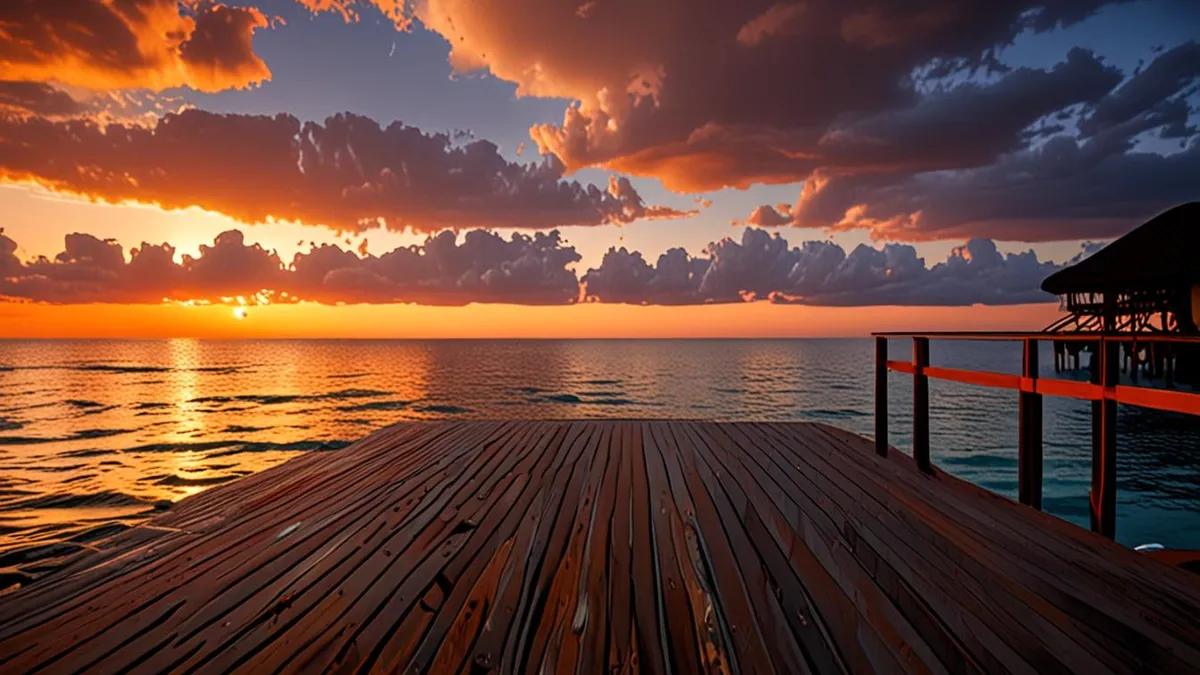
Evenings have their own quiet rhythm. The sun sets over the water in a long, slow show, and this is when you often spot reef sharks and rays gliding below your villa, lit by the last light. Dinner is usually unhurried, whether at the main restaurant or a table set on your deck. By nine or ten, most of the island has gone quiet, and the loudest sound is the water lapping under the floorboards.
Snorkeling and Marine Life Right From Your Deck
The biggest perk of an overwater villa is that the reef comes to you. Most resorts ring their villas around a house reef, meaning you can step off your deck into water that regularly hosts parrotfish, grazing turtles, and small juvenile blacktip reef sharks cruising the shallows. You don’t need a boat trip or an excursion to have a real snorkeling session; some of the best fish-watching happens ten meters from your bed.
Timing matters for visibility. The dry season from November to April brings the calmest seas and the clearest water, which makes this stretch the best window for snorkeling. In the wetter months, plankton and rain can soften visibility, though marine life never disappears entirely.
A few simple habits keep the reef healthy for everyone:
- Never stand on coral, even if it looks like rock; coral is a living animal, and a single footprint can kill a colony that took decades to grow.
- Enter and exit the lagoon from sandy patches or designated channels rather than over coral heads, to avoid kicking or brushing the reef.
- Keep a relaxed, horizontal body position while floating, since thrashing legs stir up sand that smothers nearby coral.
- Use reef-safe sunscreen, or apply it well before swimming so it absorbs into your skin rather than washing straight onto the reef.
- Look but never touch or chase marine life; turtles and sharks will pass close by on their own if you stay still.
If snorkeling is your main reason for choosing the Maldives, the resort you pick matters more than anything else, since house reef quality varies enormously between islands. For help narrowing it down, have a look at my favorite Maldives resorts for snorkeling, where I break down which islands have the liveliest reefs right off the villas.
Choosing Between Overwater and Beach Villas
Overwater villas are the iconic Maldives experience, and for good reason. You get total privacy, uninterrupted water views in every direction, and the luxury of stepping straight into the lagoon from your own deck. The trade-off is price: expect a steep premium over an equivalent beach villa on the same island, so it pays to compare the two before you commit.
When a beach villa is the smarter pick
A beach villa makes sense in three situations. First, if your budget is tighter, the savings can fund extra nights, better meal plans, or a longer trip. Second, families with small children often prefer beach villas, since toddlers can play on the sand and wade at the shore without the open-water access and deck edges that make overwater villas nerve-wracking with little ones. Third, if you’re traveling in the wet season from May to October, when rates often drop 30-50%, a beach villa becomes even better value, and you lose relatively little since you’ll spend less time in the water anyway.
Position matters more than most first-timers realize. Sunset-facing decks get the dramatic evening show and are the most requested, so they book up first and sometimes carry a premium. Sunrise-facing villas are calmer, often cheaper, and better if you’re an early riser. Also check the distance from the main island facilities: a villa at the far end of the jetty means maximum privacy but a longer walk (or a buggy ride) to restaurants and the dive center every time. If you’re weighing a completely different style of trip, my guide on choosing between a beach resort and a jungle retreat covers how to match your destination to what you actually want from a vacation.
Wrapping Up the Overwater Villa Experience
So what does a stay in a Maldives overwater villa actually look like? A spacious villa of 80-200 square meters with a sun deck and steps straight into the lagoon, transfers by seaplane or speedboat timed around daylight hours, and nightly rates of $800-2,000+ in high season. Day to day, the rhythm is simple: snorkeling off your deck in 1-2 meter depths, long afternoons on the water or on a hammock, and quiet evenings watching the sunset over the reef.
Two decisions shape most of the experience. Between November and April the seas are at their flattest and the water at its most transparent, while the May-October wet season often costs 30-50% less. And because high-season villas sell out early, booking 6-12 months ahead makes a real difference. Get those two things right and the rest tends to fall into place. If this helped you picture your own stay, leave a comment or share the article with someone planning the same trip.