You know you want a winter trip on the snow, but choosing between a ski lodge vs ski hotel is where the planning stalls. They sound similar, yet they suit very different groups, budgets and daily routines. One promises a small, communal base; the other offers services, facilities and convenience that can change the shape of your whole week.
This guide breaks the decision down step by step. We’ll define what actually separates the two, look at atmosphere and who each suits best, and compare location and slope access. Then we’ll cover food and board options, how prices typically stack up (ski hotels often charge 20-40% more per night than comparable lodges), and when to book for peak weeks. We’ll finish with where to compare real examples and a simple way to decide what fits your trip.
What Defines a Ski Lodge vs a Ski Hotel
The two formats start with size. A ski lodge is typically a small, owner-run property sleeping somewhere between 6 and 12 guests. Think of it as a large private chalet opened up to paying guests: you’ll usually find a shared living room with a fire, a dedicated boot room for drying kit, and often a single communal dinner table where everyone eats together in the evening. The owner or a small resident team is usually on site, and many lodges are run as much like a home as a business.
A ski hotel is a different animal entirely. These are larger operations with anywhere from 50 to 200 rooms, a staffed front desk, daily housekeeping and set meal times. Most have at least one restaurant on site, and the bigger properties add spas, pools, wellness areas and bars positioned right by the lifts so you can end the day with a drink in your boots. Everything is structured around scale, with systems in place to handle hundreds of guests at once.
How the Service Style Differs
This is where the experience really splits. At a lodge, your host often skis the mountain with guests during the day and cooks dinner at night, which means the people looking after you are also the people you share the week with. At a hotel, service runs on staff rosters: different faces at breakfast, reception and dinner, all working to fixed schedules. Neither is better, but they create very different rhythms for your week, and it’s worth knowing which rhythm you prefer before you book.
Atmosphere and Who Each Suits Best
The atmosphere difference between a lodge and a hotel is the part most travelers feel first, and it shapes the whole week. A lodge with its handful of guests works like a shared mountain house: you swap stories over dinner, compare runs at breakfast and end up skiing with people you met on day one. For couples and small groups who want a sociable but homey base, that’s hard to beat. The trade-off is intimacy of a different kind — you’ll share dinner, and often the living room, with strangers. If that sounds draining rather than charming, a hotel gives you the option of eating quietly as a pair or a family without small talk.
Hotels suit families with young children far better in practice. Set dinner times at a lodge rarely line up with a toddler’s routine, while a hotel lets you eat when you can, order room service after an early lift closing, and use kids’ clubs to buy yourself a few quiet hours. Solo skiers, on the other hand, often get the best value at lodges, because communal dinners make it effortless to find ski partners for the week — you’re rarely riding lifts alone unless you want to.
A few pointers on matching the format to your group:
- Couples celebrating something special: ask lodges whether they can arrange a private table on one evening; many hosts will accommodate it if you mention it at booking.
- Families with teens: older kids often prefer a hotel’s independence — pools, game rooms and the freedom to eat a late pizza instead of a set menu.
- Solo travelers on a budget: some lodges offer small single rooms or shared-bunk options that hotels rarely price competitively.
- Mixed groups of friends: a lodge booked exclusively by your group gives you the sociable dinner-table dynamic without sharing it with anyone else.
- Anyone who values privacy: if you unwind alone after a ski day, a hotel room with a door that closes on the world will suit you better than a shared lounge.
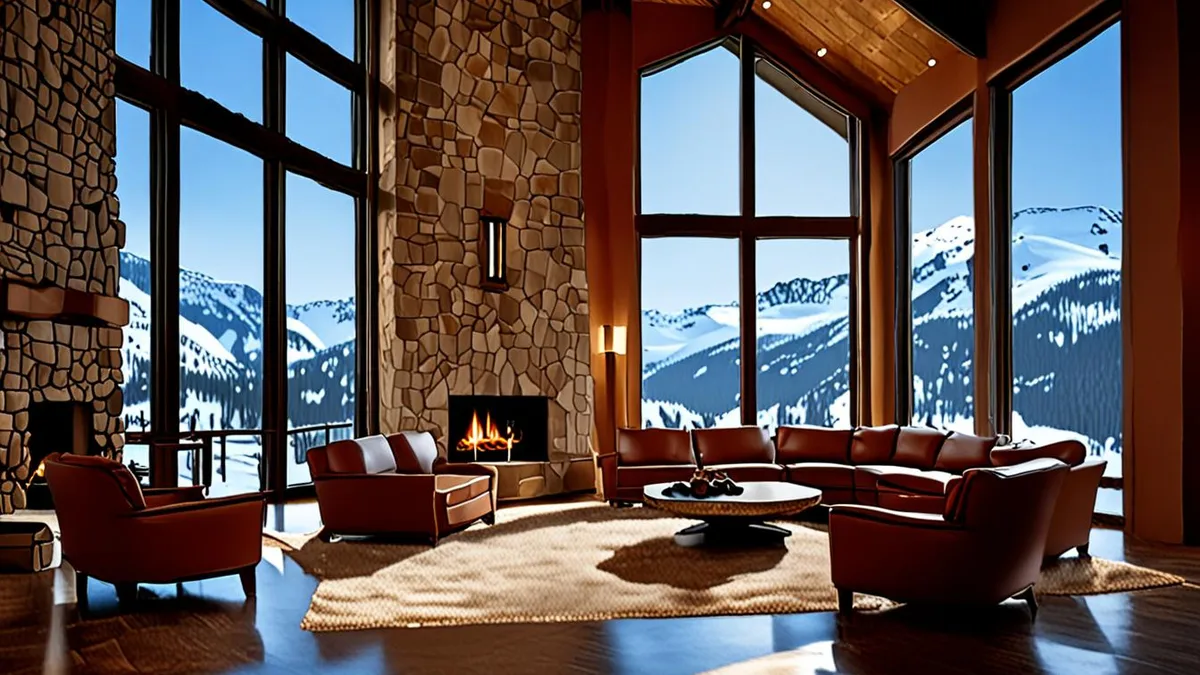
Location and Slope Access
Location is where the two formats genuinely differ. True ski-in/ski-out access — clicking into your skis steps from the door — is mostly a hotel feature, because large properties can afford the prime slopeside plots. Lodges and chalets frequently sit a 5-15 minute walk from the lifts or a short shuttle ride away, often in the quieter edges of a resort where the atmosphere is calmer and the views are better.
What slopeside access actually saves you
That convenience adds up fast. A slopeside hotel can save you 30-60 minutes a day in booting up, walking and shuttling — time you’d otherwise spend trudging in heavy boots before your first run. Across a 6-day lift pass, that’s several hours of skiing recovered, which matters if you’ve paid for a full week of mountain time. It’s also the reason slopeside properties of either type carry a 30-50% price premium over walk-or-shuttle options.
Lodge locations trade that convenience for quiet and village charm. You might trade a morning dash to the gondola for a snowy lane, a fire-lit lounge and no noise from the lifts below your window. For many travelers, that’s a fair swap — but be honest about how much daily commuting you’ll tolerate, especially with tired legs at 4 pm.
Before booking any lodge, check the exact distance to the nearest lift rather than trusting vague marketing phrases. “Close to the slopes” can mean anything from 200 meters to a shuttle bus ride. If you’re comparing options in a big resort, it helps to see how the formats sit side by side — the mix of slopeside hotels and quieter lodges in places like Whistler is a good example of how much location varies within a single mountain.
Food, Board Options and Daily Costs
Board options are one of the biggest practical differences between the two formats. Ski hotels usually offer three tiers: room-only, breakfast, or half-board. If you go half-board, expect it to typically add around 30-50 EUR per person per day on top of the room rate. In return, you get dinner and breakfast without having to hunt for a restaurant in ski boots every evening, which after a full day on the mountain is worth more than it sounds.
Lodges take a different approach. Most bundle dinner and breakfast into a single rate, cooked by the hosts or a resident chef, and served at one set time to everyone staying there. The trade-off is choice: menus are usually fixed for the week, and à la carte dining simply isn’t part of the deal. If you have dietary requirements, tell the lodge when you book rather than on arrival.
Self-catering is the third route. It’s rarely possible at lodges, since kitchens belong to the hosts, but it’s standard in apartment-style hotels. For stays of a week or more, cooking your own meals is typically the cheapest option of all. To see how these structures play out in real numbers, this budget breakdown of lodge stay costs walks through what you’re actually paying for.
- Room-only at a hotel gives you maximum flexibility to eat out in resort, but restaurant prices in ski villages can quickly outweigh what half-board would have cost.
- Lodge set menus often follow a weekly rotation, so a seven-night stay means you’ll see each dish once rather than choosing from a list every night.
- Apartment-style hotels usually include a kitchenette with basic cookware, meaning you only need to shop on arrival day and can skip paid breakfast entirely.
- Half-board timing is fixed at most hotels, commonly with an early and a late sitting, so check the dinner times if you like long afternoons on the slopes.
Price Comparison and When to Book
As a rule of thumb, ski hotels typically charge 20-40% more per night than comparable lodges in the same resort, and that’s before you add board upgrades or spa access. The premium buys you the front desk, the daily housekeeping and the slopeside location, so it’s not arbitrary, but it does mean two travelers with similar budgets can end up with very different weekly bills depending on which format they pick.
Location compounds the difference. Ski-in/ski-out properties, whether hotel or lodge, command a 30-50% price premium over walk-or-shuttle options. If your budget is tight, dropping the slopeside requirement is usually the single biggest saving available, and a lodge ten minutes’ walk from the lifts often costs little more than half the price of its slopeside neighbor.
Timing your booking
Peak weeks over Christmas, New Year and February half-term push both formats to their highest rates, and the best properties in either category sell out first. Book 4-6 months ahead for peak-season weeks if you want real choice in room type and dates. For quieter periods, 1-2 months can suffice for January or late March, when resorts are noticeably calmer and rates drop accordingly.
January and late March are the value windows for a reason: you get the same snow-covered mountains and often better last-minute deals, without the crowds of half-term. If your dates are flexible, shifting a trip by a single week can cut your accommodation cost significantly in either format.
Where to Compare Real Examples
The lodge-versus-hotel split plays out differently depending on where you go, and a few well-known destinations show the contrast nicely. Looking at real resorts is the fastest way to work out which format matches your trip.
North America: Whistler
Whistler shows the contrast clearly. The village base is lined with large slopeside hotels, many with direct lift access, spas and restaurants on the ground floor. Head to the quieter Upper Village and Blueberry areas and you’ll find smaller lodges with a more residential, homey feel. The trade is the same everywhere: convenience and facilities in the base, atmosphere and value a short distance away.
Europe: Switzerland and Andorra
Swiss alpine regions like Zermatt and Verbier mix both formats within a single resort. Lodge-style chalet stays are concentrated in the car-free village cores, where electric taxis and footpaths replace cars, while larger hotels cluster closer to the main lift stations. Zermatt’s traffic-free center in particular makes a chalet-base feel very practical, since everything is reachable on foot.
Andorra’s Pyrenees resorts lean the other way, toward hotel-style accommodation with short walk-to-lift distances and lower overall prices than the big Alpine names. If you’re considering the region, these Andorra lodges for Pyrenees snow trips give a good sense of what the smaller-property end of the market looks like there.
The Bottom Line for Your Trip
So which one wins? If your group is small, you enjoy meeting people over a shared dinner table and you’d rather pay one bundled price for meals and lodging, a ski lodge fits. If you’re traveling with young children, want slopeside convenience and flexible meal times, or value daily housekeeping and spa facilities, a ski hotel is the safer bet.
Match the format to your group size, your meal preferences and how much daily walking or shuttling to the lifts you’ll tolerate. And whichever way you lean, booking 4-6 months ahead gives you the best pick of either type during peak weeks. Still torn between a cozy lodge and a full-service hotel? Tell us about your trip in the comments or share this article with your ski crew.