Booking a Turkish boutique hotel for the first time can feel uncertain. You see charming photos of stone courtyards and rooftop terraces, but you are not sure how these small properties actually differ from a standard hotel, or what you should check before you reserve. Will the rooms be tiny? Is breakfast included? Is the building really historic, or just styled that way?
This guide walks you through exactly what to expect. We cover what makes a Turkish boutique hotel different from a chain, the regions where these stays shine brightest, and the rooms, facilities and signature spaces you are likely to find. You will also learn about the breakfast and service culture, realistic prices and the best times to book, plus practical tips for spotting a genuinely good property. By the end, you will know how to choose a boutique stay in Turkey with confidence, whether you are planning a city break in Istanbul, a cave room in Cappadocia or a courtyard hotel on the coast.
What Makes a Turkish Boutique Hotel Different
The first thing you notice at a Turkish boutique hotel is the scale. Most properties have only 10-40 rooms, which means the lobby feels more like a private home than a hotel. Many occupy restored Ottoman mansions in the cities or stone village houses in the countryside, so the building itself is part of the experience. Original wooden shutters, thick stone walls and creaky staircases are common, and they give the place a personality no purpose-built tower can copy.
Rooms with their own identity
Instead of the standardized layout you find in chain hotels, rooms here are individually decorated. One room might have a vaulted stone ceiling, another a hand-carved wooden headboard. Local textiles and kilims appear on floors and walls, and much of the furniture is handcrafted by regional makers. This means no two rooms are quite alike, so it pays to look at photos of the actual room category you are booking rather than assuming it matches the brochure.
The owner difference
Most boutique hotels in Turkey are run by an owner or a family, and that shows in the service. The person at breakfast may be the same person who chose the kilims in your room. They can tell you which restaurant in the neighborhood is genuinely good, which valley to walk at sunrise and which bus to avoid. That kind of personal, firsthand local advice is rare at large resorts, where staff follow scripts and rotate through departments. In a small family-run property, you are a guest of the household, not a room number.
Where Turkish Boutique Hotel Stays Work Best
Turkish boutique hotels are not spread evenly across the country. They cluster in a few regions where historic buildings or dramatic landscapes make small, characterful properties the natural format. Knowing where to look helps you match the style of stay to the trip you want, whether that means city sightseeing, balloon-filled valleys or a quiet stretch of coast.
- Istanbul’s converted townhouses: Neighborhoods like Karaköy, Sultanahmet and Beyoğlu concentrate restored townhouses turned into small hotels. Staying in Sultanahmet puts you within a short walk of the major historic sights, while Karaköy and Beyoğlu suit travelers who prefer a livelier, more local atmosphere with cafes and galleries on the doorstep. These areas are also well connected by tram and ferry, so you can explore much of the city without a car.
- Cappadocia’s cave hotels: In Göreme and Ürgüp, the signature boutique format is the cave hotel, where rooms are carved into the soft rock formations. These properties often have terraces positioned for the famous morning balloon views, and the thick rock keeps rooms naturally cool in summer and warm on cold nights. Expect winding corridors and uneven floors, part of the charm of sleeping inside the landscape itself.
- Coastal courtyard hotels: In Aegean and Mediterranean towns such as Alaçatı and Kaş, boutique hotels are typically built around inner courtyards shaded by bougainvillea. Alaçatı is known for its stone houses and windsurfing nearby, while Kaş works well as a base for diving and boat trips along the coast. Both towns reward evening strolls, when the day-trippers thin out and the old streets quiet down.
Each of these regions offers a different version of the boutique experience, from city townhouse to cave room to seaside courtyard. Think about what you want from your days, sightseeing, landscapes or coastline, and let that decide the region rather than the hotel brand. Once you have picked a region, compare a handful of properties on location and terrace or courtyard space, since those shared areas often matter as much as the room itself.
Rooms, Facilities and Signature Spaces
Rooms in Turkish boutique hotels are usually compact but full of character. Because the buildings are old, floor plans follow the original architecture rather than the logic of a modern hotel. You might get a curved stone wall, a low doorway or a window set deep in the masonry. What you trade in square meters, you gain in atmosphere, and most travelers find the trade worthwhile once they settle in.
One honest caveat: bathrooms
Historic buildings often mean smaller bathrooms than you would find in a chain hotel. Plumbing and layout constraints can make showers tight, and some older properties have quirks like stepped floors or oddly placed sinks. Check recent guest photos of the bathroom specifically, since this is the detail that most often surprises first-time boutique guests.
Where you will actually spend your time
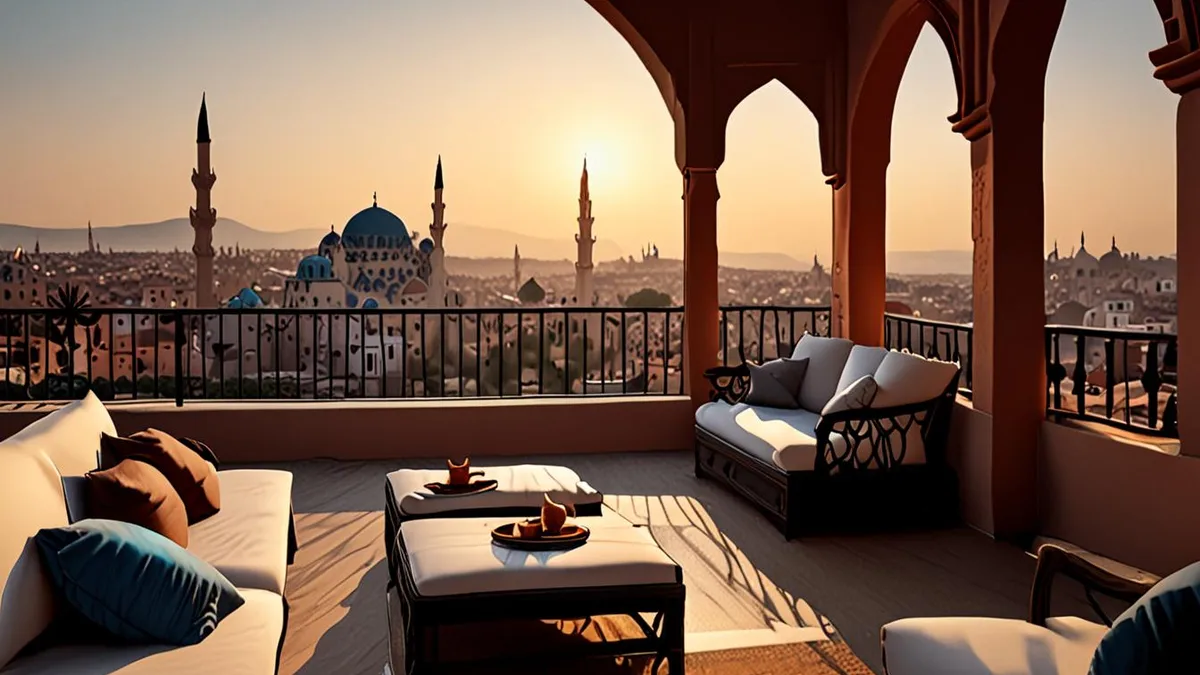
The standout facilities are usually the shared spaces rather than the rooms. Rooftop terraces are the classic signature space, often set up with loungers or low tables and, in Cappadocia, positioned for sunrise views. Inner courtyards serve as outdoor living rooms in coastal and city properties alike, shaded in summer and lit with lanterns in the evening. Some hotels also add hammam-inspired spa corners, with stone basins and warm lighting that echo the traditional Turkish bath.
Pools deserve a realistic expectation. At coastal boutique hotels, a small pool or plunge pool is common and often sits in the courtyard. In city-center properties, pools are rare because of space and heritage constraints, so if swimming matters to you, prioritize coastal towns or confirm the facilities before booking.
Breakfast and Service Culture
One of the best reasons to choose a Turkish boutique hotel arrives at the table every morning. A traditional Turkish breakfast is usually included in your rate, served between 8:00 and 10:30. Expect a spread of cheeses, olives, eggs, honey, fresh bread and endless glasses of tea, often served in the courtyard or on the terrace rather than in a formal dining hall.
Service in these small properties is personal but unhurried. With only a handful of rooms, the owner or manager often knows your name by the second day, and the same staff member who checks you in may pour your tea at breakfast. Don’t expect the brisk efficiency of a big chain; things happen at a gentler pace, which is part of the charm.
Staff who act as local fixers
Because owners live and breathe their neighborhood, staff are a goldmine for practical help. They routinely arrange airport transfers, book day tours, and point you toward restaurants where locals actually eat rather than tourist traps. Ask early in your stay, since popular tours and tables fill up fast in high season.
Keep an eye out for one more ritual: evening tea or sherbet served on the terrace as the sun goes down. It’s a small gesture, but it captures the hospitality that makes these hotels memorable, and it’s a lovely way to plan tomorrow’s sightseeing.
When to Book and What You Will Pay
Boutique doubles in Turkey typically run from 60 to 180 EUR per night, depending on the city, the season and how historic the building is. A simple stone room in a quiet village sits comfortably at the lower end of that range, while a terrace suite overlooking the Bosphorus in Istanbul or a cave suite with a private jacuzzi in Cappadocia sits at the top. The good news is that even the priciest boutique stays usually cost less than comparable rooms at large luxury chains, so you get more character for your money.
Timing makes a real difference to what you pay. The shoulder seasons of April-May and September-October deliver the best balance of mild weather and lower prices, while July and August on the coast and major holiday periods in Istanbul push rates toward the top of the range. If your dates are flexible, shifting a coastal trip by even a couple of weeks can noticeably change the quote you receive.
- Watch for local holiday spikes: dates around major Turkish public holidays and school breaks can push Istanbul and coastal rates up sharply even outside summer, so check a Turkish holiday calendar before locking in dates.
- Compare breakfast-included rates: since a traditional Turkish breakfast is usually part of the deal, compare total prices rather than headline room-only figures when checking booking platforms against the hotel’s own website.
- Ask about direct-booking perks: small family-run hotels often throw in an airport pickup, a room upgrade or a late checkout if you book directly, which matters more at this price level than at large chains.
Whatever season you choose, book 2-3 months ahead for Istanbul, Cappadocia and the coastal towns in high season. The best small properties have few rooms, so the most characterful ones sell out first, and last-minute bargains at genuinely good boutique hotels are rare.
How to Spot a Genuinely Good Turkish Boutique Hotel
Not every small hotel lives up to the boutique promise, so a little vetting goes a long way. Start with recent reviews, and pay attention to what guests say about staff and cleanliness rather than the overall score alone. Look for real guest photos of the rooms, since these show the true size, light and condition far better than polished marketing shots taken with a wide-angle lens.
Know what kind of building you’re booking
Confirm whether the property is a restored historic house or a modern small hotel, because your expectations should differ. A restored Ottoman mansion or stone village house comes with uneven floors, quirky layouts and plenty of atmosphere, but also compact bathrooms and occasional creaks. A modern small hotel usually offers more predictable comfort and standard plumbing, with less historic character. Neither is better; they’re just different experiences, and knowing which one you’ve booked avoids disappointment.
Finally, weigh the included extras, which add real value at this price range. A morning meal is typically thrown in at Turkish boutique properties, but some also offer airport pickup, free terrace access or complimentary tea service in the evening. When two hotels charge a similar rate, the one that bundles these extras often works out noticeably cheaper overall than a slightly lower headline price with everything charged separately. It also helps to message the hotel directly before booking: a quick email or WhatsApp note can confirm exactly what’s included, whether they can arrange an early check-in after a night flight, and how flexible they are with dates if your plans shift.
Wrapping Up Your Turkish Boutique Hotel Plan
A Turkish boutique hotel stay comes down to three things: small historic properties, personal service and an included Turkish breakfast. Most have only 10-40 rooms, often inside restored Ottoman mansions or stone village houses, so you get individually decorated rooms and owners who share local advice instead of a standardized chain experience. Before reserving, check recent guest reviews for staff and cleanliness, confirm whether the building is genuinely historic or a modern small hotel, and look for included extras that add value.
For the best value, aim for April-May or September-October, when the weather is mild and rates for boutique doubles typically run 60-180 EUR per night. Also match the property style to your itinerary: a converted townhouse in Istanbul works well for city sightseeing, while coastal towns are better suited to smaller hotels with outdoor space. Wherever you go, book 2-3 months ahead for high season. If this helped you plan your stay, leave a comment or share the article.