You’ve probably done it: booked a place, then spent the weeks before your trip wondering if you picked wrong. Will a hotel feel too impersonal for a countryside getaway? Will a homestay leave you stranded after a late flight? This back-and-forth over hotels vs homestays is one of the most common booking dilemmas travelers face, and the honest answer is that neither option wins across the board.
The right choice depends on your trip length, your destination and how much structure you want on arrival day. In this guide, we break down the core differences between the two stay types, show which trips suit hotels and which suit homestays, compare what you really pay for each, and cover booking timing and arrival logistics. We also look at where each option shines by destination, so by the end you can match the stay to the trip instead of second-guessing it.
Hotels vs Homestays: The Core Differences at a Glance
A hotel is, at its core, a standardized product. You book a room type, you know roughly what you’ll get, and there’s a 24-hour reception desk waiting whether you land at noon or at midnight. On-site facilities like restaurants, gyms and sometimes pools or spas mean you can handle almost everything under one roof without ever speaking to a local resident.
A homestay works differently. You’re staying in a host’s home, which usually means just 1-3 rooms available to guests, compared with the dozens or hundreds of rooms a hotel operates. Living spaces may be shared with the family or set aside for your private use, and the experience depends heavily on the individual host rather than a brand manual.
Where each one pulls ahead
Hotels win on privacy, flexibility and amenities. You get your own key, your own space, and services like daily cleaning and breakfast without negotiating anything with anyone.
Homestays win on character, local contact and price. You sleep in a building with personality, get to know someone who actually lives there, and often pay noticeably less for the privilege. Neither is better in the abstract; the question is which set of strengths matches the trip you’re actually taking.
When a Hotel Fits Your Travel Style Better
If your trip is a short city break of 1-3 nights, a hotel usually makes the most sense. On stays that short, logistics matter more than atmosphere: you might land late, drop your bag, sleep and check out the next morning. A 24-hour reception desk absorbs those awkward arrival times without a single message to a host, and quick check-out means you’re on your way to the station or airport in minutes.
Amenities are the other strong argument. After a day of walking museums and old towns, breakfast service in the lobby, reliable air conditioning and an elevator for your suitcase aren’t luxuries; they’re the difference between resting and working. Luggage storage after check-out is another quiet perk that hotels handle as a matter of course.
Families have their own reasons to lean toward hotels. Predictable, bookable room configurations remove the guesswork from planning, and you can compare family-friendly options across destinations in one guide to Europe hotels for family routes before committing.
- Rooms that sleep 4: Family rooms in hotels commonly sleep 4, so parents and two kids can share one booking instead of splitting across two small units.
- Connecting or adjacent rooms: Larger properties can often place family members near each other, something a host with 1-3 rooms simply can’t arrange.
- Cots and extra beds on request: Many hotels add a crib or rollaway bed to an existing room, which keeps a toddler in the same space as the adults.
When a Homestay Fits Your Travel Style Better
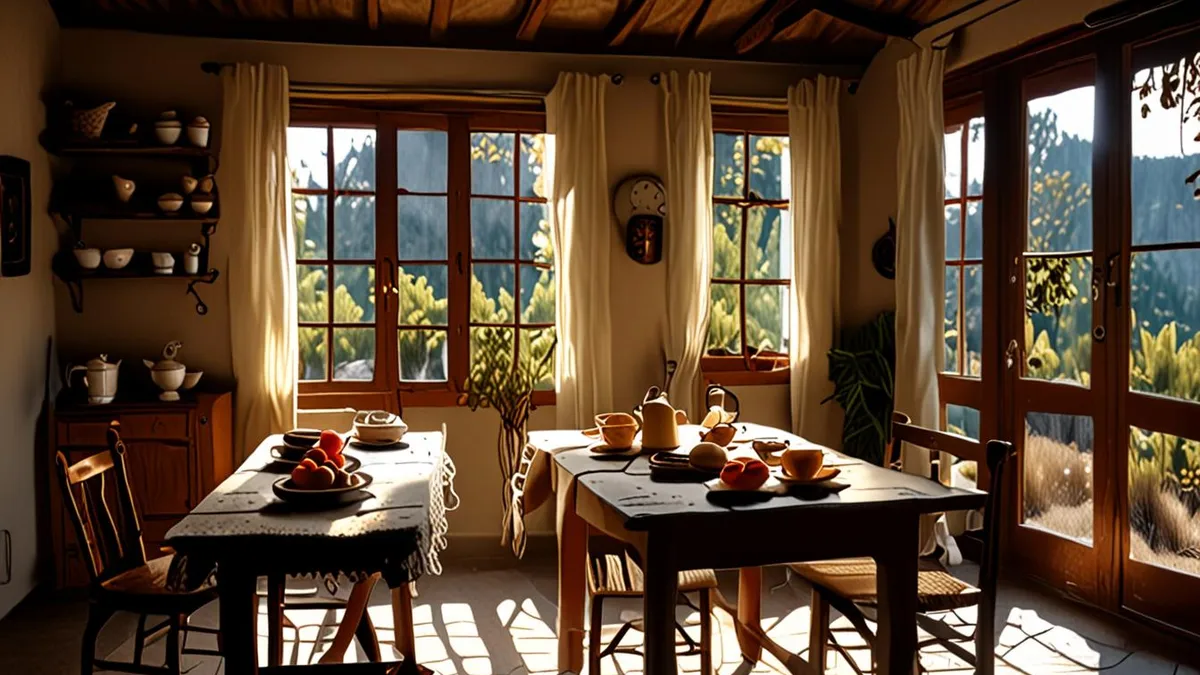
Once your stay stretches to 4 nights or more, the math and the mood both start favoring a homestay. A kitchen changes your daily budget: breakfast at home, a packed lunch for the trail or beach, and only one meal out. A living room, a real table and space to unpack also make a week-long stay feel like living somewhere rather than camping out of a suitcase.
The second reason is the host. Instead of a laminated concierge list of tourist restaurants, you get pointed to the bakery locals actually use, the market with the good cheese, the neighborhood worth an afternoon. Those tips come from someone who lives there, and they’re often the part of the trip you remember most.
Slow travel in the countryside, along the coast or in the mountains is where homestays truly dominate the accommodation mix. In many rural and coastal regions, small family-run stays are simply what’s available, and that’s a feature rather than a limitation.
- Self-catering flexibility: With a kitchen, you can shop at a local market and cook regional ingredients yourself, which doubles as a cultural experience.
- Regional route knowledge: Hosts can flag which hiking trail is muddy, which beach parking fills up first and which village festival is worth timing your stay around.
- Immersion in residential neighborhoods: Homestays are often located where people actually live, so mornings start with the village bakery or the sound of the coast rather than a hotel corridor.
- Coastal variety: If the seaside is your goal, browsing options for coastal homestays in North America shows how much character you can find steps from the water.
Price Comparison: What You Really Pay
The clearest price gap between hotels and homestays shows up in Europe. A homestay room typically runs 30-50% below a comparable 3-star city hotel, and that difference compounds fast on longer trips. For a week in a city like Lisbon or Krakow, the savings can easily cover several dinners out or a day trip.
But the sticker price is only part of the story. Hotels are built to add extras to your bill: paid parking, a minibar you raid at midnight, breakfast charged per person, and resort-style fees for pools, spas or activities you may barely use. Homestays skip most of these line items entirely, which is why the final bill often stays close to the rate you booked.
Where the savings can quietly disappear
Homestays trade money for services. There is usually no restaurant downstairs, no daily housekeeping and no concierge to arrange a taxi. If your host’s kitchen is off-limits or basic, you will be eating most meals out, and restaurant bills can erase the difference. The fix is simple: budget for self-catering or a mix of market shopping and casual meals, and the price advantage stays yours.
Booking Timing and Arrival Logistics
Timing matters more with homestays than with hotels, and the reason comes down to simple scale. A homestay usually has just 1-3 rooms, so a single family booking can wipe out half the availability in one go. A hotel with dozens or hundreds of rooms rarely feels that pinch from one reservation. That difference shapes how far ahead you should plan, how flexible your arrival can be, and how much you need to communicate with your host before you ever arrive. A few practical steps keep the logistics from working against you.
- For July-August travel, reserve homestays 4-8 weeks ahead. Small room counts sell out first, and the most characterful places go earliest.
- Match your booking lead time to your destination. A countryside homestay in a peak-demand region, such as rural Tuscany, rewards early planning far more than a big-city hotel does.
- Outside peak season, hotels can usually be booked 1-2 weeks ahead without major price jumps, so you can keep flexibility on city-based trips.
- Before paying for a homestay, confirm the arrival window with your host. Many set fixed check-in times and need to be home to greet you.
- If you land late or your train is delayed, favor a hotel: standard check-in is commonly 3 pm with a 24-hour reception desk that absorbs delays.
None of this makes homestays harder to book, it just makes them more scheduled. Hosts who run 1-3 rooms often juggle arrivals around work and family life, so they appreciate an accurate arrival time as much as you appreciate a smooth welcome. Put your expected check-in in writing when you book, and update your host if a flight or train slips by more than an hour or so. A short message usually solves what could otherwise turn into an awkward wait on a doorstep. Build your arrival time into the booking conversation from the start, and both stay types work smoothly. If your itinerary is still loose and late-night arrivals are likely, that alone can tip the balance toward a hotel for the first night or two, with a homestay once your schedule settles down.
Choosing by Destination: Where Each Stay Type Shines
Destination type often decides this question before budget does. Big capitals and business hubs favor hotels for a practical reason: transport links and late arrivals. Airport trains, metro lines and taxi ranks cluster around hotel districts, and a 24-hour reception means a midnight landing is a non-event. In cities like Paris, Berlin or Singapore, that reliability is hard to give up.
Where homestays take the lead
Rural, coastal and historic small towns tilt the other way. In these places, homestays often dominate the accommodation mix, and they come with something hotels cannot replicate: setting and host knowledge. A host in a fishing village or hill town can point you to the market stall, the quiet cove or the family-run trattoria that never makes a concierge list. The property itself, often an old farmhouse or townhouse, becomes part of the experience rather than just a base.
Timing stretches your options at both stay types. The shoulder months of May-June and September-October give the widest choice, with better availability and calmer prices whether you book a hotel room or a family’s spare room. If your dates are flexible, shifting the trip into these windows is the easiest upgrade you can make.
Wrapping Up: Matching the Stay to the Trip
So, which one actually fits the way you travel? The answer comes down to the shape of your trip. Hotels win on short stays, amenities and flexible arrival, especially when you land late or only have a night or two. Homestays win on price, space and local contact, which matters most on longer, slower trips where a kitchen and a host’s tips change your whole experience.
In practice, trip length, destination type and booking lead time decide the choice far more than brand loyalty. And if your dates are flexible, shoulder-season travel in May-June or September-October makes both options easier and cheaper to book. If you’re still torn, tell us about your next trip in the comments or share this article with a fellow traveler.