Booking a hotel for a family of four sounds simple until you start searching. Most standard double rooms sleep only two, so parents routinely pay for two rooms or squeeze into a setup that was never designed for four people, often without realizing the alternatives even exist.
This guide walks you through what actually matters when choosing a hotel for a family of four. We’ll explain why your usual search criteria need adjusting, which room types genuinely fit four people, how much space and which amenities make a real difference, and how to weigh location, child policies and hidden fees. You’ll also find practical advice on when and how to book a family room, plus a short checklist to use before you pay. The goal is simple: help you find a room where everyone sleeps comfortably, at a price that makes sense.
Why a Hotel for a Family of Four Needs Different Criteria
The single biggest mistake families make is searching with the same filters a couple would use. A standard double room typically maxes out at two guests, so if you enter four people into the search from the start, you’ll immediately see the room categories that can legally accommodate your family: family rooms, suites or connecting rooms. Start there, not with a double you plan to squeeze into.
Occupancy limits are not a suggestion. Hotels enforce them at check-in, and front desk staff can see exactly how many guests the reservation covers. If you booked a double for two and show up with two children, you risk being refused a room entirely or charged extra on the spot, at rates the hotel sets, not you. With two tired kids in the lobby, that’s a negotiation you won’t enjoy.
Don’t trust the “family-friendly” filter
Family-friendly filtering on booking sites is unreliable. Some hotels tag themselves as family-friendly based on little more than a cot in storage, while genuinely suitable rooms get mislabeled. The only dependable source is the room description itself. Before booking, open the listing and verify two things: the bed configuration (how many beds, what sizes) and the maximum occupancy stated for that specific room. If either is unclear, email the hotel directly and get the answer in writing.
Room Types That Actually Fit Four People
Once you’ve filtered for rooms that accept four, you’ll usually find a handful of categories, each with trade-offs. The right choice depends mostly on your children’s ages and how much privacy everyone needs.
Family rooms with two double beds work well for parents with younger kids, since small children are usually happy sharing one bed or sleeping beside you. If your kids are teenagers, look for a double bed plus two singles instead. Teens value having their own bed far more than parents expect, and it prevents the nightly argument over who sleeps where.
Suites are the middle option: the sofa bed in the living area creates a separate sleeping zone, so the kids go to bed while adults stay up. But check the sofa bed’s real width. Many measure only 120-140 cm, which is tight for two children and genuinely too narrow for two teens.
- Connecting rooms give you the most space and, crucially, a second bathroom, which halves the morning queue. The trade-off is price: two rooms typically cost 60-100% more than one standard double.
- Family rooms with bunk beds are common in chain hotels and kids usually love them, but check the upper bunk’s weight limit if your children are older or heavier.
- Suites with a partition or sliding door offer better sound separation than an open-plan layout, worth asking about if one child goes to bed much earlier than the other.
Bed sizes and category names vary a lot between countries and hotel chains, so it pays to understand the terminology before you book. Our practical guide to choosing a hotel room type walks through each category and bed size in detail.
How Much Space and Which Amenities Matter
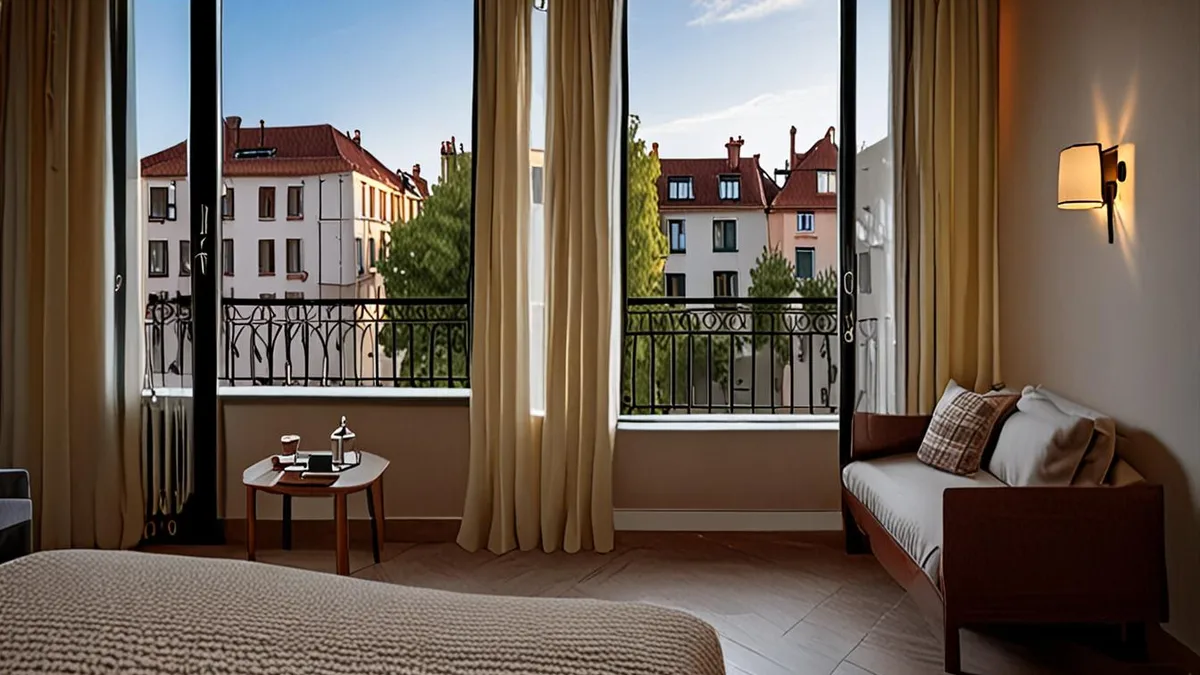
Space matters more with four people than most first-time family travelers expect. Aim for at least 20-25 m² of room space. Anything smaller can feel fine on night one, but after two or three nights with four people, four suitcases and a stroller, it starts to feel genuinely cramped. You’ll be tripping over bags in the dark and stepping around sleeping children instead of relaxing.
Amenities matter too, but not the ones hotels advertise most. For families, a few practical features make a bigger difference than any lobby or bar. The three that top most parents’ lists:
- A fridge or minibar you can actually use keeps milk, yogurt and snacks cold for breakfast and bedtime, saving you daily shop runs and restaurant stops.
- Blackout curtains protect early bedtimes, especially in summer when the sun sets late and kids wake at dawn without them.
- A bathtub rather than just a shower makes bathing small children far easier, and doubles as a way to entertain a toddler in the evening.
Beyond the room itself, think about the length of your stay. For a week-long trip, a pool, a kids’ menu in the restaurant and self-service laundry access rank highest, because they solve daily problems rather than offering one-off fun. A kettle matters more than a gym for most families: morning bottles, instant oatmeal and tea breaks come up every single day. Check the room description and hotel photos for these details before booking, and email the hotel if anything is unclear.
Location: Walking Distance, Transport and Safety
With kids in tow, location stops being about sightseeing convenience and becomes about daily logistics. A hotel within a 10-15 minute walk of a metro or train station keeps arrivals, day trips and airport transfers manageable, because tired children and four people’s luggage turn every extra minute into a negotiation.
Neighborhood matters just as much as distance. Quiet residential areas close to the center usually beat nightlife districts: bars and clubs run their noise well past a child’s bedtime, and family rooms are scarcer in those areas anyway. A slightly longer commute to the sights is usually a fair trade for quiet evenings and easier parking.
Walk the route, not just the map
Before booking, check the actual path from the station to the hotel, not just the distance on the map. A 700-meter walk can feel very different depending on what’s in between:
- Long staircases or steep hills, which are miserable with strollers and suitcases
- Wide roads with few crossings, which slow you down and add stress with small children
- Unlit or deserted stretches, worth avoiding if you’ll arrive after dark
Use the street view on a map app to preview the route, or read recent family reviews that mention the walk from the station. For more on picking a base near major rail hubs, see our guide on how to choose a hotel near a train station in Europe.
Budgeting: Rates, Child Policies and Hidden Fees
Family rooms are priced at a premium, typically 30-60% more than a standard double in the same hotel. Before accepting that, compare it against the cost of two connecting rooms: in some hotels the two-room option is barely more expensive, and the extra bathroom alone can be worth it. Run both scenarios for your exact dates, since the gap varies widely by city and season.
Child policies are where the real differences hide. Children under 6 often stay free when sharing existing beds, while ages 6-12 usually pay 20-50% of the adult rate. That means a family with an 8- and a 10-year-old can pay noticeably more than the advertised room rate, so read the child policy line by line before booking.
Then there are the extras that never show up in the headline price. Resort fees, city parking and breakfast charges can quietly reshape your budget, and we break down the common ones in our guide to hotel hidden fees and extra costs. A few to check before you pay:
- Resort or facility fees, which are often charged per person per night, so a family of four pays them four times over
- Parking, which in city-center hotels often runs 15-30 euros per day, sometimes more than a full day of meals
- Cot or extra-bed charges, which some hotels bill nightly even when the child otherwise stays free
- City or tourist taxes, usually collected at the front desk and easy to forget when comparing rates
On the flip side, breakfast included is often the best-value add-on for families. In Western Europe, it can save a family of four roughly 30-60 euros per day compared with buying coffee, bread and fruit at a café, which frequently offsets a higher room rate that includes it.
When and How to Book a Family Room
Family rooms are a small slice of any hotel’s inventory, and they’re the first category to sell out when schools break up. Booking late for summer travel usually leaves you choosing between overpriced leftovers and rooms that don’t actually sleep four. A little method goes a long way, and the routine below takes less than half an hour from first search to final confirmation. It won’t guarantee a perfect room, but it removes most of the surprises that catch families out at the front desk.
- Search 2-4 months ahead for summer dates. That window gives you the widest choice of genuine family rooms and suites, before the remaining inventory shrinks to a handful of rooms at peak prices. Family inventory is far smaller than the supply of standard doubles, so the good options go first.
- Book a rate with free cancellation. It costs slightly more per night, but children’s illnesses and changed plans happen far more often than couples’ schedule shifts, and a flexible rate turns a potential loss into a simple date change. Read the cancellation deadline carefully and put it in your calendar.
- Email the hotel right after booking. Confirm the exact bed configuration, whether a cot is available for a toddler, and whether your children count toward the room’s maximum occupancy. Get the reply in writing so you have something to show at check-in if there’s any disagreement.
- Reconfirm a week before arrival. A short follow-up message catches any room reassignments or system errors while there’s still time to fix them. Ask again about the cot or extra bedding if you need it, since supplies are limited and allocated first come, first served.
This routine takes maybe twenty minutes in total, and it removes most of the check-in surprises that families run into. The hotels that answer your email clearly and promptly are also a decent signal of how well they handle families in general. If a property ignores two polite messages before you’ve even paid, treat that as useful information and keep looking.
The Family-of-Four Checklist at a Glance
Most standard hotel rooms sleep only two, which is why so many families of four end up paying for two rooms or squeezing into a room meant for a couple. The fix is simple: search for family rooms or suites with verified occupancy for four from the very first click, and never assume a standard double will work out at check-in.
Before you pay, confirm the basics that make or break a week away: enough floor space for four people and luggage, a bed configuration that suits your kids’ ages, a fridge for snacks and milk, and blackout curtains for early bedtimes. Stay within a short walk of public transport, read child policies and hidden fees line by line, and book well ahead for summer travel, when family rooms sell out first. If this helped you plan your next trip, leave a comment or share the article with another traveling family.