You booked a glamping stay, pictured yourself arriving to a cozy bed and a stocked kitchen, and then a nagging question hits: what exactly do you need to bring? Bedding, towels, cooking gear, even toilet paper — every site handles these differently, and packing wrong can mean lugging a duvet you didn’t need or shivering through dinner with nothing to cook in.
This guide walks you through what a typical glamping stay includes, from linen and made-up beds to kitchen equipment, bathrooms and heating. We’ll cover the standard checklist you can usually expect, the details worth confirming before you book, what commonly costs extra, and the exact questions to ask your host. By the end, you’ll know how to pack light and still have everything covered.
What Is Included in a Glamping Stay: The Standard Checklist
Most established glamping sites work on a hotel-like model for the basics: you arrive, the beds are made, and the lights switch on. That said, the exact package depends on the operator, the unit type and the season, so it helps to know what counts as standard and what doesn’t. A safari tent in July and a heated dome in February can sit at very different points on the comfort scale, even on the same site.
The biggest trap is assuming everything holiday-rental-like is provided. Glamping sits somewhere between a hotel and camping, and each site draws that line in a different place. Some hosts include almost everything, while others treat towels, firewood and even soap as paid extras. Rather than guessing, use the checklist below as your baseline for what typically comes as standard — and where the gaps usually appear:
- Bed linen and made-up beds: at the large majority of established sites, beds are dressed and ready when you walk in, so you can leave the sleeping bags at home. This is the closest thing to a universal standard in European glamping.
- Towels: the most common exclusion of all — many sites either skip them entirely or charge a hire fee, so this is the one item to confirm before you pack. If you forget to ask, bring a quick-drying travel towel as a backup.
- Heating and cooling: a wood burner, electric heater or fan may be provided, but which one (and whether it’s there at all) varies by unit type and season — a summer safari tent and a winter dome rarely offer the same setup. Off-grid sites in particular may rely on wood stoves rather than electric heating.
- Lighting, power sockets and toiletries: interior lights, enough sockets for phone charging and usually small basics like soap come as standard, even at more rustic sites. At solar-powered sites, lighting is often low-energy and sockets may be limited, so a small power bank is a sensible addition to your bag.
If your chosen stay ticks all four boxes, you’re packed for a normal hotel trip. If any of them are missing, the next sections show you exactly what to ask about — from linen charges to kitchen kits and bathroom arrangements — so nothing catches you out on arrival.
Linen, Towels and Bedding: What to Confirm Before You Book
Linen sounds like the simplest part of any stay, yet it’s where glamping sites vary the most. At most established operators, beds arrive made up with sheets, duvets and pillows — but smaller or more rustic sites sometimes leave a linen pack for you to make the bed yourself. Ask directly when booking: “Are the beds made up on arrival?” It’s a one-line question that changes what you pack and how smoothly your first evening goes.
Towels and extra linen charges
Towels are the classic hidden extra. Many sites exclude them or charge a hire fee, often in the range of 5-15 per person, and tea towels for the kitchen are frequently left out too. If the listing doesn’t mention them, assume they’re not included and confirm in writing.
Also think about the length of your trip. For stays longer than 3-4 nights, ask whether linen and towels are changed mid-stay, or whether you’ll need to request fresh sets. Some sites include a change automatically; others treat it as an on-request service.
Staying warm in the off-season
If you’re booking outside summer, duvet weight matters. A lightweight summer duvet plus one thin blanket can feel thin on a cold night in a tent or yurt, so ask whether extra blankets are available and what the duvet tog or weight is. For more detail on cold-weather trips, our guide on how to stay warm and comfortable when glamping in winter covers heating, bedding and packing in depth.
Kitchen Equipment: From Full Kitchens to Fire Pits
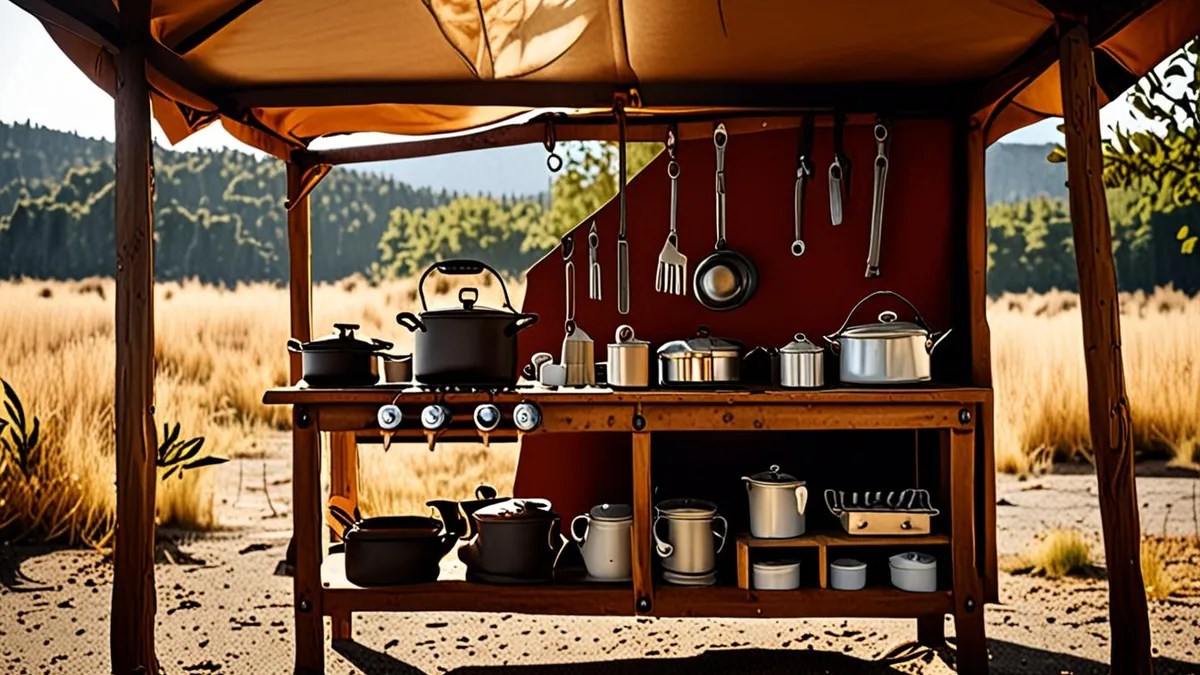
Kitchen setups are the widest spectrum in glamping. At one end, a fully equipped unit works like a small holiday apartment; at the other, you get a fire pit and a grill grate. Knowing which end your booking sits on determines half your packing list.
In units described as having a private kitchen, you can normally expect a hob (usually 2-4 burners), a fridge, and a basic kit of pots, pans, plates, cutlery and utensils sized for the stated guest count. If a site sleeps six, the kit should serve six — but it’s reasonable to ask whether that includes serving spoons, a sharp knife and a cutting board, which are the items most often missing.
Shared kitchens, BBQs and fire pits
Safari tents and yurts frequently skip the private kitchen and instead offer a shared kitchen block or a BBQ on your terrace. A shared block means carrying your food a short walk and timing your cooking around other guests; a BBQ-only setup means everything gets grilled or cooked in foil. Neither is a problem if you know in advance — it’s only a problem if you arrive with a lasagna plan and no oven.
For a full breakdown of the different cooking models sites use, see our guide to how glamping sites handle food and cooking options.
Finally, confirm the small stuff: is there a kettle or coffee gear, a cool box if the fridge is shared or absent, and is drinking water provided on tap or only in bottles? And ask whether firewood or charcoal for the BBQ and fire pit is included or charged per basket — it’s a common per-item fee, and running out mid-evening is a frustrating way to learn about it.
Bathrooms and Showers: Private En-Suite or Shared Facilities
The bathroom setup is often the biggest difference between glamping styles, and it is worth checking before you book rather than on arrival. Domes, treehouses and well-appointed cabins usually come with a private en-suite bathroom, while traditional canvas tents at many sites rely on a shared facilities block with toilets, sinks and showers. Neither option is better by definition, but knowing which one you have booked shapes what you pack and what you expect each morning.
Hot water is the next thing to confirm, especially at off-grid sites that run on solar power or limited water tanks. In practice this often means showers are plentiful on sunny days but shorter or slower to warm up after a stretch of cloud. A quick question to the host about how hot water is heated will tell you more than any listing photo.
Shared facilities: distance matters
If your unit shares a facilities block, ask how far it is from your tent and whether the path is lit at night. A two-minute walk feels very different in steady rain at midnight than it does in a sunny listing photo. Some sites provide headlamps or solar path lights, others leave you to bring your own torch.
Finally, confirm what is stocked in the bathroom itself. Soap, shampoo and toilet paper are provided at most established sites, but the quantity varies, and some hosts only supply a starter amount. If you have read our guide to what to expect at a glamping site’s bathrooms and kitchens, you will know that packing a small toiletries kit covers almost every gap. It weighs nothing and saves you a trip to the nearest shop.
What Usually Costs Extra at a Glamping Site
Most glamping sites are upfront about what is included, but the extras are where budgets quietly creep up. The pattern is fairly consistent across Europe: the essentials like linen and basic kitchen equipment are usually covered, while consumables and conveniences come at a price. Towel hire, firewood and BBQ charcoal commonly add around 5-15 per item or per basket, which sounds small until you multiply it across a week-long family stay.
Cleaning fees deserve special attention because they surprise people most often. Final cleaning is usually included in the rate, but some sites charge a fee of roughly 30-80 even when most amenities are part of the deal. This is usually stated in the small print of the listing, so read it before you book rather than after.
- Hot tubs: at sites that offer them, wood-fired hot tubs are typically a paid add-on, and some hosts charge per session or per day rather than a flat fee for the stay.
- Breakfast baskets: many hosts deliver a basket of local eggs, bread and jam to your tent, but this is almost always ordered and paid separately, sometimes with a cutoff for next-day orders.
- Activities: kayak hire, guided walks, pizza nights and farm tours are run as optional extras at many sites, and availability can be limited outside peak months.
- Pet fees: dog-friendly sites commonly charge a per-stay or per-night pet fee, and most have rules on size, where pets may sleep and whether they are allowed on furniture, so check the limits before you promise the kids.
None of these extras are hidden charges in the sneaky sense. They are simply services the host offers on top of the base stay. Add up the ones you actually want, and your real nightly cost becomes clear.
How to Verify Inclusions: Questions to Ask When Booking
A five-minute email can save you from every unpleasant surprise on this list. Hosts answer inclusion questions all the time, and most would rather clarify things before arrival than deal with a disappointed guest at check-in. The trick is asking the right questions at the right time, and then keeping the answers where you can actually use them. A written reply is worth far more than a phone call you half-remember, because it gives you something concrete to refer back to if anything falls short once you arrive.
- Email 2-3 months before peak-season trips. For stays in June through August, booking early leaves you a comfortable window to get a written inclusions list from the host. Ask specifically about linen, towels, kitchen equipment, heating and firewood, and keep the reply saved on your phone. If you are traveling with a group, forward the answer to everyone so nobody packs the wrong things.
- Cross-check the listing against your packing list. Go through the amenities section line by line and mark what it confirms. Everything not mentioned is a true gap, and only those items go in the car. This keeps you from hauling a duvet to a site that provides one, or leaving behind a headlamp you will wish you had.
- Ask about check-in times. Check-in is typically 15:00-16:00 and check-out 10:00-11:00, which leaves little slack for sorting linen or kitchen questions on arrival. Knowing your arrival window in advance lets you raise anything unresolved with the host while they are still around to fix it.
- For off-grid sites, confirm power, water and heating explicitly. Ask how electricity is generated, whether there is drinking water on site, and how the unit is heated in cooler months. Vague answers are not a red flag, but they are a reason to pack a headlamp and a power bank rather than assume everything will simply work.
Send one clear message covering all four points rather than a string of separate questions. Hosts are far more likely to reply thoroughly to a single, organized email, and you will arrive knowing exactly what your stay includes and what to bring yourself. If a host never replies at all, treat that as useful information too, and pack for the most basic setup rather than the most generous one.
The Bottom Line on What Your Glamping Stay Covers
So, what does a glamping stay actually include? Bed linen and made-up beds are near-standard at established sites, so there is usually no need to haul your own bedding across the country. Towels, firewood and cleaning are the most common extras, and kitchen setups range from full private kitchens to shared blocks and a simple fire pit.
The good news is that almost all of this uncertainty disappears with one short pre-booking email to the host. Ask for a written inclusions list, compare it with your packing list, and you will know exactly what to bring. If this guide helped you sort out your own trip, leave a comment or share it with a fellow traveler.