You’ve scrolled through listings for a weekend away, spotted a round canvas structure called a yurt, and wondered what on earth is actually inside. Is it a tent? A cabin? Do you sleep on the floor, or is there a real bed? If you’ve hesitated to book because you can’t picture the space, you’re not alone. Yurt stays are one of the most popular forms of glamping, yet they’re also one of the most misunderstood.
This guide walks you through everything you need to know before booking. We’ll cover what a yurt actually is and where the design comes from, what you’ll find inside a modern glamping yurt, how warm and weatherproof they really are, typical prices and booking timing, who a yurt suits best, and how to pack for your first night. By the end, you’ll know exactly whether a yurt stay fits your trip and how to make it a comfortable one.
What Is a Yurt? Origins and Modern Glamping Design
Long before yurts appeared on glamping websites, they were homes. Nomadic peoples across Central Asia, from Mongolia to Kazakhstan, have used circular felt tents for thousands of years. These traditional yurts were engineered for a mobile life on the steppe: lattice walls that folded flat for transport, a central roof ring that let smoke escape and light in, and thick felt covers that held warmth through brutal winters. The design proved itself over centuries of hard use.
How modern glamping yurts differ
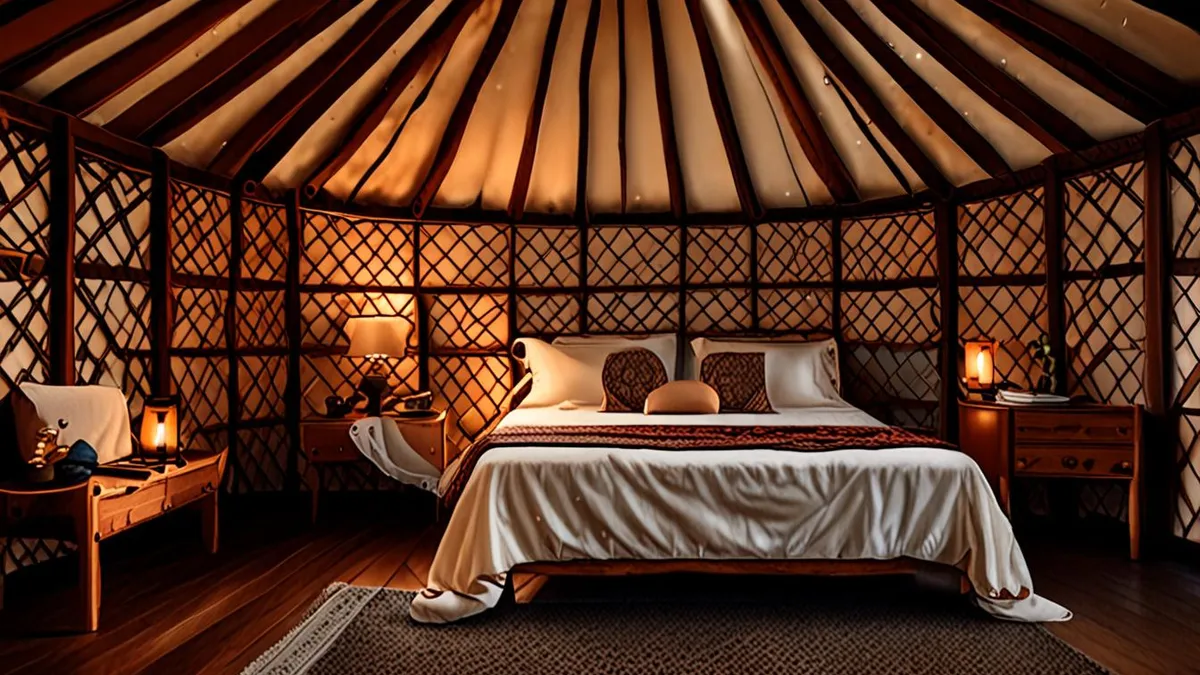
Today’s glamping yurts borrow the shape but sit on a fixed wooden platform, usually raised slightly off the ground. Walls are typically a lattice frame or solid wooden panels, covered with weatherproof canvas instead of felt. Most have a clear roof ring or a dome window at the top, which floods the space with natural light and lets you watch the sky from bed. A standard glamping yurt is roughly 5 to 7 meters (16 to 23 feet) in diameter, which gives you far more usable floor space than you’d expect from the outside.
The round shape changes how the space feels in a way that’s hard to appreciate until you’re inside it. There are no corners, so nothing feels wasted or cramped, and the circular layout naturally draws everyone toward the center. Light spreads evenly from the roof ring, and the whole room feels open even when it’s full of furniture and people. It’s a small difference on paper, but it’s the reason many guests say a yurt feels cozier than a rectangular cabin of the same size.
What’s Inside a Glamping Yurt
The biggest surprise for first-time yurt guests is usually the beds. This is not camping with a sleeping bag on the ground. Most glamping yurts have real beds with proper mattresses, typically one double plus single beds or bunks, sleeping anywhere from 2 to 6 guests depending on the layout. You bring yourself and your clothes; the sleeping arrangements are already sorted.
Beyond the beds, most yurts are furnished simply but comfortably. Expect a small table with chairs, some storage space for clothes and bags, and lighting, often electric if the site has power or lanterns and solar lights if it doesn’t. Many yurts also include a wood stove or heater, which matters enormously for comfort in cooler months.
What you usually won’t find inside is a private bathroom or a full kitchen. At most sites, these facilities are shared and located a short walk away, which is standard practice across most glamping accommodations. If you want a clear picture of how shared bathrooms, camp kitchens and other communal facilities typically work, it’s worth reading our guide to what to expect at a glamping site, from bathrooms to kitchens before you book.
That said, the top end of the market has changed things considerably. Luxe yurts increasingly come with features you’d expect from a small cabin or hotel room:
- En-suite bathrooms with a proper toilet, sink and often a shower, so you never have to walk to a shared block at night
- Kitchenettes with a small fridge, sink, kettle and basic cookware for simple meals and morning coffee
- Private wooden decks with outdoor seating, sometimes with a hot tub or fire pit for evening use
- Upgraded touches like quality linens, blackout curtains, coffee makers and heated floors in colder regions
These extras push the price up noticeably, so check the listing carefully to see whether you’re booking a standard yurt with shared facilities or a self-contained one. The difference in comfort, and in cost, can be significant.
Warmth, Weather and Comfort in a Yurt
Yurts handle cold far better than most people expect, and a big part of that comes down to heating. Many glamping yurts include a wood stove set on a heat-protected base, with a chimney pipe running up through the roof. Because the space is round and relatively compact, heat from the stove circulates evenly with no cold corners to trap chill. Yurts with wood stoves stay comfortable in temperatures below freezing, which is exactly why they’ve become so popular for winter glamping. Some sites supplement the stove with electric or propane heaters, so ask what’s available if you’d rather not manage a fire yourself. If a cold-weather trip is on your list, it helps to read up on how to stay warm and comfortable while glamping in winter before you pack.
Summer heat and ventilation
Warm weather presents a different challenge. Canvas heats up quickly in direct sun, and by mid-afternoon a closed yurt can feel noticeably warmer than the shade outside. This is where the roof ring earns its keep: it vents rising hot air out of the top of the yurt, and combined with open windows or door panels it creates a steady airflow through the space. Sites in hot climates often position yurts under trees or add shade structures for the same reason.
In rain and wind, a yurt sits comfortably between a tent and a cabin. The canvas cover is far more weatherproof than tent fabric, and the rigid frame means gusts that would rattle a tent barely register. You stay dry in ordinary rain without the damp, sagging feeling of tent walls. The trade-off is noise: canvas flexes and drums in strong wind and heavy rain, so light sleepers should pack earplugs for stormy nights. Most guests find it a soothing sound rather than a problem, but it’s worth knowing before you book.
How Much a Yurt Stay Costs and When to Book
Most yurt stays cost between $100 and $300 per night, which puts them in the sweet spot between a campsite and a boutique hotel. The lower end of that range usually gets you a simple yurt with shared bathrooms, while the upper end buys more space, better locations or extra amenities. If you want an en-suite bathroom, a private deck or a particularly scenic setting, expect rates to climb above that range. For a broader comparison with cabins, safari tents and other options, see this guide to glamping prices by stay type.
When rates are highest
Peak season runs roughly May to September in most northern-hemisphere regions, and that’s when you’ll pay the highest rates. Summer weekends at popular yurt sites often book out 2 to 3 months ahead, so don’t leave it late if you have specific dates in mind. Midweek stays in July or August can still be easier to find than a Saturday night.
The shoulder seasons and winter offer much more flexibility. Sites with wood stoves stay comfortable even on below-freezing nights, so off-season yurt trips can be a bargain if you don’t mind cooler weather. Always check current prices directly with the site, as rates vary widely by region and change from year to year.
Who a Yurt Stay Suits Best
Yurt stays don’t suit everyone, but for certain travelers they strike a balance that tents and cabins can’t match. The round shape, soft canvas walls and single shared space create a completely different atmosphere from a rectangular hotel room, and that’s exactly the appeal for many guests. If you’re wondering whether a night in a yurt is worth it, it helps to think about how you like to travel. Some people want total privacy and a long amenity list; others are happy to trade those for something more memorable. Here’s a closer look at who tends to get the most out of a yurt stay.
- Couples after something different: A yurt gives you a cozy, unusual room with real beds, and the circular layout feels intimate rather than cramped. Many couples find the roof ring or dome window turns stargazing from bed into part of the experience.
- Families of 4 to 6: Since most glamping yurts sleep 2 to 6 guests, a family can share one circular space instead of splitting into separate rooms. Parents can keep an eye on younger children, and the single room makes bedtime routines simpler than in a multi-room cabin.
- Cold-season campers: Even when the thermometer drops well below freezing, a wood stove keeps the interior pleasantly warm, which is why yurts have become a favorite for winter trips. You get the snow-and-silence experience without the chill of a canvas tent or the cost of a hard-walled cabin.
- Travelers who want character without exposure: If a standard cabin feels too much like a hotel and a tent feels too close to the ground, a yurt sits nicely in between. You’re on a raised wooden platform with solid furniture, but the canvas walls keep you connected to the sounds and smells of the outdoors.
If you value privacy above all else, be honest with yourself before booking. At many sites you’ll walk to shared bathrooms, and the canvas walls let in more sound than drywall, so light sleepers should pack earplugs. But if you’re after warmth, comfort and a memorable night under canvas, a yurt is hard to beat.
How to Prepare for Your First Yurt Stay
A yurt stay is wonderfully simple once you arrive, but a little preparation makes that first night much smoother. Unlike a hotel, you can’t count on a shop downstairs, a front desk with spare supplies, or a fully equipped kitchen, so it pays to know exactly what you’re walking into before you set off. Yurts sit in open fields, on hillsides or at the edge of campgrounds, which is part of their charm but also means you’ll be carrying your bags a short distance and settling in with whatever you brought. A few small decisions made at home save a cold walk, a fumbled search for light, or an awkward morning without towels. These four steps cover the essentials, and none of them require extra luggage space beyond what a normal camping-style trip would need anyway.
- Pack layers and slippers. Even in summer, nights can turn chilly and canvas walls don’t hold heat the way solid walls do, so temperatures inside can swing noticeably between afternoon and midnight. Slippers or warm socks matter too, because yurt floors can feel cool underfoot, especially on wooden platforms in cooler months. A light fleece for the evening and something breathable for daytime covers most situations.
- Bring a torch or headlamp. Many yurt sites keep pathway lighting deliberately dim to preserve the night sky, so the walk back from the shared bathroom can be genuinely dark, with uneven ground underfoot. A headlamp keeps your hands free for carrying toiletries or a mug of tea, and a small backup light on your phone is worth having as well.
- Confirm what’s provided. Bedding, towels and firewood are included at some sites and not at others, and the difference can seriously affect what you pack. Check your booking details or email the host before you leave, and ask whether you need to bring stove fuel or matches if your yurt has a wood burner. hosts are usually happy to answer, and a quick message now prevents a cold first evening later.
- Check the site map before choosing your yurt. Bathrooms and kitchens are often shared and can be a short walk away across grass or gravel. If that matters to you, look at where each yurt sits relative to the facilities, and book the one closest to them rather than the most scenic spot on the far edge of the property. Families with young children and anyone planning late-night trips will thank themselves for this.
Do these four things and your first yurt night will feel less like camping and more like checking into a very unusual room. The whole point of the stay is to relax into the round space and the quiet around it, so handle the logistics early and leave the evening free for the fire, the stars and a proper night’s sleep.
Is a Yurt Stay Right for You?
So, is a yurt stay right for you? If you want a real bed, heating and a circular living space wrapped in canvas, a yurt delivers a close-to-nature feel that a standard hotel room simply can’t match. Just go in with the right expectations: most sites use shared bathroom and kitchen facilities rather than private ones, and the most sought-after yurts get snapped up quickly for summer weekends, so it pays to reserve early rather than hope for a last-minute spot.
Yurts offer great value for couples and families who want comfort without losing the outdoor atmosphere. You get warmth on chilly nights, room to spread out and the sound of wind in the canvas overhead. If that sounds like your kind of trip, a yurt stay is well worth trying. Have you stayed in a yurt, or are you planning your first one? Leave a comment or share this article with a fellow traveler.