You’ve probably spotted listings labeled “eco glamping” or “off-grid” and wondered what you’d actually be signing up for. Is it a night of bucket showers and candlelight, or just a regular glamping tent with a few solar panels bolted on? The truth sits somewhere in between, and it varies a lot from site to site.
This guide breaks down what eco glamping really involves, from the power and water setups at off-grid sites to how their prices compare with grid-connected ones. We’ll also help you choose between stay types like safari tents, yurts and domes, walk through booking and packing tips, and describe what the daily rhythm actually feels like. By the end, you’ll know whether an off-grid or solar-powered site fits your comfort level, or whether a grid-connected glamping stay is the smarter pick for you.
What Eco Glamping Actually Means
Eco glamping covers stays that minimize dependence on the mains grid. In practice, that means sites that generate their own electricity, usually with solar panels, collect rainwater for washing, use composting or dry toilets, and build their units with low-impact materials and foundations. The comfort level can still be high: proper beds, solid flooring and good insulation are all possible without a utility hookup.
Off-grid vs. solar-powered: not the same thing
These two terms get used interchangeably, but they describe different setups. An off-grid site has no mains electricity or water connection at all, so everything it offers comes from what it generates and collects on site. A solar-powered site, on the other hand, generates its own electricity but may still be connected to mains water. That single difference changes a lot about your stay, especially the bathroom situation.
It’s also worth knowing that “eco” is not a standardized label. Certification requirements differ between countries and platforms, so one site’s eco badge might mean a full sustainability audit while another’s means little more than a recycling bin. Read the listing details rather than trusting the word itself: look for specifics on power sources, water supply and toilet type. The facilities section tells you far more than any adjective in the title.
Power, Water and Facilities at Off-Grid Sites
Solar setups at off-grid sites are designed for essentials, not for everything you use at home. They typically cover LED lighting, phone and camera charging and small fans, but they won’t run kettles, hair dryers or air conditioning. Pulling that much power can drain a site’s battery bank in minutes, which is why most operators simply don’t allow high-draw appliances. Plan your packing around what the panels can actually deliver.
Water is the other big difference. Off-grid sites often source it from rainwater tanks or a shared fill point, and hot water may be limited to specific hours or come from a wood-fired boiler rather than an unlimited mains supply. If you’re wondering how this compares with facilities at standard sites, check out what to expect at a glamping site: bathrooms, kitchens and more for a full breakdown.
Toilets follow the same logic: where there’s no mains water, composting or dry toilets are the standard, while flush toilets usually appear only at sites with mains connections. They’re cleaner and less intimidating than many travelers expect, but they do work differently from flush toilets.
- Composting toilets separate liquid and solid waste, which controls odor; adding a scoop of covering material after use is usually all that’s required.
- Many sites post simple usage rules inside the unit, such as which bin holds paper and what never goes into the toilet, so read the card before your first visit.
- Wood-fired boilers mean hot showers may depend on someone lighting a fire, so ask at check-in when hot water is available rather than assuming it’s constant.
How Eco Glamping Compares on Price
Price is one of the quiet advantages of eco glamping. Off-grid sites of the same tent or cabin type usually cost 10-20% less than their grid-connected equivalents, simply because the operator skips utility hookups and the ongoing bills that come with them. On a longer stay, that gap adds up to a real saving on what is already a premium form of accommodation.
What you trade for the lower rate
The cheaper price comes with simpler facilities, so packing a little smarter pays off. A power bank and a rechargeable lantern are the two most useful items, since you can’t count on unlimited outlets or bright site lighting after dark. Neither costs much, and both make an off-grid stay noticeably more comfortable.
Timing matters as well. Demand at eco sites concentrates heavily in the peak season, which runs roughly May to September in most temperate regions. Outside that window, shoulder-season rates often drop further than they do at grid-connected sites, because operators are more eager to fill units in quieter months. If your dates are flexible, late spring or early fall can get you the same tent for noticeably less.
To see how these savings fit into the bigger picture, it helps to compare what glamping costs across different stay types before you book.
Choosing Between Off-Grid Stay Types
Not every glamping structure handles an off-grid setup equally well. The frame of the unit matters, because solar panels, battery stations and water tanks all need somewhere to live. If you are still weighing your options, this breakdown of safari tents, yurts and domes explains how each structure is built and who it suits best.
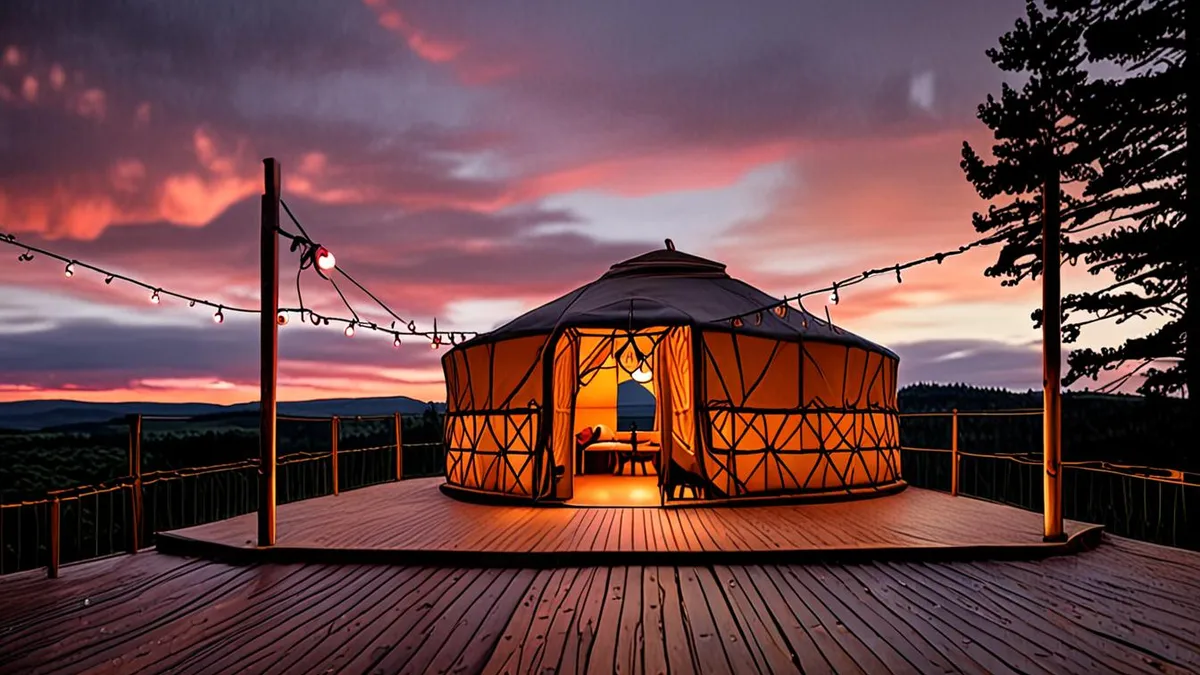
Safari tents and yurts are the workhorses of the off-grid world. Their solid frames and generous footprint give owners room to mount panels on the roof or on a nearby rack, plus space inside for a battery station and charge controller. Yurts in particular were designed for self-sufficient living, so a solar setup fits them naturally.
Domes come into their own on solar sites in cooler months. The curved shell sheds wind and holds heat better than a flat-walled tent, so less of the stored battery power goes toward heating. That said, check the heating limits before you book: some domes rely on a small electric heater that the solar array can only run for a few hours a night, while others use a wood stove that works independently of the battery.
Whatever you pick, match the stay type to your actual comfort level rather than the prettiest photo.
- First-timers: choose a solar site with a shared kitchen block, so you can cook, charge devices and fill water bottles at a communal building instead of managing everything inside your unit.
- Light packers: a safari tent on a partially off-grid site often includes a small fridge or gas hob, reducing the gear you need to bring compared with a fully remote unit.
- Cold-weather travelers: ask specifically how the unit is heated and whether that heating draws from the solar battery or runs on wood or gas, since the answer changes how warm your nights will be.
- Remote-work guests: confirm the battery station supports laptop charging during daylight hours, because some sites cap charging to protect their stores.
Booking and Preparing for an Off-Grid Stay
Off-grid eco sites are usually small operations with a handful of units rather than rows of pitches, so availability disappears faster than at large campgrounds. That intimacy is exactly what draws many travelers in, but it also means there is less margin for error: no front desk, no late-night staff and often no shop on site. A little preparation before you book and pack makes the difference between a smooth, restorative stay and a frustrating one. Here is how to go about it.
- Book early for peak season. Popular off-grid sites fill up fast for summer weekends, so reserve 2-3 months ahead. With only a few units on site, a single canceled weekend can wipe out a property’s availability for that month.
- Read the facilities list carefully. Confirm what the solar setup powers, where water comes from and whether toilets are composting or dry. This tells you exactly what to pack and what to leave at home.
- Plan a daytime arrival. Most eco sites ask guests to arrive before dark because paths and shared areas are unlit after sunset. Aim to check in with daylight to spare so you can find your unit, the water point and the toilets while you can still see them.
- Pack your own power. A 20,000 mAh power bank holds roughly 4-5 phone recharges, which comfortably covers a 2-3 night stay. Add a rechargeable lantern for moving around after dark.
- Leave high-draw appliances at home. Hair dryers, kettles and space heaters will trip a small solar system or simply fail to run, so skipping them entirely saves you carrying gear that will not work anyway.
One last tip: message the host a few days before arrival to confirm access details, parking and any usage rules for the toilets or water system. Small operators often reply quickly, and it removes the guesswork from your first evening. It is also worth asking about anything the listing leaves vague, such as road access for low-clearance cars or where to park if the track is muddy. A short exchange now can save you a stressful phone call from a field with patchy signal. Once you arrive with realistic expectations, the quieter rhythm of an off-grid stay tends to win most people over completely.
Living the Eco Glamping Rhythm Day to Day
Life at an off-grid site runs on a different clock than a hotel or a grid-connected campground. The rhythm comes from the sun, and once you settle into it, the slower pace becomes part of the appeal rather than a limitation.
Mornings and midday
Solar output peaks around midday, so that is when you charge phones, cameras and power banks. Most sites ask guests to follow this pattern, since charging on a cloudy evening drains the battery stores that others rely on for lighting. Hot water can also follow the sun: showers are typically shorter than you would take at home, and at some sites hot water is only available during certain hours or after a wood-fired boiler has been lit.
Waste gets a moment of attention too. Composting toilets and sorted waste bins are standard, and the simple rules posted in the unit take a day to feel normal.
Evenings and rainy days
After sunset, off-grid sites go genuinely dark and quiet. There are no floodlights or humming generators, which makes them excellent for stargazing, but it also means you need a headlamp for any late walk. Rain is manageable if you plan some indoor time in the unit: bring a book or cards, and expect solar generation to dip. Battery stores usually cover lighting through a wet stretch, so you are rarely left in the dark, just a little more conscious of every switch you flip.
Is Eco Glamping Right for You?
So is eco glamping roughing it? Not quite. It sits between a hotel and a tent: you still get a real bed and a solid roof over your head, but you trade some convenience, mainly unlimited power and flush toilets, for lower prices and a lighter footprint. Off-grid stays usually cost 10-20% less than grid-connected sites of the same type, which is a fair return for shorter showers and a composting toilet.
The honest answer depends on your habits. If you’re happy with solar-level power for lights and phone charging, don’t mind a dry toilet, and enjoy a dark, quiet site under the stars, eco glamping will likely suit you well. If you need air conditioning, a hair dryer or late-night lighting, a grid-connected glamping site is the better fit, and there’s no shame in that. Have you tried an off-grid stay yet? Leave a comment or share this article with a friend who’s curious.