You booked that geodesic dome or safari tent months ago, paid a deposit, and now the forecast shows a week of storms rolling in right over your dates. Will you get your money back, a credit, or nothing at all? The answer depends entirely on the site’s terms, and glamping cancellation policies can be very different from what you’d expect from a hotel.
Because canvas and tent structures are weather-sensitive in ways brick buildings aren’t, bad weather affects glamping bookings differently. This article explains why weather hits these bookings harder, how typical cancellation tiers and deposits work, what happens when the site itself closes a unit for safety, and how to check a policy before you commit. We’ll also cover timing your booking around seasonal risk, using travel insurance and rebooking credits to protect your money, and the key numbers to verify before you pay. By the end, you’ll know exactly what to ask a host before the storm season starts.
Why Bad Weather Hits Glamping Bookings Harder Than Hotels
Glamping units are fixed structures, not rooms behind solid walls. A luxury safari tent or dome can become genuinely unsafe in high winds, which means operators may close units for safety reasons even when the roads are clear and nearby hotels are welcoming guests as normal. That gap between what a hotel can offer and what a tented site can offer is the root of most weather-related booking disputes.
Small operators, little slack
Most glamping sites are small businesses running somewhere between 3 and 10 units. When a storm forces a closure, there’s no spare room block to move you into, and the lost night is often a significant share of that week’s income. A hotel with hundreds of rooms can absorb a few rescheduled guests; a five-unit site usually can’t, which is why operators build strict terms into their contracts.
There’s also a legal and practical reality to understand: weather is almost always treated as an uncontrollable event rather than a fault of the site. The operator didn’t choose the storm, so most policies don’t automatically trigger a refund when you decide not to travel. That doesn’t mean you’re powerless — it means the details of the policy matter enormously, and knowing them before you book is what protects your money.
Typical Glamping Cancellation Policies Explained
Most glamping sites follow a similar three-tier structure. Cancel outside the free-cancellation window — typically 7 to 14 days before check-in — and you pay little or nothing. Cancel inside that last week and you’ll often forfeit 50-100% of the booking value, with 50% being a common middle ground. No-shows almost always lose the full amount. These tiers exist because small operators have little slack to resell a canceled unit at short notice.
Deposits and payment schedules
Deposits commonly range from 20-50% of the total stay price, with the balance usually due 30 days before arrival. That payment schedule matters: once you’ve paid in full, you have far less leverage if plans change. Before booking, it helps to know what you’re paying for in the first place — our guide to what different glamping stay types cost puts those deposits in perspective.
Timing also changes the terms. Peak-season bookings, which in most of Europe and North America run May to September, often carry stricter cancellation conditions than midweek or shoulder-season stays, simply because a lost summer weekend is nearly impossible to resell. Finally, some sites offer a weather waiver as a paid add-on at checkout — a small extra fee that gives you more flexibility to reschedule if the forecast turns. It’s not offered everywhere, but if you’re booking a pricey dome for a specific weekend, it can be worth asking about.
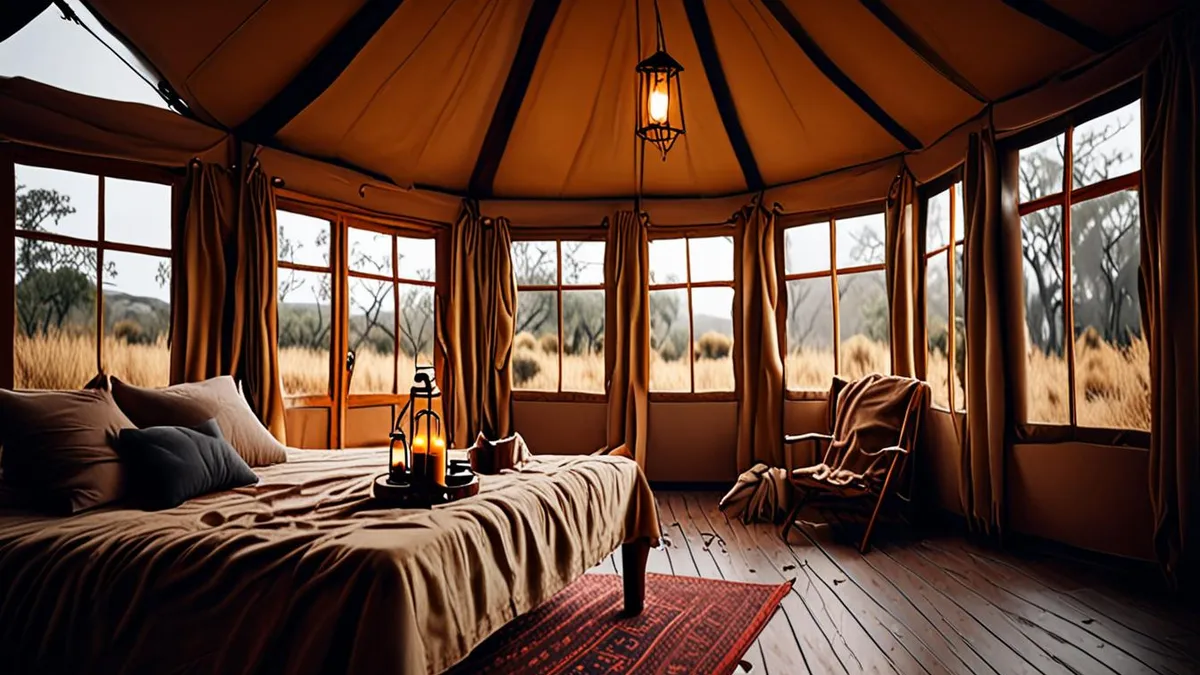
What Happens If the Site Cancels Because of a Storm
When a storm forces the operator to close a unit for safety, the situation flips in your favor. Because the site canceled — not you — most operators offer a choice between a full refund or a rebooking credit, and storm-related closures usually trigger rebooking credit valid 6-12 months rather than cash refunds. You’ll typically need to decide quickly, so it pays to know your preference before you get the email.
Partial closures work differently. If only one unit is down but others are safe, the site may offer to relocate you to a different unit type, sometimes with a partial refund for the difference in value. If you’re booked into a dome and moved to a smaller tent, ask how the price difference will be handled. The structure you booked matters here, too — how domes and safari tents handle wind and rain varies, and our comparison of glamping domes versus safari tents for weather and comfort explains which types close more often in storms.
What to look for in the fine print
- The liability cap: some operators limit their obligation to the booking value itself, meaning anything you spent beyond that — fuel, flights, a rental car — is not covered.
- The force majeure wording: check whether “adverse weather” is named as a qualifying event, and whether the site commits to a refund versus only a credit.
- The notification duty: some terms require the operator to inform you within a set time of a closure decision; knowing this helps you chase a timely answer.
- Expiry terms on credits: a 6-12 month credit is only useful if your travel dates allow you to use it, so confirm whether it’s transferable or date-restricted.
How to Check a Site’s Weather Policy Before You Book
Glamping cancellation policies vary more from site to site than hotel policies do, largely because many operators are small family businesses rather than chains with standardized terms. Two sites on the same lake can have completely different rules, even if their listings look identical. Before you pay anything, it pays to dig into the details. A few minutes of checking can save you a frustrating dispute later, and much of what applies here overlaps with the broader questions worth asking when choosing a glamping site in the first place.
- Find the cancellation cut-off date. This is the last day you can cancel and still get most of your money back. Most sites set it somewhere between 7 and 14 days before check-in. If the terms only say “strict cancellation policy” without a number, treat that as a red flag and ask.
- Check how much is due upfront. Many operators take a partial payment at booking and hold the balance until closer to your arrival date. Knowing exactly what leaves your account on day one tells you what you risk if plans change, and when the rest becomes non-refundable.
- Note the rebooking window. If storms force the site to close, many operators offer a credit rather than a refund, typically valid for 6-12 months. Confirm how long the credit lasts and whether it applies in high season.
- Email the host and get it in writing. Ask directly: “If a storm forces you to close my unit on my dates, what are my options?” A written answer is far more useful than a vague listing description if a dispute ever arises.
- Scan recent guest reviews. Look for mentions of storms, closures or rescheduling. How an operator actually handled a washed-out weekend tells you more than any policy page.
- Screenshot the policy at booking time. Terms can change between seasons. A dated screenshot is your proof of what you agreed to when you booked.
None of these steps takes more than a few minutes, and doing them before you pay gives you real leverage if the weather turns. Small operators are often happy to explain their terms by email, and that conversation can also reveal how flexible they are in practice. The goal is simple: know your options before you need them, not after the forecast has already gone bad.
Timing Your Booking Around Weather Risk
When you book matters almost as much as where you book. Weather risk is not spread evenly across the year, and the smartest glampers match their booking strategy to the season they are traveling in. Get this right and you rarely have to argue about refunds at all.
Peak season: book early, but stay flexible
The summer months from May to September are when glamping demand is highest, and the best units at popular sites fill up fast. Booking 3-6 months ahead usually gets you the pick of the site, but resist the temptation to grab the cheapest non-refundable rate. Choose a rate with a 14-day cancellation window instead, even if it costs slightly more. That flexibility is worth far more than the small saving if a summer storm rolls in.
Shoulder season and winter: never go non-refundable
Trips outside the main season carry much higher weather risk, from autumn gales to early snow. Discounted non-refundable rates look tempting in these months, but they are exactly the bookings that leave you out of pocket when a forecast goes wrong. If you want the discount, at least pair it with travel insurance so you have a fallback.
Finally, keep an eye on the 7-day mark. Most policies harden once you are inside a week of arrival, which is also when forecasts become genuinely reliable. Make any decision to rebook or cancel before that window closes, because after it does, your options shrink to almost nothing.
Insurance, Rebooking and Protecting Your Money
Even a careful booking can run into a storm, so the last layer of protection is financial. Think of it in three parts: insurance for the worst case, rebooking for the likely case, and payment method as your safety net. Handled together, these cover most bad-weather scenarios a glamping trip can throw at you.
Travel insurance is the most reliable tool. For a one-week glamping trip, a policy covering trip cancellation typically costs 4-8% of the trip price, and weather disruptions are one of the most common claims. But read the fine print before you buy, because not all weather cover is equal.
- Check that “adverse weather” at the destination is covered. Some policies only pay out if transport to your destination is shut down, not if the campsite itself closes. You need the latter.
- Confirm the site closure counts as a covered event. Ask the insurer directly whether a safety closure ordered by the operator qualifies, and keep any written notice the site sends you as evidence.
- Buy the insurance when you book, not when the storm appears. Most policies exclude events that were already foreseeable at the time of purchase, so a named storm on the radar will not be covered by a policy bought that afternoon.
If a storm is coming but the site stays open, try rebooking before you cancel. Operators are often far more willing to issue a credit for a future stay than to return cash, and a credit usually protects the full value of your booking. Ask early, be polite, and get any agreement confirmed in writing.
Finally, pay by credit card where you can. Chargeback protection gives you a last layer of recourse if the site cancels and fails to refund, and it costs you nothing extra. Between insurance, a rebooking credit and a card payment, your money has several ways to come home even when your trip does not go ahead.
The Bottom Line on Weather and Your Glamping Booking
So, will you lose your money if a week of storms rolls in? The honest answer is: it depends on who cancels. Most glamping sites refund or rebook only when they close a unit themselves — not when you simply decide not to travel in the rain. That single distinction shapes everything about how a bad-weather booking plays out.
Before you commit to that pricey dome or safari tent, get familiar with two numbers. First, find out how many days before check-in you can pull out without penalty — most sites allow this somewhere in the 7 to 14-day range. Second, ask about the deposit, which commonly runs 20-50% of the total stay. Then back yourself up with written confirmation of the weather policy and travel insurance that covers adverse weather at the destination. Between those layers, most storm scenarios end with a rebooking credit rather than a total loss. Have you weathered a stormy glamping booking? Share your story in the comments or pass this along to a fellow traveler.