You booked a glamping trip weeks ago, and now the forecast shows rain for nearly every day you’ll be away. It’s tempting to cancel, but glamping in the rain can actually be one of the most memorable versions of this kind of getaway, if you prepare for it properly.
This guide walks you through everything you need to make a wet forecast work in your favor. We’ll cover why rainy days can be a highlight rather than a washout, how to choose a stay that keeps water out, the best times to book and go, and exactly what to pack. You’ll also find tips for staying dry and comfortable on site, ideas for rainy-day activities, and a few parting thoughts to wrap up your planning. With the right stay, smart packing and a flexible plan, a soggy forecast turns into misty mornings, quiet trails and long evenings under canvas with the rain drumming overhead.
Why Glamping in the Rain Can Be a Highlight, Not a Washout
A rainy forecast changes the whole character of a glamping trip, and mostly for the better. Popular sites that pack out on sunny weekends quiet down considerably when clouds roll in, so you get more space, more silence and easier access to shared facilities. The landscapes tend to improve too: mist drifting through trees and fog settling over hills create the kind of atmospheric photos that bright midday sun rarely delivers.
Your wallet will thank you
There’s a financial upside as well. Shoulder-season trips in April-May and September-October, when rain is more likely, typically run 20-40% cheaper per night than the same site at peak summer rates. You’re essentially trading a guaranteed tan for lower prices, thinner crowds and moodier scenery, which many travelers consider a fair deal.
Glamping itself is what makes wet weather manageable in the first place. Unlike traditional tent camping, you’re not kneeling in mud to zip a leaking flysheet. Glamping accommodations usually offer solid floors, real beds raised off the ground and covered decks where you can sit outside without getting soaked. A quality dome or safari tent with a proper rainfly can handle sustained rain for several days without letting water in. Instead of dreading the forecast, you can settle in and watch the weather do its thing from somewhere warm and dry.
Choosing a Rain-Proof Glamping Stay
Not all glamping accommodations handle rain equally well, so the booking stage is where most rainy trips are won or lost. A flimsy bell tent on poorly drained grass will test your patience; a cabin or dome on a raised platform barely notices a downpour. Before you commit, it helps to run any candidate through a checklist of what to look for in a glamping site, but here are the rain-specific essentials.
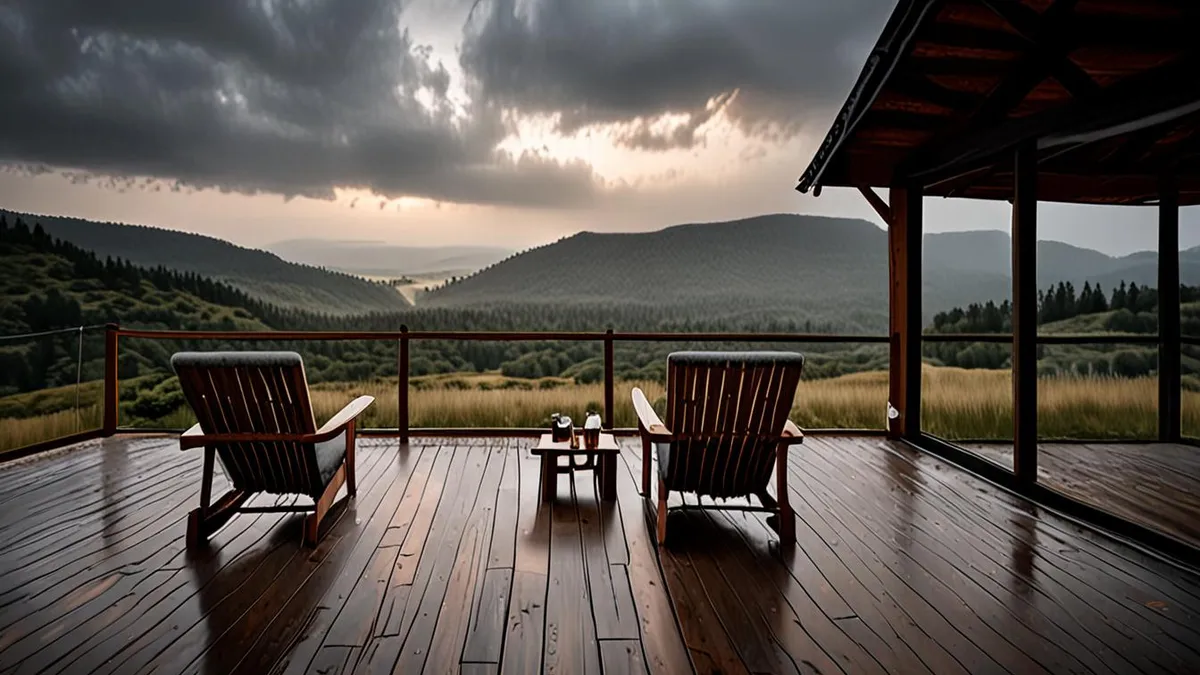
Start with the structure itself. Dome tents shed water well thanks to their aerodynamic shape, and a quality dome or safari tent with a full rainfly can handle sustained rain for several days without leaking. Cabins and yurts sitting on raised wooden platforms stay clear of puddles and mud. Then look beyond your own unit: a site with covered communal areas gives you somewhere to cook, eat and socialize when the sky opens up.
- Roofed private decks: a covered deck effectively doubles your living space, letting you sit outside with a coffee while rain falls a few feet away.
- Indoor lounges or common rooms: shared indoor space with sofas and heating turns a wet afternoon into a cozy one instead of a cramped one.
- Site drainage and ground cover: gravel paths, raised walkways and well-sited units mean you’re not wading through standing water to reach the bathroom.
- Ventilation features: windows, vents or mesh panels that open even in rain help control the condensation that builds up inside canvas.
Reviews are your best friend here. Search them specifically for words like “leak,” “damp,” “musty” or “mud” before booking, because a single wet weekend will reveal exactly what previous guests experienced. On price, expect roughly $100 per night for a basic tent up to $400 or more for a luxury cabin, with cabins and domes generally handling rain best. Paying a bit more for a weatherproof structure is usually the smartest upgrade you can make for a wet-weather trip.
When to Book and When to Go
Timing matters twice over for a rainy glamping trip: when you book and when you go. For shoulder-season weekends in April-May and September-October, reserve weather-resilient stays like cabins and domes about 2-3 months ahead. These are exactly the units everyone wants when the forecast turns, and the best ones at popular sites fill early even in the quieter months.
Why shoulder season works in your favor
Shoulder season delivers the best combination of the year: nightly rates drop well below peak summer prices, while the landscapes hit their most dramatic phase. Morning mist over valleys, low clouds catching the light and rain-washed forests all make for far better photos than a hazy July afternoon. If you’re new to this style of travel, reading up on what to expect from a first glamping trip will help you arrive prepared rather than surprised.
Before picking dates, check the regional rainfall pattern for your destination. Many temperate glamping regions see rain on roughly 10-15 days per month during these shoulder months, which sounds daunting until you remember that most of that rain arrives in showers rather than all-day downpours. That rhythm actually works well for a glamping trip: you plan short outings between showers and save the cozy indoor stuff for when the clouds open. Look at monthly climate averages for the specific area rather than relying on general impressions, since two regions an hour apart can have noticeably different rainfall habits. A little research here means you arrive expecting the weather you actually get.
Packing for Wet Weather
Packing well is what separates a cozy rainy glamping trip from a soggy ordeal. Canvas and dome tents handle rain well, but they hold onto humidity, so everything you bring should either repel water or dry quickly. Start with a waterproof jacket that has a hydrostatic head rating of at least 5,000 mm, which is the baseline for sustained wet-weather use. Pair it with quick-dry layers such as synthetic or merino base layers, and leave heavy cotton at home since it stays damp for hours.
Organization matters as much as clothing. Once humidity creeps into a tent or yurt, anything loose will absorb it, so pack with containment in mind. Dry sacks and waterproof bags keep your sleeping bag, spare clothes and electronics protected even if water pools under a bag or drips near your bed. Beyond the basics, a few comfort items go a long way when you are stuck inside for an evening. These are the extras seasoned rainy-weather campers never skip:
- Dry sacks in multiple sizes: a small one for your phone and camera, a medium one for chargers and documents, and a large one for your spare outfit so you always have one truly dry change of clothes.
- A thermos: fill it before the evening rain sets in so you can have hot tea, coffee or cocoa without leaving your warm sleeping area.
- Downloaded entertainment: films or podcasts saved to a device, plus a paperback or a compact card game, since Wi-Fi at remote sites can be unreliable during storms.
- Moisture-wicking socks in duplicate: rotate between pairs so one is always drying, and bring a spare pair sealed in a dry bag for emergencies.
- Extra towels: one for drying off after wet walks and a separate one for wiping condensation off tent walls and windows in the morning.
Staying Dry and Comfortable On Site
The moment you step inside is when wet-weather trips are won or lost. Set up a designated dry zone right at the entryway of your tent, dome or cabin, and make it a firm rule: wet boots, rain jackets and dripping daypacks stay there. This keeps mud and moisture out of your sleeping area, which means cleaner bedding and far less damp smell by day three.
Beat the condensation
Even a well-built tent gets humid in sustained rain, and most of that moisture comes from your own breath and wet gear. Open the vents every morning, even when it is still drizzling, so air can move through and condensation can escape instead of dripping back onto your bed. If your stay has a small heater, run it briefly with a vent cracked open rather than sealing the space completely.
Live in the covered spaces
One of the biggest advantages glamping has over tent camping is covered outdoor space, so use it. Treat a roofed deck or shared lounge as your rainy-day living room: drink your coffee there, read there, watch the storm roll through. It keeps you from feeling cooped up while still staying dry. If the temperature drops more than you expected, the same layering principles apply as on a cold-weather trip, and our guide to staying warm and comfortable while glamping in winter covers them in detail.
Finally, be patient with drying. Place boots and damp clothes near a heater or wood stove rather than directly on it, which can warp soles and scorch fabric. Rotate between two pairs of footwear so each gets a full day to dry out, and nothing in your bag stays soaked for the whole trip.
Rainy-Day Activities That Make the Trip
Rain changes your itinerary, but it does not have to shrink it. The trick is to work with the weather instead of against it. Watch the sky and plan short hikes in the gaps between showers, keeping routes close to your site so you can duck back if the clouds turn serious. When a true downpour arrives, that is your cue for the comfortable stuff: a spa treatment, a soak in the hot tub or an afternoon by the fireplace.
Location helps too. When booking, favor sites that sit within about a 30-minute drive of small towns with indoor options, so a rainy afternoon can easily become a cafe crawl or a museum visit rather than a long, wet drive. That said, some of the best rainy-day moments happen right where you are. Slow travel suits glamping perfectly: linger over breakfast, read while rain drums on the canvas, and step outside when the clouds break, because the stargazing between weather systems can be spectacular. A few ideas to fill the wet hours:
- Photography walks: mist, fog and wet foliage make for dramatic landscape shots, so take a short loop trail right after a shower when the light is soft and atmospheric.
- A local tasting afternoon: many small breweries and cafes offer tastings or flights, giving you a warm, dry way to sample the region without needing a full-day plan.
- A long games session: pack a compact board game or a deck of cards and turn a rainy evening into a tournament, ideally on a covered deck with a hot drink.
- A soak with a view: if your site has a hot tub or heated pool, save it for active rain, since sitting in warm water while rain falls around a covered area is one of glamping’s best moments.
Wrapping Up Your Rainy Glamping Trip
So the forecast shows rain for your glamping weekend, and you’re tempted to cancel. Don’t. A wet forecast is manageable with the right stay type, smart packing and a flexible plan. Pick a dome or cabin that handles sustained rain, throw a solid waterproof jacket in your bag, and keep your plans loose enough to swap a hike for a hot tub when the clouds roll in.
Rainy shoulder-season trips often cost less than peak summer getaways, and they frequently feel more atmospheric too. Misty mornings, empty trails and rain drumming on canvas are the kind of details that stick with you. With covered spaces to relax in and indoor backups ready to go, glamping in the rain can become the trip you remember most. Have you glamped in the rain? Share your story or tips in the comments, or pass this article along to a friend who needs it.