You have three nights in a city and a decision to make: do you book a hotel or an apartment? The answer is rarely obvious. A hotel promises service and simplicity, while an apartment offers space and a kitchen, and the right choice depends on how long you stay, who you travel with and how much logistics you are willing to handle.
This guide walks through hotels vs apartments step by step, comparing the core differences for a short stay, how prices stack up, room sizes and layouts, location and getting around, what to arrange for booking and check-in, and which option suits solo travelers, couples and families. By the end, you should know exactly which stay type fits your next city break, and which details decide the total cost before you click book.
Hotels vs Apartments: The Core Differences for a Short Stay
The basic trade-off is simple: hotels bundle services into one price, apartments trade those services for space. A hotel room comes with a reception desk, daily cleaning and usually the option of breakfast, all handled for you. An apartment gives you a kitchen, a living area and room to spread out, but you clean up after yourself and often arrange your own arrival.
On a typical city break of 2 to 4 nights, this trade-off matters more than it does on a week-long trip. A cleaning fee charged once per booking weighs heavily when you only stay two nights, and a fixed check-in time agreed by message can clash with a late train. On longer trips, those frictions fade because you amortize them over more days.
Who each option suits
Hotels suit travelers who want zero logistics: drop your bags, let the staff handle the rest, and head straight out to see the city. Apartments suit travelers who value room to spread out, want to cook some meals, and don’t mind a bit of planning around arrival and departure. Neither is better in absolute terms; the right pick depends on trip length, group size and how much self-service you genuinely enjoy.
Price Compared: When Each Option Costs Less
The nightly rate is where apartments usually shine. Comparable apartments typically cost 10 to 30 percent less per night than a city hotel room, which sounds like a clear win until you look at the extras. Most apartments charge a cleaning fee of roughly 30 to 80 euros per booking, charged once no matter how short the stay.
The cleaning fee problem on short stays
On a 2-night stay, that fee can erase the entire per-night saving. If an apartment saves you 20 euros a night but adds a 60 euro cleaning fee, you end up paying about the same as the hotel, sometimes more. The longer you stay, the more the fee dilutes, which is why apartments tend to win on value only from around 3 nights onwards.
Breakfast and eating in
Breakfast is the second cost swing. Hotels commonly charge around 10 to 25 euros per person per day for breakfast, which adds up quickly for a couple over several mornings. An apartment kitchen lets you eat in for a fraction of that: coffee, eggs and bread from a local shop cost a few euros and often taste better than a buffet you paid too much for.
Put together, the lower nightly rate and the kitchen usually tip the total in the apartment’s favour for stays of 3 nights or more. For a quick 2-night weekend, the cleaning fee often means the hotel costs about the same, with far less hassle attached.
Space and Comfort: Room Sizes and Layouts
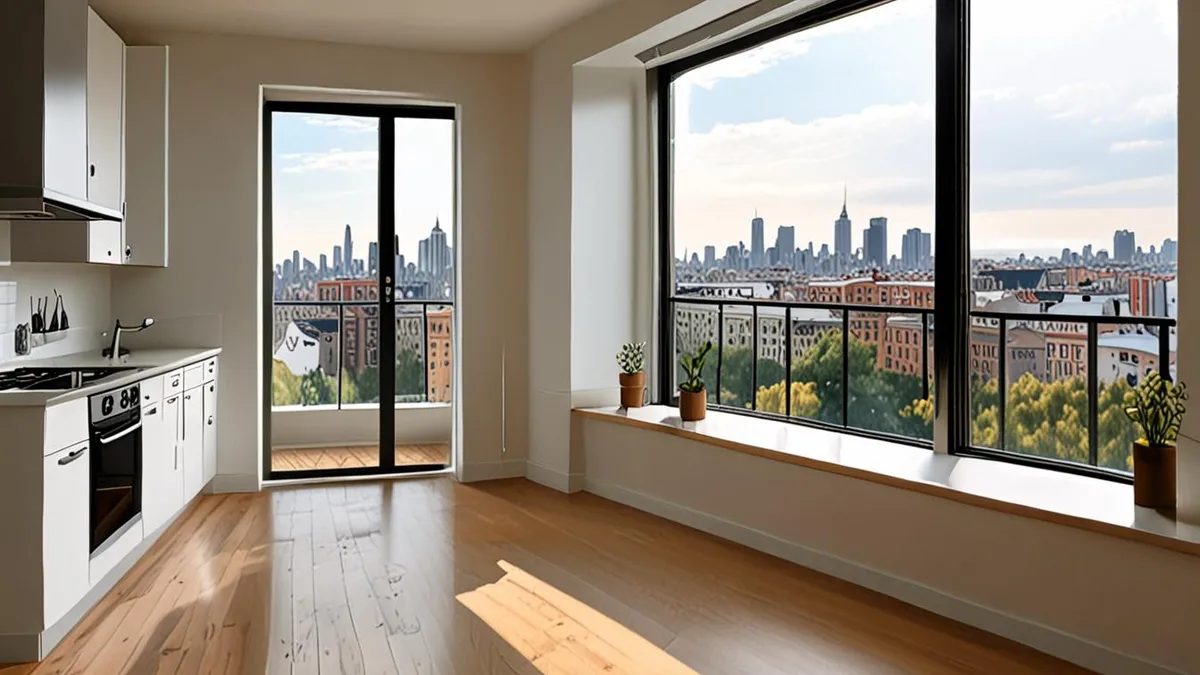
Space is the most noticeable difference the moment you walk in. Hotel rooms in most cities average 18 to 30 square meters, which is perfectly comfortable for two people sleeping, showering and heading out again. But it gets tight when a family squeezes in, or when you want to spend a relaxed evening in with takeaway and a film.
What an apartment layout gives you
Apartments typically offer 40 to 70 square meters, with separate sleeping, living and cooking areas. That means one person can nap while another cooks, kids have room to play, and you can sit at a real table instead of balancing plates on the bed. For anyone staying in during the evenings, this difference changes the whole feel of the trip.
Value per person for groups
Families and groups of three or more see the biggest gap in value per person. A hotel stay for four often means booking two rooms at double the price, while a single apartment with two bedrooms or a sofa bed keeps everyone together for one fee. Split the apartment cost between three or four people and the per-person price usually beats any hotel option, while giving everyone far more room to enjoy.
Location and Getting Around the City
Location can quietly decide how much of your city break you actually spend sightseeing. Hotels cluster around train stations, old towns and the main shopping streets, and that concentration is no accident: they know short-stay travelers want to step outside and already be in the middle of things. On a 2 to 4 night visit, cutting twenty minutes of walking or metro time off each outing adds up to real extra hours in your day.
Apartments usually sit in residential blocks, often 15 to 30 minutes from the center. The trade-off is a more local experience: neighborhood bakeries, cafés and supermarkets where prices run noticeably lower than in the tourist core. If you enjoy seeing how residents actually live, this can be a feature rather than a flaw.
When walking distance matters most
On a weekend break, staying within walking distance of the main sights saves the most time. With only two or three days, every commute into the center eats into your limited schedule, and late evenings mean fewer transport options back to a far-flung apartment. If you do want the convenience of a central base, it pays to think about transport links before you book, and our guide on how to choose a hotel near a train station in Europe walks through exactly that. For longer stays, a slightly out-of-center apartment paired with a day travel pass often balances cost and convenience nicely.
Booking and Check-In: What to Arrange in Advance
Booking a city break is not just about picking dates and paying. The two accommodation types work on very different timelines, and knowing what to arrange in advance saves you from stressful surprises on arrival day. A little preparation the week before you travel often makes the difference between a smooth check-in and a frustrating hour spent waiting on a street corner. Here is how to handle each step.
- Book apartments early for weekends. Good units in central areas sell out first, and the best ones typically require booking 4 to 8 weeks ahead for weekend city breaks. Leave it later and you are often left with the least appealing options at the highest prices. If you are traveling with a group, start looking even earlier, because larger apartments are fewer in number and get snapped up quickly.
- Use hotels for spontaneous trips. Hotels allow later booking and offer flexible cancellation more often, which makes them the safer choice when your plans might still change. Check the cancellation terms before paying, as the cheapest rates are usually the strictest.
- Arrange apartment check-in in advance. Most apartments have no reception desk, so you will need to agree a fixed meeting time with the host or follow self-check-in instructions. Confirm this a day or two before arrival and share your travel delays if any.
- Plan around hotel desk hours. Hotel check-in typically runs from 14:00 to 15:00, and the front desk can store your luggage if you arrive earlier. Apartments rarely offer this, so factor it in if you land in the morning.
One final habit worth adopting: screenshot or print your check-in instructions before you travel. Mobile data can fail at the worst moment, and standing outside an unfamiliar building with no access code is a poor start to any city break. A paper copy in your day bag costs nothing and has saved more than one traveler from a long wait outside a locked door.
Choosing by Trip Style: Solo, Couples and Families
The right accommodation depends less on the city and more on who is traveling and for how long. A solo visitor and a family of four have completely different needs, even on the same weekend in the same destination. Matching the stay type to your group is the simplest way to get both comfort and value.
Solo travelers on a 2-night break get the most from a compact hotel room near the center. You do not need space to spread out, and the convenience of walking back to your room after dinner or a late museum visit is hard to beat. There is also no one to share cooking or cleaning duties with, so a kitchen adds little value.
Couples who want breakfast included and daily cleaning should lean towards hotels. Someone else makes the bed, the breakfast bill is already settled, and the whole trip runs on autopilot. That said, if you are staying longer and plan to cook together, a well-located apartment can feel more like living in the city than passing through it.
- Families of three or more: staying 3 nights or longer, they save the most in a 40 to 70 square meter apartment, where separate sleeping areas mean parents do not have to tiptoe around after the kids fall asleep.
- Groups of friends: splitting one apartment with two bedrooms and a sofa bed usually costs far less per person than booking multiple hotel rooms, and the shared living room becomes a social space in the evenings.
- Mixed or multi-generation groups: an apartment’s kitchen lets different family members eat on their own schedules, which matters more than any hotel amenity when grandparents and toddlers travel together.
The Bottom Line for Your Next City Break
So, hotel or apartment for your three nights in the city? The answer comes down to what you value most. Hotels win on short 2-night stays, central locations and service, while apartments win on space, kitchens and value from 3 nights upwards. On a three-night trip, the apartment’s lower nightly rate and the chance to cook a couple of meals usually tip the total in its favour, especially for two people or more.
Before you book, run the numbers on the three details that decide everything: the cleaning fee, the cost of breakfast and the check-in style. A 30 to 80 euro cleaning fee can quietly erase an apartment’s 10 to 30 percent saving on a short stay, and a fixed meeting time may not suit a late arrival. Match the stay type to your group size and trip length rather than to price alone, and you will get the better stay for your money. If this helped you decide, leave a comment or share the article.