Glamping with kids sounds perfect in theory: fresh air, campfires and family time without a car full of soggy tents. In practice, many parents hesitate, worried their children will get bored by day two, shiver through the night or melt down far from home. Those worries are reasonable — and mostly avoidable with the right planning.
This guide walks you through the decisions that matter most before you book. We’ll look at why glamping suits families so well, how to choose between a safari tent, cabin or yurt, and what makes a site genuinely kid-friendly rather than just photogenic. You’ll also find advice on timing and booking windows, a packing list that goes beyond the basics, and simple ways to plan days your kids will actually remember. Follow along and you can head into your first trip knowing the risks have been handled before you even leave the driveway.
Why Glamping With Kids Works: Comfort Meets Adventure
The biggest stress points of camping with children — cold nights, uncomfortable sleep and midnight treks to a shared bathroom block — simply disappear when you glamp. Real beds mean everyone actually sleeps, heating keeps early mornings bearable, and a private bathroom turns bedtime and potty training from a logistics challenge into a non-event. When kids are rested and warm, the whole trip changes character.
All of the fun, none of the gear haul
Meanwhile, the parts of camping kids love most stay fully intact. Campfires, wildlife spotting, muddy trails and stargazing from a deck are all still on the menu — but without parents spending hours pitching tents, pumping air mattresses or cooking on a single camp stove. The setup work that usually drains the first day of a family camping trip is already done for you.
Keep your evening routine
Many family units are designed with separate sleeping areas, whether that’s a partitioned kids’ room, a loft or a second bedroom in a cabin. That layout matters more than it sounds. Once the kids fall asleep at their normal bedtime, parents can read, talk or enjoy a glass of wine by lamplight instead of lying rigidly in the dark two feet away. You keep a piece of your normal evening, which is often what keeps a longer trip feeling relaxing rather than relentless.
Choosing the Right Stay Type for Your Family
The stay type you pick shapes the whole experience, especially with young children. Safari tents and cabins are the safest bet for first-timers and families with toddlers: solid floors underfoot, sturdy walls and lockable doors give you a secure base, and there’s far less to worry about if a curious two-year-old is on the loose. Yurts and bell tents, on the other hand, offer a rounder, more outdoorsy feel that suits families with school-age kids — children old enough to love the novelty of canvas walls and zip-up doors without anyone needing a nap-safe, toddler-proof space.
Whichever style appeals, the single most important detail is the sleeping configuration. A unit advertised as sleeping four might mean one double bed plus a thin fold-out, which is a recipe for elbows in faces. Bunk beds or a separate kids’ sleeping area let everyone settle at their own pace. If it’s your first trip, it helps to read up on what to expect and how to prepare for your first glamping stay before you commit.
- Check the bed sizes, not just the headcount. A unit sleeping six might include two singles meant for children — fine for kids, less fine for a tall parent.
- Look for blackout or lined canvas in yurts and bell tents. Thin canvas wakes with the sun, which matters if your kids normally sleep past dawn.
- Ask about linens and towels. Some sites provide full bedding, others only mattresses or duvets, and a surprise packing requirement is no fun at check-in.
- Confirm heating or a wood stove. Even in warm months, canvas structures can cool sharply at night, and a stove often doubles as a cozy evening feature kids love.
Budget-wise, expect roughly $150-350 per night for a family-sized unit, typically about 30-60% more than a comparable two-person option. Most family safari tents, cabins and yurts sleep 4-6 people, so the per-person cost often works out better than it first appears.
Picking a Kid-Friendly Site and Location
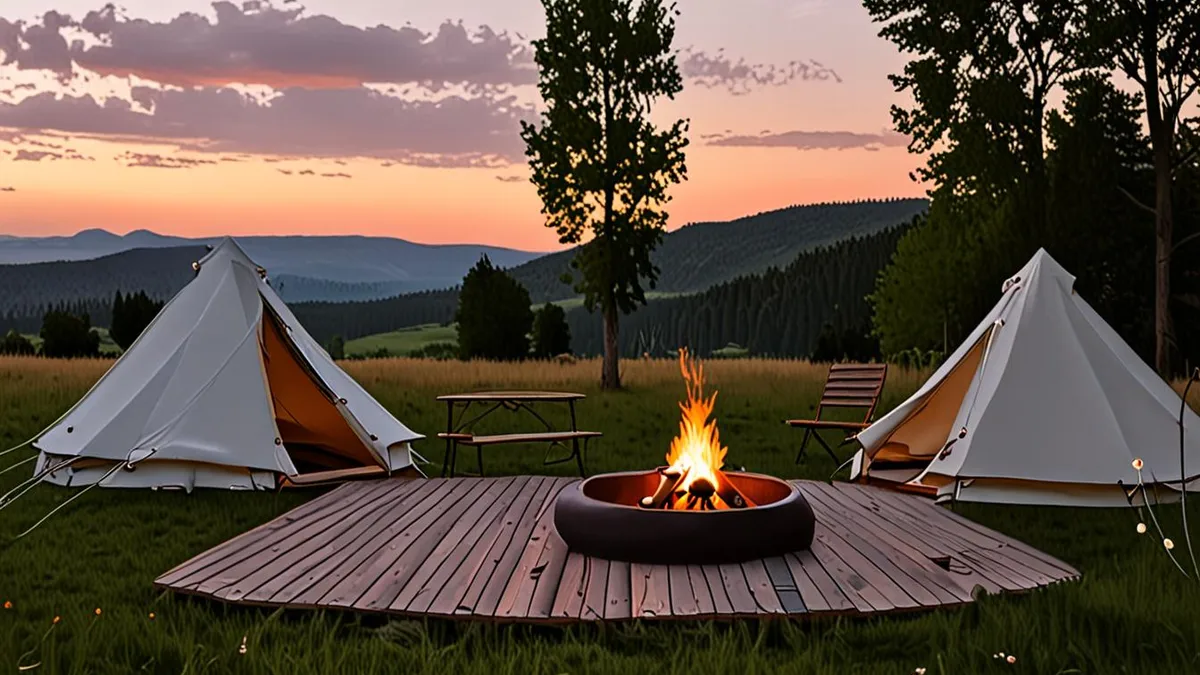
Location can make or break a family glamping trip. The best sites for kids let them burn off energy without you driving anywhere: look for places with a playground, a pool or farm animals to visit. A site with resident goats or chickens turns a slow afternoon into an activity, and a playground within sight of your tent means you can relax while the kids play.
Distance to amenities matters just as much, especially with children under 8. Aim for bathrooms, dining and water within a 5-10 minute walk of your unit — a trip that feels trivial for adults becomes an expedition when a small child needs the toilet urgently. Safety-wise, confirm the site is fenced or naturally set back from water, roads and steep terrain before you book, and don’t be shy about emailing the host to ask directly.
Finally, read reviews the way families read them. Couples’ reviews often rave about romance and quiet; you want to know whether the neighboring tent hosts a family with a toddler who wakes at 5 a.m. For a fuller checklist, our guide on how to choose a glamping site and what to check before booking covers the details that matter.
- Ask about shared kitchen facilities. A communal kitchen or outdoor dish station saves you hauling cookware and makes simple meals far easier with kids.
- Check the terrain around your unit. A decked, level approach to the tent is far easier with a stroller, a wagon or an armful of tired children than a gravel or sloped path.
- Look at the neighbor spacing. Tents spaced well apart mean less worry about noise — both your kids’ and other guests’.
- Find out what’s included for kids. Some sites offer cots, high chairs, games rooms or animal feeding times; knowing up front helps you pack less and plan better.
When to Book and When to Go
Glamping with kids works best when the weather cooperates, and in most temperate regions that means the sweet season runs May through September. Outside that window you risk cold nights, mud and rain-soaked downtime, which is exactly what turns a family trip into a survival exercise. If your children are young, aim for the months when evenings are warm enough for them to sit outside past bedtime in pajamas, rather than being bundled indoors by sundown.
Booking timing matters just as much as the season. Family-sized units are the first to sell out in peak summer, so don’t leave it to chance.
- July and August stays: reserve 3-6 months ahead, especially for safari tents and cabins that sleep a whole family — these are limited in number at most sites.
- Off-peak dates: 4-8 weeks’ notice is often enough, which makes spring and autumn trips a good option if you decide to travel on short notice.
- Shoulder-season weekends: late May and mid-September often combine decent weather with lower prices and noticeably fewer crowds, meaning shorter waits at the playground and a quieter campfire area.
- School holidays: check your local calendar before booking, since half-term weeks can push demand up even outside peak summer.
Always confirm cancellation terms before paying, since family plans change more often than solo ones. A sick child or a shifted school event can force a last-minute change, and a flexible booking is worth a few extra dollars. If you’re unsure about a site, call ahead and ask whether they can accommodate an early arrival or a late checkout — small things like that make a big difference when you’re traveling with kids in tow.
Packing Smart: What to Bring Beyond the Basics
Even the most comfortable safari tent won’t stop your kids from finding the one muddy puddle on site. Pack for that reality rather than the brochure photos, starting with clothing that can handle the weather swings you’ll get in most temperate regions — a sunny afternoon can easily turn into a chilly evening by the time you’re walking back from the campfire. Think layers, quick-dry fabrics and enough spares to cover at least one full outfit change per child per day.
The first night in an unfamiliar space is often the hardest for young children. Strange sounds, different lighting and a new ceiling can all trigger bedtime wobbles, so bring a few pieces of home with you. A small comfort kit tucked in your bag can make the difference between a smooth first evening and a rough one, especially on a short 2-3 night trip where every night counts.
- Layers and spare shoes: pack one extra set of clothes per day plus waterproof boots — wet sneakers at breakfast are a mood-killer for everyone.
- Comfort items: a favorite toy, a small nightlight and their own blanket from home ease the transition far better than any new gadget.
- Low-effort entertainment: bug-catching kits, glow sticks and a deck of cards fill downtime at the tent without needing your constant involvement.
- Snacks and a cooler: many glamping kitchens are minimal or shared, so bring easy wins like fruit, crackers and sandwich supplies rather than planning elaborate meals.
- Headlamps for everyone: paths between units are often unlit, and kids love having their own light for the walk back from the campfire.
Resist the urge to overpack activities. Between the site’s own amenities and a bit of boredom-fueled imagination, most kids stay happily busy with far less than you think. A well-packed duffel of practical gear, a comfort kit for bedtime and a handful of simple distractions will carry your family through nearly any glamping stay — leaving you free to actually enjoy it too.
Planning Days Kids Will Remember
The best family glamping days follow a simple rhythm: one planned highlight, plenty of unstructured time. Trying to schedule a full itinerary backfires quickly with kids, so pick a single anchor activity each day — a short hike, an hour of paddling or a campfire cookout — and let the rest of the day fill itself with playground visits, animal spotting and lazy tent time.
Keep hikes short and snack-heavy
For children under 10, aim for hikes under 2-3 km and build in snack breaks before anyone asks for them. A handful of trail mix at the halfway point prevents most meltdowns, and letting kids lead the way for a stretch turns even a flat loop trail into an adventure.
Make the campfire the nightly ritual
The campfire is the part your kids will remember, and it costs nothing. S’mores, a round of stories and some stargazing give the evening a predictable shape — and once the kids are asleep in their own sleeping area, you can slip back outside with a drink and enjoy the quiet. That combination of shared ritual and parental downtime is exactly why glamping beats a regular campsite for families.
Your Family Glamping Trip at a Glance
Glamping with kids doesn’t have to feel risky. The worry that children will get bored, cold or overwhelmed disappears once you plan the basics before booking. Choose a family-sized unit such as a safari tent, cabin or yurt for around $150-350 per night, aim for the May-September window, and book 3-6 months ahead for summer stays. Keep your first trip to 2-3 nights so everyone can ease in.
Then it’s about the small things: pick a site with kid-friendly amenities within easy reach, pack comfort items like a favorite toy or nightlight, and plan one simple daily activity with plenty of downtime around the campfire. Do that, and the trip is set up for success before you even leave home. If this helped you plan your family adventure, leave a comment or share this article with other parents.