You book a 4-star hotel expecting a touch of luxury, then arrive to find a plain room with a lumpy bed and a view of the parking lot. It happens to travelers all the time, and the reason is simple: hotel star ratings measure facilities and services, not comfort, style or how well you will sleep. A hotel can tick every box on an official checklist and still feel dated and charmless.
This guide explains who actually hands out those stars, what each level from 1 to 5 typically delivers, and why the same rating can mean very different things in Europe and the United States. You will also learn how to judge a hotel beyond its star badge, using recent guest reviews, location details and what is actually included in the price, so your next booking matches what you really want from the trip.
Who Assigns Hotel Star Ratings and How the System Works
Contrary to what many travelers assume, the stars next to a hotel name usually do not come from the booking site you are browsing. In most countries, hotel star ratings are awarded by national tourism boards or industry associations that inspect properties against a fixed set of criteria. Booking platforms often display these official ratings, and where none exists they may show their own estimate, which is one reason the same hotel can appear with different star levels across websites.
Inspectors score properties on measurable features rather than feelings. Typical criteria include minimum room size, the hours the reception desk is staffed, whether there is an on-site restaurant or breakfast service, the presence of elevators, and the range of amenities such as fitness rooms or meeting spaces. Because the checklist focuses on what can be counted and verified, a hotel earns stars by having features, not by being beautiful or comfortable.
Why the same stars feel different abroad
There is no single global standard. Each country sets its own requirements, so a 3-star hotel in one country might require a 24-hour front desk, while a neighboring country awards the same rating with far lighter obligations. That means the star level is a useful starting point, but it only tells you what the local system demands, not what the experience will feel like.
What to Expect From 1-Star and 2-Star Hotels
At the bottom of the scale, 1-star and 2-star hotels are all about the basics. You get a bed and a bathroom, which in some 1-star properties may be shared rather than private, and very little beyond that. Do not expect a restaurant, a lounge or anyone to carry your bags. These properties exist to give you a safe, inexpensive place to sleep, and they do that job without decoration.
Service is minimal by design. Housekeeping may happen only when you request it, so your towels might not be refreshed daily unless you ask at the desk. Reception hours can also be limited, which matters more than most travelers realize. If you arrive on a late train and the front desk closes at 9 pm, you may find yourself locked out or checking in through a night window. Always confirm arrival arrangements before you book at this level.
These hotels suit a specific kind of trip. If you plan to spend all day out sightseeing and only need somewhere to shower and sleep, a simple 2-star room can be a smart way to stretch your budget in an expensive city. For a longer stay, or if you want to spend relaxed time in the hotel itself, the lack of comfort and service starts to wear quickly. If you are curious how much character a small, independently run property can offer at a modest level, the contrast with a stay like what to expect from a Turkish boutique hotel stay is instructive.
- Ask about key access: many budget properties use physical keys or card systems with set door hours, so late returns can be an issue.
- Check the bathroom situation: confirm whether the bathroom is private or shared, and whether it is en-suite or down the hall.
- Look at noise and location: budget hotels are often on busy streets or near stations, so request a rear-facing room if you are a light sleeper.
- Verify luggage storage: not all simple properties will hold your bags before check-in or after checkout.
What a 3-Star Hotel Delivers
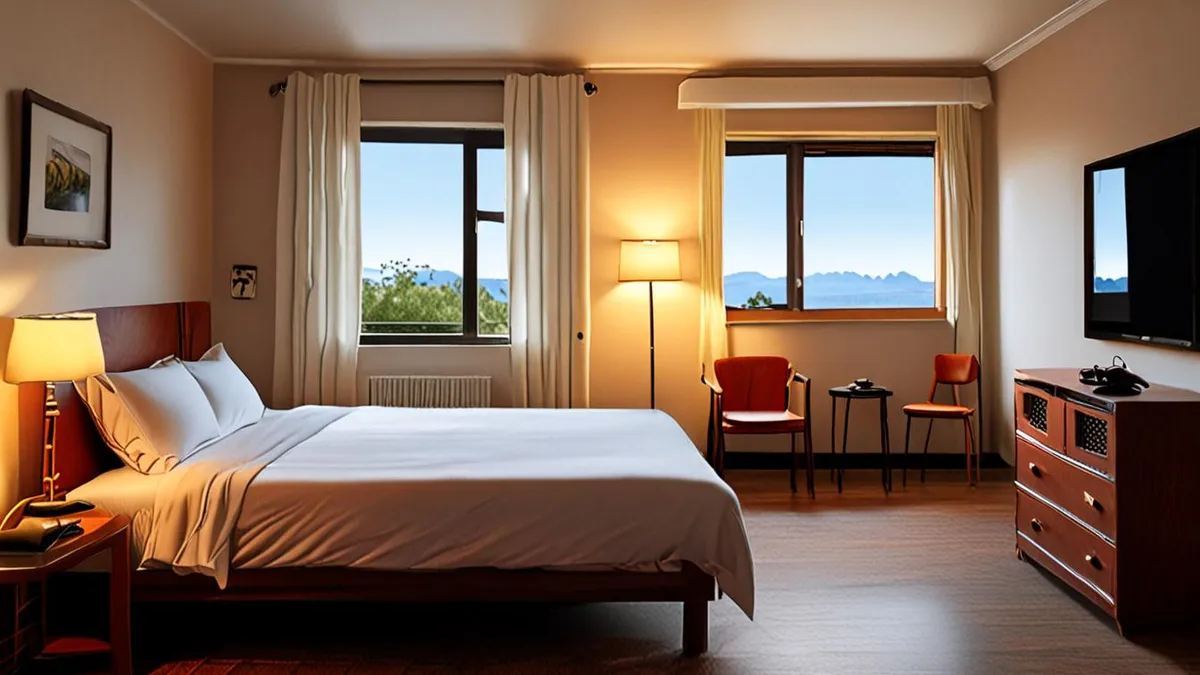
The 3-star level is where most travelers find their comfort sweet spot. A typical 3-star hotel includes daily housekeeping, a staffed front desk, often around the clock, and usually an on-site breakfast room or restaurant. You are no longer improvising around the hotel’s limitations; the property is set up to handle normal travel needs without you having to ask.
Rooms at this level generally come with a private bathroom, a TV and, in city properties, often air conditioning. Expect clean, functional furnishings rather than design flair, and enough space to open two suitcases without performing gymnastics. Business travelers and couples on city breaks make up much of the clientele, and the hotels are built accordingly, often near stations or main streets for easy access.
What a 3-star stay typically costs
In Europe, mid-range 3-star city hotels commonly run 80-150 EUR per night in high season, though prices vary widely by city and demand. That rate usually buys you a dependable, central base rather than an experience. If you want a spa, a gym or someone to book your dinner reservations, you will need to look a level higher. For straightforward sightseeing trips where you are out all day, a good 3-star hotel often delivers the best value of any category.
What Separates 4-Star and 5-Star Hotels
The jump from 3 to 4 stars is where hotels start adding genuine extras rather than just covering the basics. A 4-star property typically offers a fitness center, room service during set hours, and noticeably better furnishings — think proper desks, quality bedding and a more considered design. Front desk service is usually available around the clock, and you can expect extras like a minibar or a bar and lounge area on site.
A 5-star rating pushes things further into premium territory. At this level, inspectors generally look for services that go beyond what a room contains: a concierge who can arrange tickets and transport, a spa or pool, 24-hour room service, and luxury toiletries in the bathroom. Staff-to-guest ratios tend to be higher, which is why someone is usually available to handle your luggage, book a table or solve a problem within minutes.
Here are some of the service details that separate the two levels in practice:
- Concierge desk: a dedicated staff member who secures restaurant reservations, tours and theater tickets — often the single biggest difference you will actually notice during a stay.
- Round-the-clock food: 5-star room service runs 24 hours, while 4-star kitchens typically close after dinner service.
- Wellness facilities: a spa, sauna or pool is generally expected at 5 stars, whereas a 4-star hotel may only offer a small gym.
- Bathroom extras: premium toiletries, bathrobes and slippers are standard at 5 stars rather than an upgrade.
One thing to keep in mind: the leap from 4 to 5 stars is mostly about service depth, not necessarily a better night’s sleep. A quiet, well-run 4-star room can be just as comfortable as one in a 5-star property — you are largely paying for staff, facilities and pampering, not mattress quality.
Why Hotel Star Ratings Differ Between Europe and the United States
If you have ever stayed at a European 3-star hotel and wondered why it felt simpler than a 3-star back home, the answer comes down to how the two systems work. In much of Europe, star ratings are often official, granted by government-run tourism authorities working through strict checklists. Inspectors verify measurable criteria, and a hotel cannot buy its way up a level without meeting them.
That rigor cuts both ways. Because the criteria are strict and facility-focused, a European 3-star can feel modest — smaller rooms, simpler lobbies, fewer extras — even though it is clean, well-run and honestly rated. In the United States, ratings lean heavily on amenities like pools, business centers and on-site dining, so an American 3-star often looks and feels fuller-service than its European counterpart.
Why the same star level can feel so different
Neither approach is wrong, but they are not interchangeable. A traveler who books a 3-star room in Paris expecting the space and amenities of a 3-star property in a US city may be surprised by a compact room with a small bathroom. The reverse can also be true: an American hotel with a pool and a big lobby may offer less personal service than a modestly rated European family-run hotel. If you are planning a stay in an American city, this overview of what to expect from city hotels in the United States covers the details that matter.
This is why stars alone hide big differences in comfort. Before booking, always check the photo gallery — real guest photos are especially useful — and look up the actual room size in square meters or square feet. A few minutes of checking will tell you far more about whether you will sleep well than the number of stars on the listing ever will.
How to Judge a Hotel Beyond Its Star Rating
Star ratings tell you what a hotel has, not how well it runs it. Two 3-star properties in the same city can deliver completely different stays, so it pays to look past the badge before you book. The good news is that this kind of vetting does not take long. With a booking page, a map and a bit of patience, you can get a realistic picture of a hotel in about ten minutes. Here is a simple process that works whether you are booking a city break or a longer trip.
- Read recent guest reviews first. Focus on reviews from the last few months, since management and renovation status change. Guest review scores on booking platforms often predict satisfaction better than the star rating itself, so prioritize properties scoring above 8 out of 10 and skim the critical reviews for repeated complaints. If several guests mention the same issue, take it seriously.
- Pinpoint the exact location and transport links. A listing that says “city center” may actually sit a metro ride away. Check the map for the nearest station or stop, and in large cities, factor in how long it will take to reach the sights you actually plan to visit.
- Compare what is included, not just the price. One hotel may include breakfast and air conditioning while another charges for both, which can swing the real cost significantly. Read the room description line by line and note what is missing before comparing rates.
- Check the photos for room size and condition. Look at guest-uploaded images as well as official ones, and confirm the actual room dimensions if the listing provides them.
Ten minutes of this kind of checking will tell you more than any star badge. The goal is to find a hotel that fits your plans and your budget — and the details in the listing and reviews are where that answer lives.
Choosing the Right Star Level for Your Trip
If you have ever booked a 4-star hotel and walked into a plain, dated room, the star system is not broken — it simply measures facilities and services, not style or comfort. A 4-star badge may reflect a gym, room service and polished furnishings, while the mattress, the view and the noise level stay uninspected. Ratings also vary by country, so the same number of stars can promise very different things depending on where you travel.
A more reliable way to choose is to match the level to your plans: 1-2 stars for short stays where you only need a bed, 3 stars for dependable comfort with daily housekeeping and reception, and 4-5 stars when you want extra services on site. Then let recent guest reviews and the list of included amenities — breakfast, air conditioning, room size — carry more weight than the star badge itself. If this helped you book smarter, leave a comment or share the article with a fellow traveler.