You love the idea of a luxury tent stay: a proper bed, a wood stove, and a field with a view. But a nagging question keeps creeping in, especially if you’re going alone. Are glamping sites safe when your bedroom is essentially canvas in a remote field?
The honest answer is that glamping is far less risky than it might feel, and most of your security comes down to a handful of practical choices made before and during your stay. In this guide, we’ll look at how safe glamping sites really are, how to vet a site before you book, and how to protect your valuables inside a tent or yurt. We’ll also cover habits that keep solo travelers confident, how to prepare for weather, wildlife and emergencies, what to do if something feels off mid-stay, and the bottom line on glamping safety overall.
How Safe Are Glamping Sites, Really?
The short answer: glamping sites are generally low-risk places to stay. Most are small, privately run operations with somewhere between 3 and 15 units, and in the majority of cases the owners or staff live on site or very close by. That combination of small guest numbers and a resident host does more for security than any padlock ever could.
Yes, canvas walls are not impenetrable. A determined person could get through a zip in seconds. But theft and break-ins are rare in practice, because glamping sites are quiet, remote and have short guest lists. There is no anonymity for a thief to hide behind: everyone on site knows everyone else, and a stranger would stand out immediately.
The risks that actually matter
The real hazards are environmental rather than criminal. Think sudden weather changes, curious wildlife, uneven ground between your tent and the bathroom block, and patchy phone signal on rural sites. These are the things worth preparing for, and they are exactly what the later sections of this article help you handle.
It also helps to compare glamping with wild camping, which is what most people picture when they worry about sleeping outdoors. With glamping you get locks, lighting, hosts and neighbors. That alone removes most of the vulnerability of a solo outdoor night before you’ve even done anything clever.
Vetting a Site for Security Before You Book
Good security starts before you hand over any money, and the booking stage is where you have the most leverage. Start with recent reviews, and read them with a specific filter: look for mentions of lighting, locked gates, responsive hosts and whether previous guests felt the site was too isolated for comfort. A review from last month tells you far more about current conditions than a glowing write-up from three years ago.
Then ask the host directly before you book. Any reputable operator will answer security questions without hesitation, and a vague or evasive response is itself useful information. Most glamping sites sit within a 10-15 minute drive of the nearest town or fuel station, so it’s fair to ask exactly where that town is and how long help would take to reach you.
It’s also worth thinking about layout. Favour sites with defined boundaries, marked paths and units spaced close enough to hear a neighbor, rather than units hidden deep in woodland. For a fuller walkthrough of this process, this guide on how to choose the right glamping site before you book covers the checks in detail.
Timing matters too. Peak-season glamping sites often fill 2-3 months ahead, so booking early means you can choose a unit near the facilities and the host’s base instead of settling for whatever is left. And since typical stays run $100-$300 per night, glamping is a real investment, so treat the security questions above as part of comparing value, not as an awkward extra.
- Ask about arrival access: find out whether late arrivals can get through the gate on their own, or whether you need to be there before staff lock up for the night.
- Check the unit’s position on the site map: a unit near the parking area means a shorter, better-lit walk if you arrive after dark or need to leave quickly.
- Confirm what lighting exists: ask whether paths to the bathroom block and kitchen are lit, or whether you’ll need your own headlamp for every evening trip.
- Ask how the host handles emergencies: a good answer includes a phone number that’s answered outside office hours, not just a message box on a booking platform.
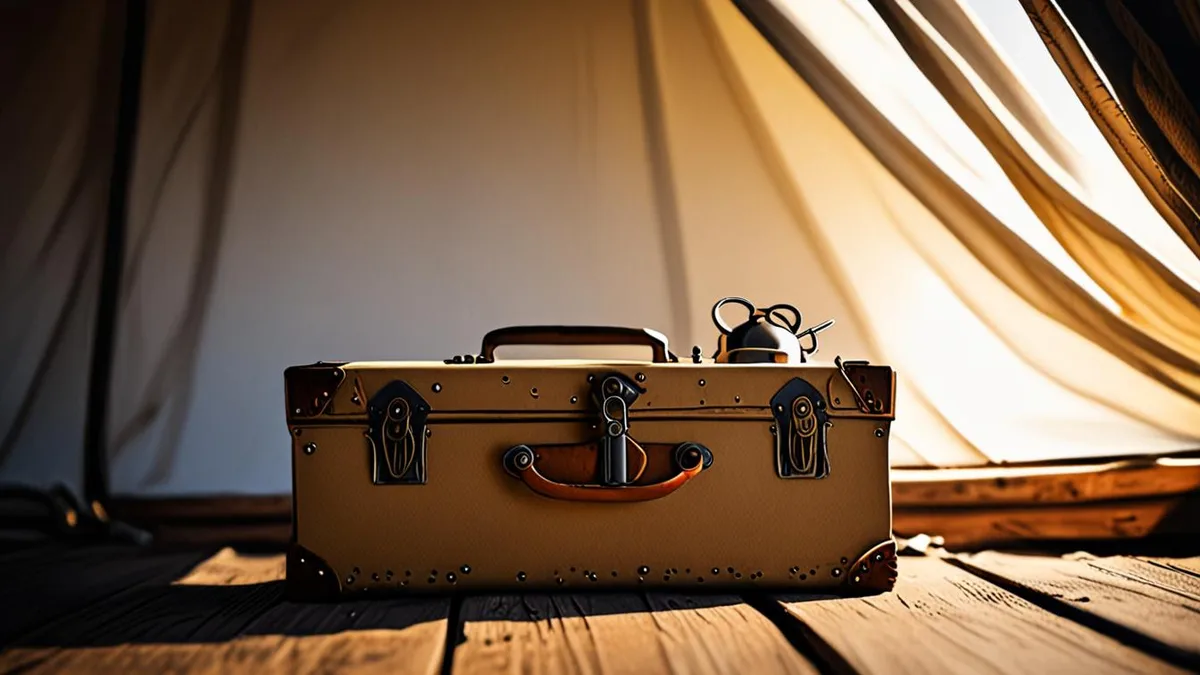
Protecting Your Valuables Inside a Tent or Yurt
Let’s be realistic about canvas: a fabric door deters opportunists, but it is not secure on its own. Anyone can unzip a tent in seconds, which is why your goal isn’t to make your unit burglar-proof, it’s to make stealing from it inconvenient and unattractive. That starts with using whatever the site provides. Many glamping units come with a lockable box or safe; if yours does, put it to work every single time you leave, not just on the first night.
If there’s no lockable storage, bring your own solution. A small padlock and a short cable let you lock the two zip pulls of a canvas door together, which is enough to stop casual tampering. It won’t stop a determined intruder, but determined intruders are precisely what you’re unlikely to encounter on a quiet site with a handful of guests.
The simplest habit is consolidation. Keep passports, car keys, cash and electronics in one bag that either goes with you or locks in the car boot out of sight. One bag, one decision, nothing forgotten. And if rain is forecast for your trip, this guide to staying dry and comfortable when glamping in wet weather covers how to keep gear protected in damp conditions too.
Finally, document what you bring. Photograph your gear on arrival so you can describe and prove what anything looked like, and report any loss to the host immediately. Fast reporting matters: hosts know their site, their staff and their other guests, and they can only act on a problem they know about within the hour rather than the next morning.
- Split your valuables: keep the items you genuinely need on your person (phone, one card, ID) separate from the backup stash locked in the car, so no single loss wipes you out.
- Use less obvious hiding spots if you must leave something in the tent: inside a sleeping bag roll or a dirty laundry bag beats leaving a wallet on the pillow.
- Charge devices during meals at the shared kitchen: many units have limited or no sockets, so plan charging times when you’re nearby rather than leaving devices unattended.
- Close laptop bags and camera cases before leaving: an open bag displaying contents invites trouble even on an honest site, while a closed bag looks like it holds nothing interesting.
- Double-check zips at night: zip the door fully shut from the inside before bed, including any mesh layer, so nothing gapes open while you sleep.
Solo Glamping: Habits That Keep You Confident
Solo glamping works best when you build a few simple habits into your stay, starting before you even leave home. The first one is timing: aim to arrive within the usual 3-5 pm check-in window. Daylight arrival lets you walk the whole site, locate the bathroom block and shared kitchen, and put a face to your host’s name. If something about the place feels wrong, you can raise it or leave while it is still light and easy to act on.
Second, treat your trip as something one person back home knows about in detail. Share your booking confirmation, the site’s general location and your expected return date with a trusted friend or family member, then send a quick message once a day. It takes ten seconds and means someone will notice quickly if you go quiet.
Phone management matters more in a tent than it does in a hotel. Canvas units rarely have sockets next to the bed, so charge up during the evening and carry a small power bank for emergencies. Beyond that, a few habits are worth making automatic every time you stay somewhere new:
- Zip your unit fully every time you leave, even for a two-minute trip to the bathroom block, so the habit never lapses when it counts.
- Keep your exact unit number vague when chatting with other guests; say “mine’s up near the facilities” rather than pointing it out.
- Trust your instincts about people. If another guest makes you uncomfortable, mention it to the host early rather than waiting to see if it passes.
- Keep your car keys and shoes within reach of your bed at night, so you can move quickly if you ever need to.
If this is your first solo outdoor stay, make it easy on yourself. Choose a site with staff on site and shared facilities rather than a fully remote standalone unit, and read up on what a first glamping trip actually involves so nothing about the setup surprises you. Once you know the routine, you can gradually try wilder, more isolated options with confidence.
Weather, Wildlife and Emergency Preparedness
Glamping puts you closer to the weather than a hotel ever would, so check the forecast before you set off and plan around it. Many sites in colder climates shut from late October to March, which means shoulder-season trips in spring or autumn need extra layers, a waterproof shell and a rough plan for what you will do if a storm rolls in. A host who answers your weather questions before booking is usually a host who keeps guests informed during their stay too.
Wildlife problems at glamping sites are almost always food problems. Store everything edible or scented, including toiletries, snacks and trash, in the sealed container or car the host designates, and never inside your sleeping area. A mouse or raccoon chewing through canvas at 2 am is far more likely than any kind of crime, and it is entirely preventable.
Emergency planning takes five minutes and is worth doing before you lose signal. Save the local emergency number on your phone before arrival: 112 works across the EU, while 911 covers the US and Canada. Also note the site’s address or grid reference, because remote locations can be hard to describe to a dispatcher. Before you pack, run through this list:
- Bring a headlamp rather than relying on your phone’s flashlight, since the walk to shared facilities after dark is typically unlit.
- Pack a basic first aid kit with blister plasters, antiseptic wipes and any personal medication, as the nearest pharmacy may be a drive away.
- Download offline maps of the area before you arrive, because phone signal can drop out entirely on remote sites.
- Keep a spare layer and dry socks in a sealed bag inside your unit, so a wet afternoon never turns into a cold night.
None of this is complicated, and most of it fits in a daypack. The point is that environmental risks, not criminal ones, are what you should actually prepare for on a glamping trip, and a little preparation covers nearly all of them.
What to Do If Something Feels Off During Your Stay
Most glamping stays pass without a single awkward moment, but knowing what to do when something feels off is what turns a nervous traveler into a confident one. Whether it is a broken lock, a stranger loitering near the units or simply a bad feeling you cannot shake, the right response is usually quick and low-drama. Work through these steps in order:
- Contact the host or on-site staff first, for anything from a broken lock to an unwelcome visitor. They know the site, the other guests and the local area, and they can move you to another unit or call for help on your behalf.
- If you feel unsafe at night, stay in your unit with it fully zipped and use your phone instead of walking across an unlit site to find someone. A message or call gets a faster response than wandering in the dark.
- Know your exit from the moment you arrive. Work out the fastest route to your car or the site gate in daylight, so you are never trying to figure it out under pressure after dark.
- Leave an honest review afterwards if security fell short. It protects the next solo traveler and puts real pressure on hosts to fix gaps in lighting, locks or staffing.
One thing to remember: raising a concern is not an overreaction, and hosts would much rather hear about a small problem at 7 pm than a serious one at midnight. Good hosts expect questions and take them seriously, because their reputation depends on guests feeling safe. If a host dismisses a genuine concern, that itself is useful information, both for how you spend the rest of your stay and for what you write in your review. Trust your judgment, act early, and you will almost always find the issue is smaller than it felt.
The Bottom Line on Glamping Safety
So, are glamping sites safe? Yes, broadly speaking they are. Most are small operations with just a handful of units, hosts who live on site or nearby, and guest numbers low enough that strangers rarely go unnoticed. The realistic risks are environmental, like weather, wildlife and patchy phone signal, far more often than crime. Compared with a wild night under the stars, you arrive to a site with a host on hand, a way to secure your unit and other guests within earshot, which removes much of the vulnerability of sleeping alone outdoors.
Just as importantly, most of your safety comes from choices made before you arrive: a vetted site, a daylight check-in and a shared itinerary with someone at home. Add a locked valuables bag, a charged phone and the right emergency numbers saved, and a solo glamping stay becomes a confident, comfortable way to enjoy the outdoors. Have you glamped solo, or do you have a question about your first trip? Leave a comment or share this article.